REVIEW · BUENOS AIRES
Bike Tour: Buenos Aires to the North
Book on GetYourGuide →Operated by La Bicicleta Naranja · Bookable on GetYourGuide
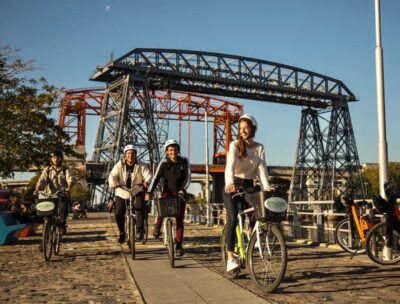
Buenos Aires by bike is a fast education. This North Tour strings together San Telmo, Puerto Madero, and the cultural stretch toward Recoleta and Palermo, with bilingual guides that keep the ride making sense.
I especially like how the tour hits major landmarks without turning into a museum marathon, including Floralis Genérica and Recoleta Cemetery. One possible drawback: some bikes are reported as very old, and the route can stick to big boulevards with lots of car traffic, with no electric bikes available.
In This Review
- Key highlights worth knowing
- Buenos Aires North by bike: why this route feels efficient
- Price and logistics: what you’re paying for (and what to watch)
- Getting moving: how the first stretch sets up the whole tour
- Plaza Francia to Floralis Genérica: the sculpture and the mood shift
- Law School and the UBA area: spotting the city’s institutions
- Museo Nacional de Bellas Artes, Biblioteca Nacional, and culture stops that don’t drag
- Recoleta and Eva Perón: where the tour turns emotional
- Palermo’s Bosques and El Rosedal: the best payoff for your legs
- Additional landmarks along the way: Pilar Church and Malvinas commemoration
- Bike quality and route comfort: what to consider before you book
- What’s included in this $44 tour (and what you should plan yourself)
- Who this tour suits best
- Should you book the Buenos Aires to the North bike tour?
- FAQ
- How long is the Buenos Aires to the North bike tour?
- How much does the tour cost?
- Where do I meet the tour if I’m not picked up from my hotel?
- Can I get hotel pickup?
- What major sights are included on the route?
- How many different drop-off locations are there?
- What’s included in the price?
- Are snacks provided during the tour?
- What should I bring?
- Is there a cancellation option?
Key highlights worth knowing
- Puerto Madero for that modern port-city contrast right out of the gate
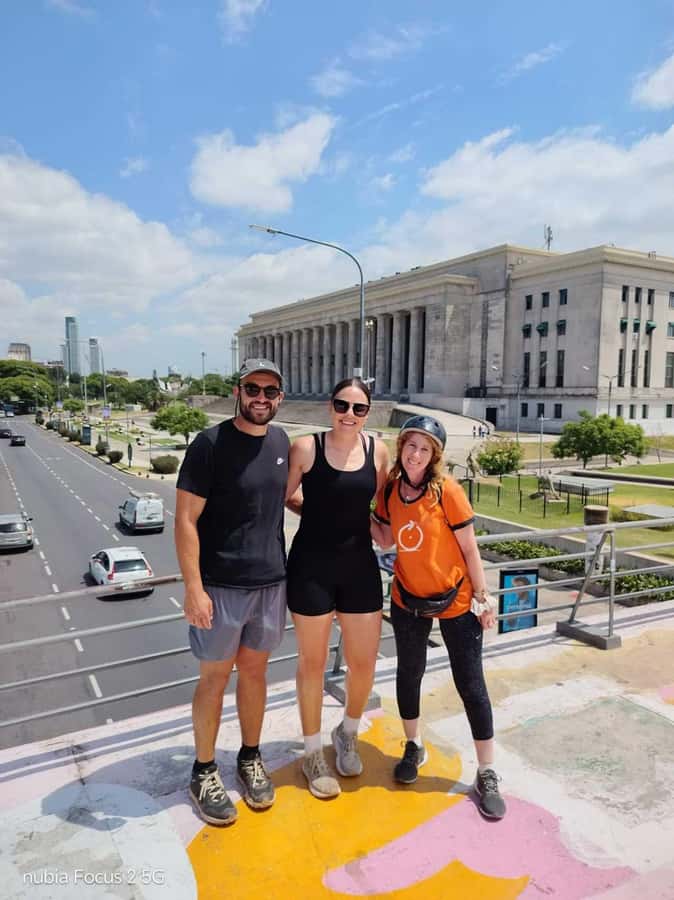
- Floralis Genérica and the Law School area, where architecture and history are easy to spot
- Recoleta Cemetery / Eva Perón as the emotional and symbolic center of the ride
- Palermo’s Bosques and El Rosedal for a green break from the streets
- Multiple drop-off options across neighborhoods, so you can end closer to where you’re staying
Buenos Aires North by bike: why this route feels efficient
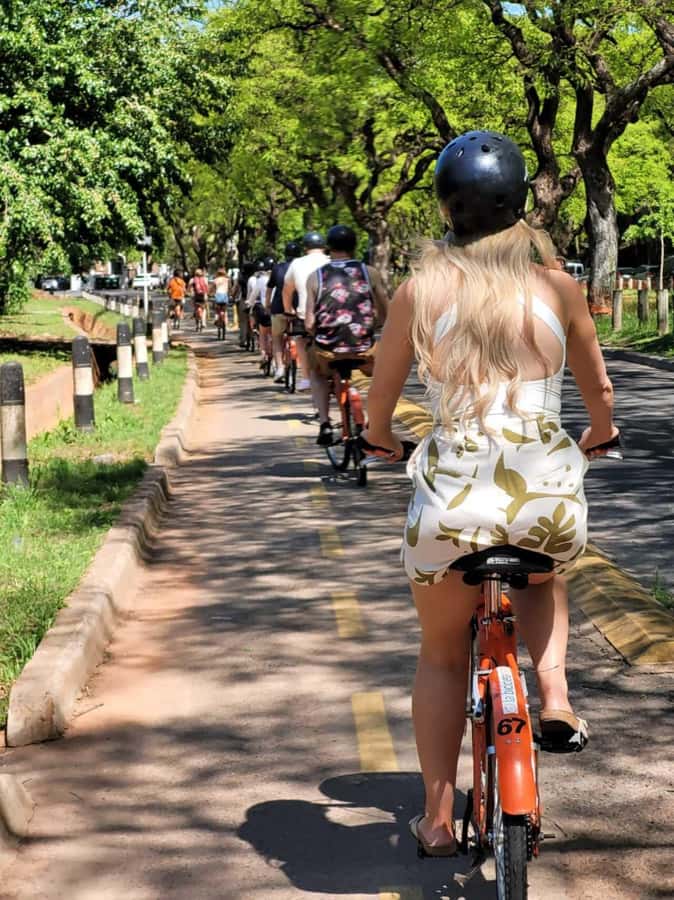
This tour is designed for one thing: getting you oriented in Buenos Aires fast, then letting you savor it. You don’t just ride through one theme. You move from the older streets and historic textures of the south side up toward the smarter, greener north, with Puerto Madero and Recoleta as key pivots.
I like that the pacing stays focused on big landmarks that you can actually see from a bike: squares, institutional buildings, sculpture stops, and park areas. In 3.5 hours, you cover enough ground that the city starts to feel less like random blocks and more like a set of neighborhoods with their own personalities.
And because you’re on a bike with a guide, you get context as you go. That matters here. Buenos Aires is full of architecture and street-level clues, but it’s not always obvious what you’re looking at. This route gives you names and stories along the way.
You can also read our reviews of more cycling tours in Buenos Aires
Price and logistics: what you’re paying for (and what to watch)
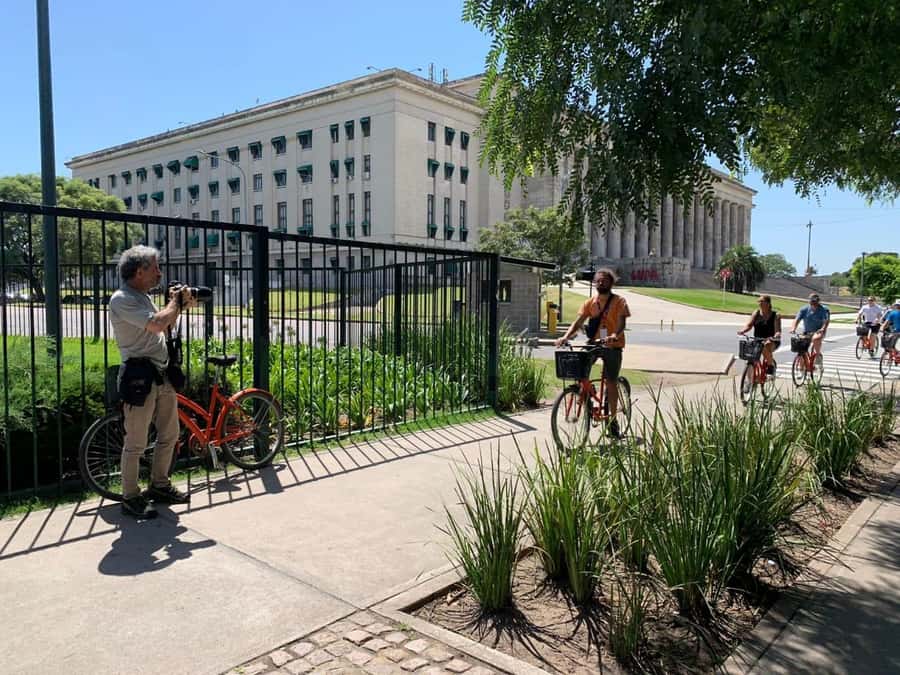
At $44 per person for about 3.5 hours, the value is strongest if you want guided sightseeing plus the freedom of cycling. You’re getting a bike, helmet, a water bottle, and bilingual live guiding (English and Spanish). No snacks are included, so plan to eat before you start or after you finish.
Pickup is optional. If your hotel is in the designated areas, the tour begins there. If not, you meet in San Telmo. That is a practical detail: if you’re staying far from the pickup zone, just assume you’ll start from San Telmo and finish somewhere in the northern neighborhoods.
Another practical thing: the tour includes eight different drop-off locations (San Telmo, Palermo, Dr. José Modesto Giuffra 308, Puerto Madero, Retiro, Recoleta, San Nicolás, and Monserrat). That can save you time later, especially if your hotel isn’t near the meeting spot.
Getting moving: how the first stretch sets up the whole tour
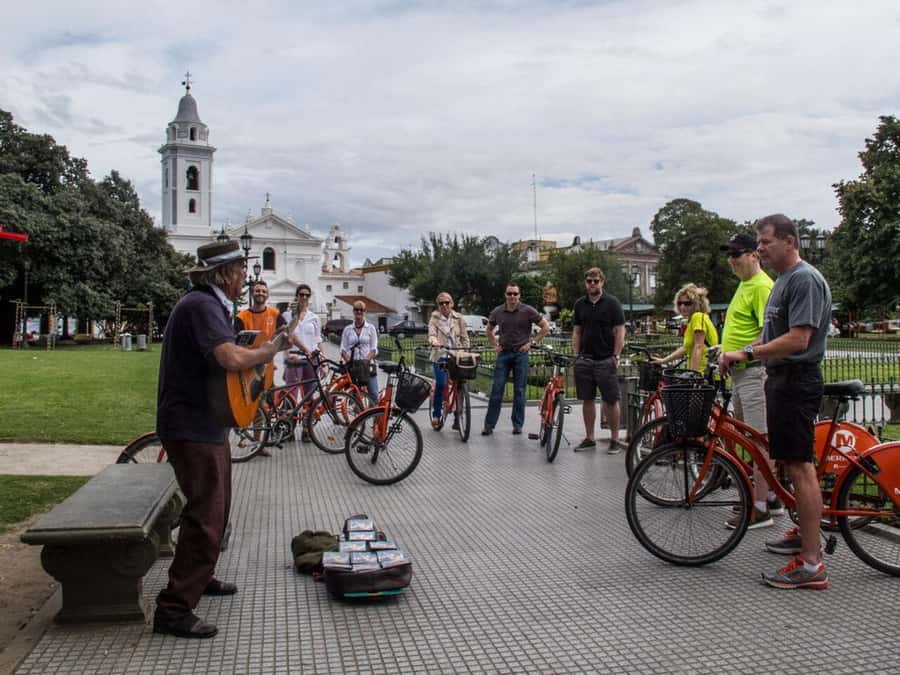
The tour starts with a pickup that depends on your selected option. If you’re not picked up, the meeting point is in San Telmo. Either way, the ride is structured to hit Puerto Madero early, then build up through major plazas and cultural institutions.
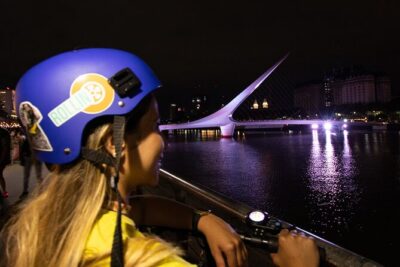
Stop 2 is Puerto Madero, a quick bike segment (about 10 minutes). This is a smart opener because Puerto Madero shows a different face of Buenos Aires than the historic neighborhoods—clean lines, a modern port vibe, and that sense of the city looking outward. If you’re still figuring out how Buenos Aires is laid out, this early contrast helps.
Then you continue on to Plaza Francia for a bike stop, which acts like a transition zone. Plazas and civic spaces in Buenos Aires tend to be where neighborhoods “talk” to each other. Even a short stop here helps you understand where the tour is headed next.
Plaza Francia to Floralis Genérica: the sculpture and the mood shift
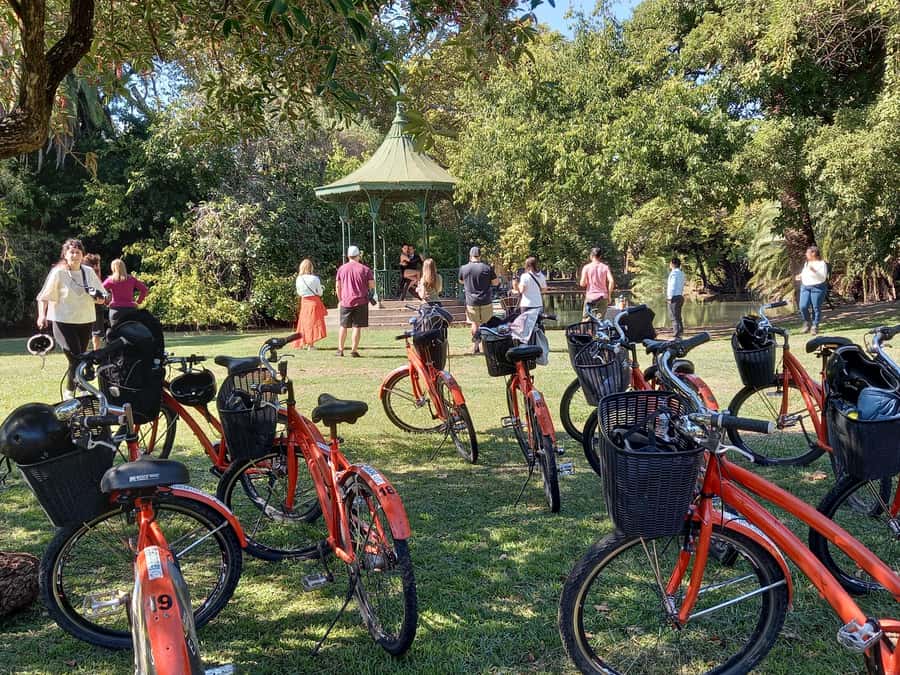
From Plaza Francia, you reach Floralis Genérica. Expect a short stop here (about 10 minutes). This is the kind of sight you can’t help but notice. The payoff is not just seeing it. It’s having the guide frame what it represents and how it fits into the surrounding city fabric.
The nice part is that Floralis Genérica is visually readable. You don’t need deep background knowledge to enjoy it. You can simply look around: the scale, the setting, and how the area feels different from older residential streets.
After that, the route continues toward Plaza General San Martín (another brief bike stop of about 10 minutes). That sequence—sculpture, then plaza—helps you understand how public spaces structure the city. It also breaks up the ride so you’re not just pushing forward with no sensory payoff.
Law School and the UBA area: spotting the city’s institutions
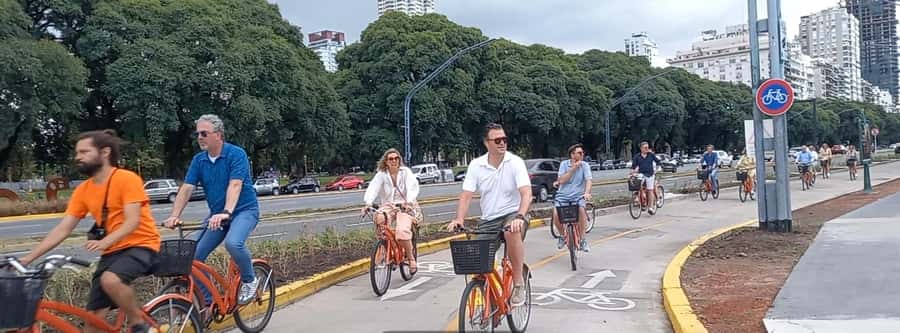
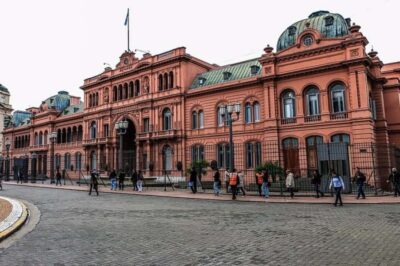
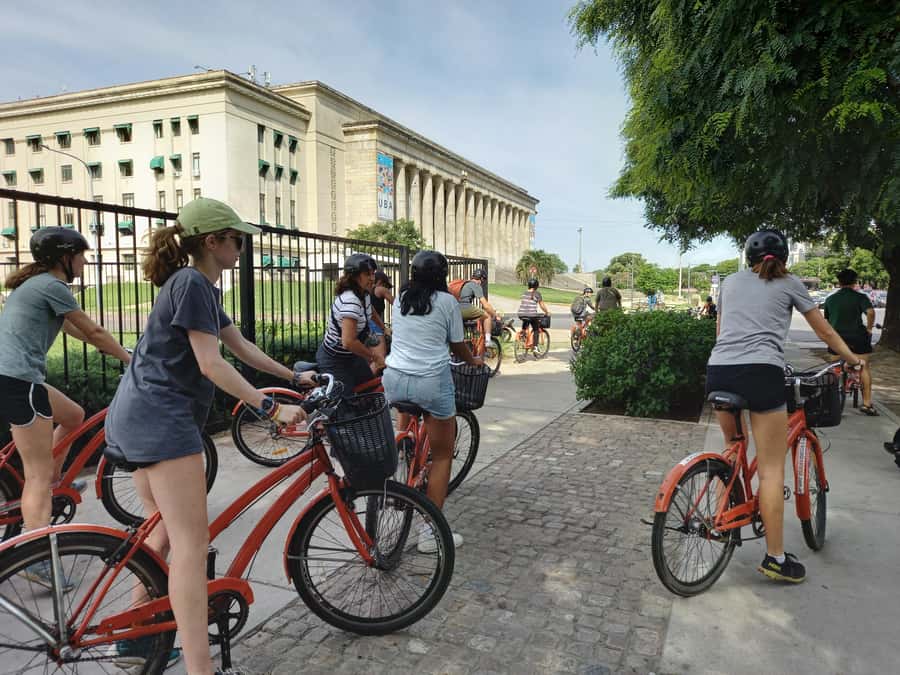
One of the tour’s strongest sections is the institutional corridor around the Facultad de Derecho (UBA). This is where the tour goes beyond “look at buildings” and starts giving you a sense of Buenos Aires as an education-and-law city as much as a café-and-history city.
You also stop near the Embassy of France, which helps connect the city’s European influences with its local identity. Buenos Aires often gets called the Paris of South America, but the real usefulness of that comparison is in how you recognize French cultural fingerprints without losing the Argentine viewpoint.
This is also a section where being on a bike helps. These are streets you’ll likely walk past later, but biking gives you better coverage with less fatigue. You’re still moving, so the tour feels like a guided route rather than a series of disconnected photos.

Museo Nacional de Bellas Artes, Biblioteca Nacional, and culture stops that don’t drag
Next comes a run of cultural landmarks: Museo Nacional de Bellas Artes and the Biblioteca Nacional. You’ll have short bike segments and viewing time during the stops (the library stop is listed as about 10 minutes).
Here’s the practical value: these places are important, but you don’t need a full museum day to appreciate why they matter. A guided stop can give you just enough orientation—what these institutions are known for, and where their influence sits in the city.
The Instituto Nacional Sanmartiniano also appears on the route with a short bike pause (about 10 minutes). That adds a historical layer that rounds out the modern government-and-arts feel you’ve already gotten.
If you’re the type who worries tours will rush you, this itinerary avoids that by keeping the stops short and purposeful rather than long and repetitive. You’ll still get plenty of cycling time, but each pause has a clear role.
Recoleta and Eva Perón: where the tour turns emotional
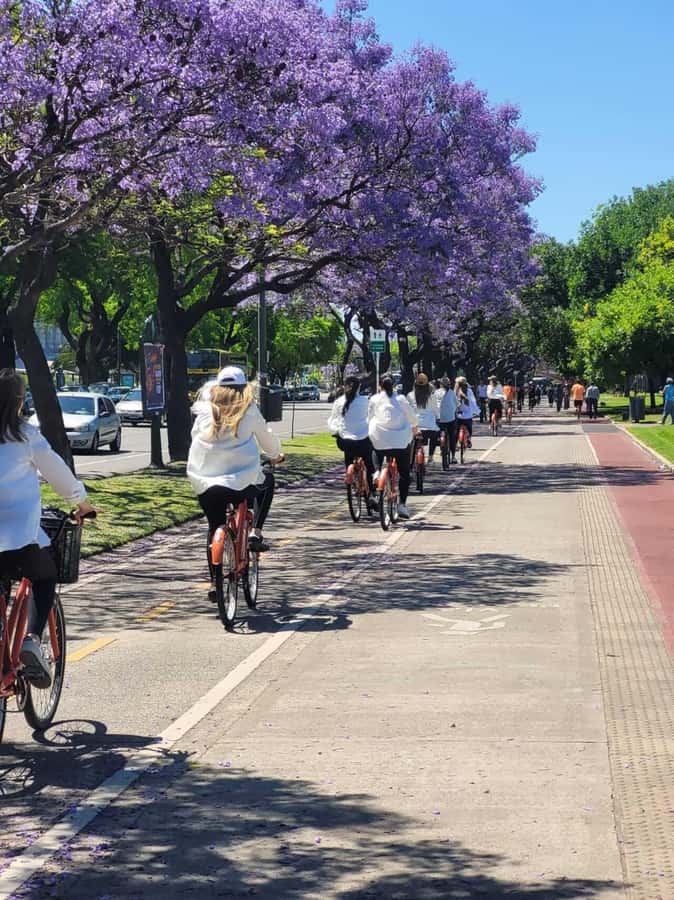
Then you hit Recoleta, and this is the tour’s emotional center. The route explicitly includes Recoleta’s sophisticated charm and the final resting place of Eva Perón in Recoleta Cemetery.
This part is valuable because it’s not just sightseeing—it’s perspective. Recoleta can look like an elegant neighborhood on the surface, but the cemetery turns it into a place of memory and meaning. If you only see architecture, you miss the human stories Buenos Aires carries through its public spaces.
I also like that the tour is not afraid to include this heavier element in a day that otherwise has plenty of plazas and parks. It prevents the tour from feeling like a checklist. You come away with at least one moment that sticks.
Palermo’s Bosques and El Rosedal: the best payoff for your legs
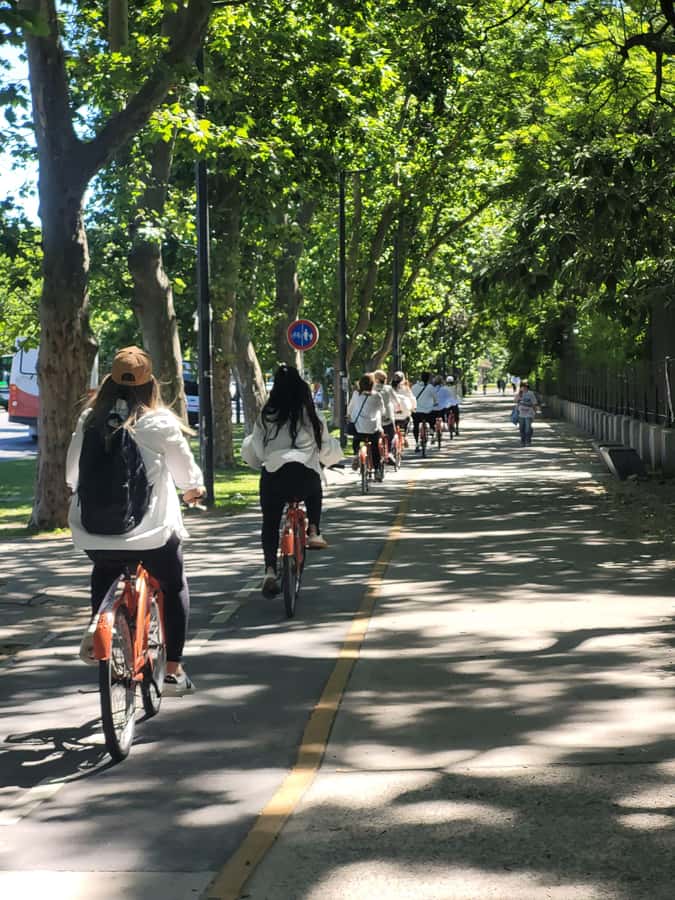
After the cultural and historical stops, the ride shifts into Palermo, including Bosques de Palermo and El Rosedal Garden. The Rosedal stop is listed as about 20 minutes, which tells you the tour expects this to be a bigger moment.
This is where the bike tour really earns its keep. Cycling through park space feels different from cycling through traffic-adjacent streets. You get a break for your eyes and your pace. It’s the kind of stop where you can slow down, look around, and let the city’s rhythm change.
The route also references Palermo Chico and its magnificent residences. That’s a nice bonus because it gives you a feel for where the wealth and architecture style of northern Buenos Aires show up in real life, not just in guidebook pages.
Additional landmarks along the way: Pilar Church and Malvinas commemoration
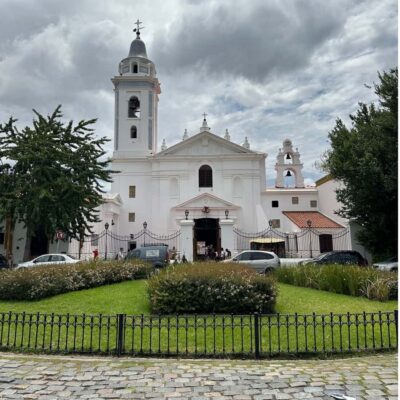
You’ll also see stops tied to religion and national memory: the Pilar Church and a cenotaph commemorating those who fell in the Malvinas conflict.
These stops can be brief, but they add weight. Buenos Aires isn’t only visual. It has places that hold shared history, and short guided moments can make you notice details you’d otherwise skate right past.
If you like your sightseeing to come with meaning (not just photos), this is a good sign. Even if you’re not religious or not deeply familiar with the topic, a guided stop helps you understand what you’re looking at and why it matters in the city.
Bike quality and route comfort: what to consider before you book
Here’s the honest tradeoff to weigh. The tour does not offer electric bikes. One rating points out that a bike can be very old, and that without e-bikes the route can feel less interesting—especially when the tour stays on large boulevards with plenty of car traffic.
That doesn’t mean the tour is a bad idea. It does mean you should show up with the right expectations:
- Bring a mindset for steady cycling, not a smooth glide-through-everything experience.
- If you’re sensitive to traffic conditions, consider how comfortable you are staying alert on busy streets.
- If you like routes that take quiet side streets, keep in mind that the return portion can be close to the outbound path.
If you’re generally confident on a regular bike and you’re focused on the sights more than the riding comfort, you’ll probably feel fine. If you were hoping for an easy e-bike day, this is not that.
What’s included in this $44 tour (and what you should plan yourself)
Included:
- Bike
- Helmet
- Bilingual guides (English and Spanish)
- Water bottle
Not included:
- Snacks
So I suggest you plan like this: eat a real snack or light meal before you go, then carry your own simple option for later if you need it. Bring sunscreen and a sun hat. You’ll be outdoors for the full 3.5-hour window, so heat can sneak up on you even when you feel like you’re moving.
You’ll also want an ID card. A copy is accepted, so it’s easier to pack.
Who this tour suits best
This one fits best if you want a guided “northward” arc that covers multiple neighborhoods without spending your day on buses or long walks. It’s also a good match for first-timers because the route includes landmarks that help you understand Buenos Aires’s layout.
You’ll likely enjoy it most if:
- You like architecture, major public institutions, and well-known landmarks.
- You want a mix of city and parks in the same half day.
- You prefer small-group or private formats, since the tour offers both.
If you want a slow, scenic ride with minimal traffic, or if you strongly prefer e-bikes, you’ll need to weigh the bike and boulevard comfort issue carefully.
Should you book the Buenos Aires to the North bike tour?
I’d book it if your priority is seeing a lot of iconic Buenos Aires highlights with expert bilingual guidance in about 3.5 hours, especially if you’re curious about Puerto Madero, Recoleta, and Palermo’s park areas. It’s also a solid value at $44 because you’re not paying extra for the bike, helmet, or guide.
I would hesitate if e-bike comfort is important to you or if you’re expecting a brand-new bike and mostly quiet cycling. Also remember: there are no snacks, so you’ll want to handle food yourself.
If you’re a confident cyclist and you’re excited by the itinerary’s mix of big landmarks and green pauses, this tour is a practical way to understand the city fast.
FAQ
How long is the Buenos Aires to the North bike tour?
It runs for about 3.5 hours. Starting times depend on availability.
How much does the tour cost?
The price is listed as $44 per person.
Where do I meet the tour if I’m not picked up from my hotel?
If your hotel is not in the designated pickup areas, the meeting point is in San Telmo.
Can I get hotel pickup?
Yes, pickup is optional if your hotel is located within the designated areas. Otherwise, you meet in San Telmo.
What major sights are included on the route?
You’ll ride through or stop for views of Puerto Madero, Floralis Genérica, the Law School / Facultad de Derecho (UBA), Recoleta (including Eva Perón’s final resting place), Palermo (including Bosques de Palermo and El Rosedal), plus cultural and memorial stops along the way.
How many different drop-off locations are there?
The tour lists 8 drop-off locations across neighborhoods, including San Telmo, Palermo, Puerto Madero, Retiro, Recoleta, San Nicolás, and Monserrat (plus Dr. José Modesto Giuffra 308).
What’s included in the price?
Included are the bike, bilingual guides (English and Spanish), a helmet, and a water bottle.
Are snacks provided during the tour?
No, snacks are not included.
What should I bring?
Bring a sun hat, sunscreen, and an ID card (a copy is accepted).
Is there a cancellation option?
Yes, free cancellation is available up to 24 hours in advance for a full refund.