REVIEW · BUENOS AIRES
Buenos Aires: Montserrat, San Telmo, La Boca, and Puerto …
Book on GetYourGuide →Operated by VIP TOURS BA · Bookable on GetYourGuide
History walks fast in Buenos Aires. I like how this route stitches Buenos Aires’ oldest neighborhoods to modern Puerto Madero in just a few hours, and I like that you get both big-name sights and small, weird local details. The result is a tour that feels like a shortcut to the city’s personality, not a checklist.
One thing to consider: this is a walking-focused experience, and it is not set up for wheelchair users. If weather is hot or rainy, plan your pace and wear shoes that can handle uneven sidewalks.
In This Review
- Key things that make this tour worth your time
- Four neighborhoods, one smart route (and why it works)
- Montserrat: Plaza de Mayo, Avenida de Mayo, and the city’s oldest street corners
- San Telmo: Mafalda’s statue, old squares, and Market life since 1897
- La Boca: Boca Juniors Stadium area, Caminito color, and tango atmosphere
- Puerto Madero and Puente de la Mujer: Calatrava’s landmark finish
- Costanera Sur Ecological Reserve: a short nature break that matters
- Price and logistics: what you really get for about $100 per person
- Who should book this Buenos Aires walk?
- Should you book VIP TOURS BA for Montserrat, San Telmo, La Boca, and Puerto Madero?
- FAQ
- How long is this tour?
- Where does the tour start?
- Where does the tour end?
- What neighborhoods and areas are included?
- Is Boca Juniors Stadium included?
- Does the tour include Puente de la Mujer?
- Are meals included?
- What about Café Tortoni?
- What languages are offered?
- Is it suitable for wheelchair users?
Key things that make this tour worth your time
- Oldest bookstore, church, and pharmacy in Buenos Aires, plus the city’s first two-story building
- Montserrat’s Plaza de Mayo and Avenida de Mayo layout, with the option to stop at historic Café Tortoni (availability-based)
- San Telmo’s Plaza Dorrego and Market from 1897, where antiques and everyday life share the same space
- Boca Juniors Stadium area and Caminito, including color, tango culture, and football energy
- Puente de la Mujer by Santiago Calatrava, one of Puerto Madero’s most photographed landmarks
- Puerto Madero port history, including the frigate Sarmiento and the corvette Uruguay, plus a visit near Costanera Sur
Four neighborhoods, one smart route (and why it works)
Buenos Aires can feel like two cities at once: formal squares and grand avenues on one hand, and lively working-class neighborhoods on the other. What I like about this 4-hour format is that it gives you structure without turning the day into a sprint.
You’ll move from Montserrat into San Telmo, then swing over to La Boca, and finish in Puerto Madero at Puente de la Mujer. Each area has a distinct vibe, so you’re not just walking the same kind of street for hours.
You also get real “context moments,” like why Plaza de Mayo matters, why Avenida de Mayo became a spine for civic life, and why Boca’s football identity is bigger than sports. That’s the difference between seeing places and understanding them.
You can also read our reviews of more tours and experiences in Buenos Aires.

Montserrat: Plaza de Mayo, Avenida de Mayo, and the city’s oldest street corners
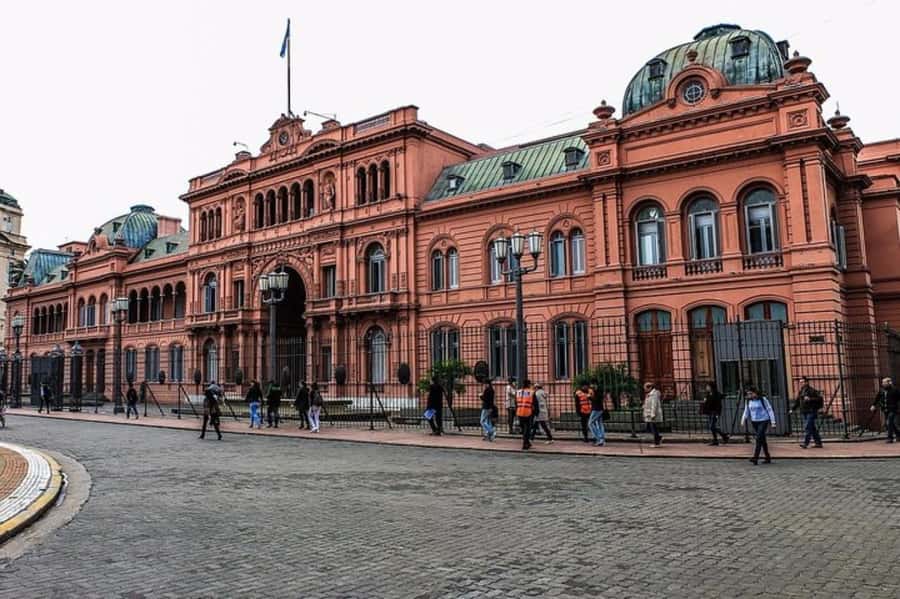
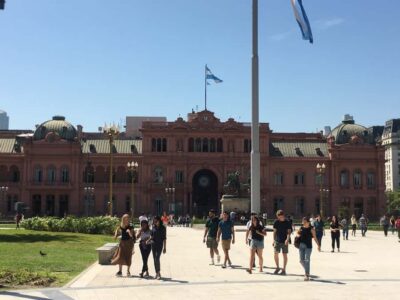
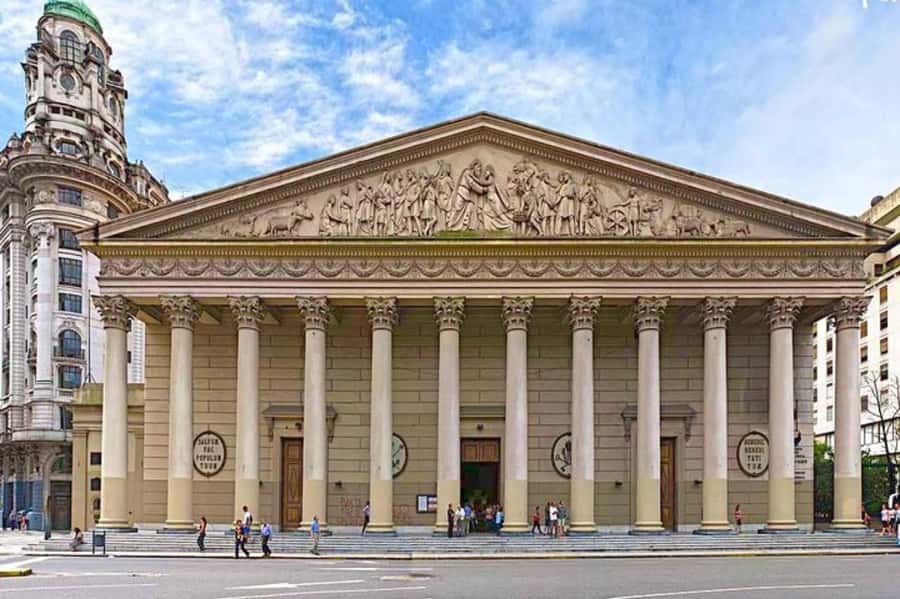
You start near the Catedral Metropolitana de Buenos Aires, then head into Montserrat, the pulse of the city. Plaza de Mayo is the kind of place where politics, power, and daily life overlap. Around it you’ll spot major landmarks like Casa Rosada, the Cabildo, and the Metropolitan Cathedral area, plus government ministries.
Then comes Avenida de Mayo, which the tour frames as the first boulevard in Buenos Aires and the first avenue in South America. Even if you’ve seen grand avenues before, this one’s worth watching because it connects institutions in a very direct way: it visually links the National Congress side and the Casa Rosada side.
One of my favorite details here is how the tour’s pacing helps you notice the edges of history. You’re not only staring at the “headline” sights. You’re also walking Calle Defensa, where you can find older layers of the city.
This is where Montserrat delivers on the “oldest of everything” promise. You’ll visit the oldest bookstore, church, and pharmacy in Buenos Aires, and you’ll also see the first two-story building. If you like history that lives in everyday streets (not just museums), these stops are exactly the right kind of unusual.
There’s also a Café Tortoni option. It’s described as the oldest café in Argentina and South America, but the stop depends on availability. That’s a small trade-off, but it’s also honest: cafés in landmark locations can be unpredictable. If you want coffee, it’s worth knowing you may have to settle for a photo outside if access is tight.
San Telmo: Mafalda’s statue, old squares, and Market life since 1897
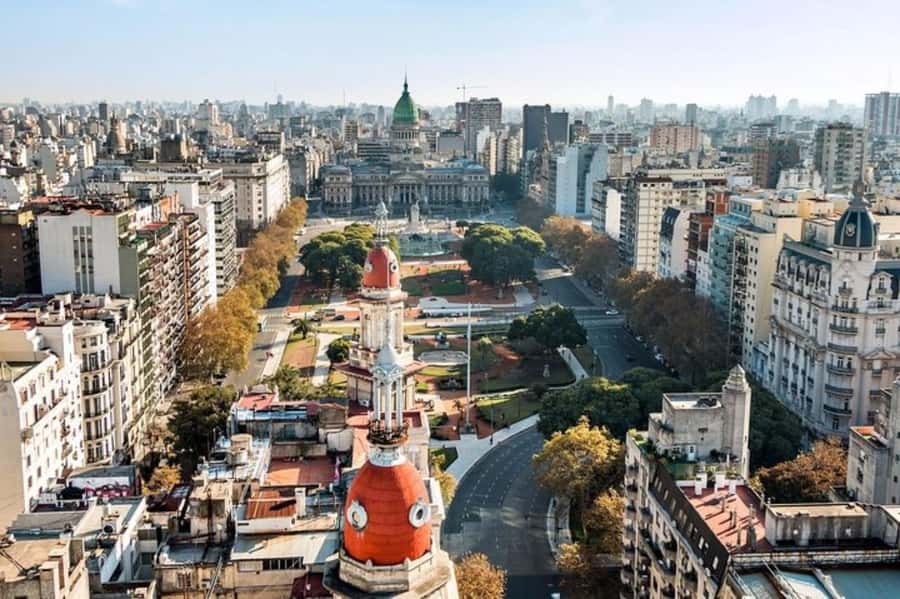
San Telmo is the next chapter. It’s known as the city’s second oldest neighborhood, and the tour uses Calle Defensa to show why people fall for it.
One quick visual anchor you’ll get is the statue of Mafalda. This Argentine comic character is basically a cultural ambassador, and seeing her there gives you a fun bridge from history to modern identity.
As you keep walking, you’ll hear tales tied to the city’s people-moving story: sailors, immigrants, and enslaved people, along with urban legends. The “point” of those stories isn’t just drama. It’s to remind you that Buenos Aires was built by arrivals, work, and survival, long before the postcard versions of the city.
You’ll also spot the smallest house in the city. That kind of odd landmark is perfect for a walking tour because it breaks up big sights with something memorable and human-sized.
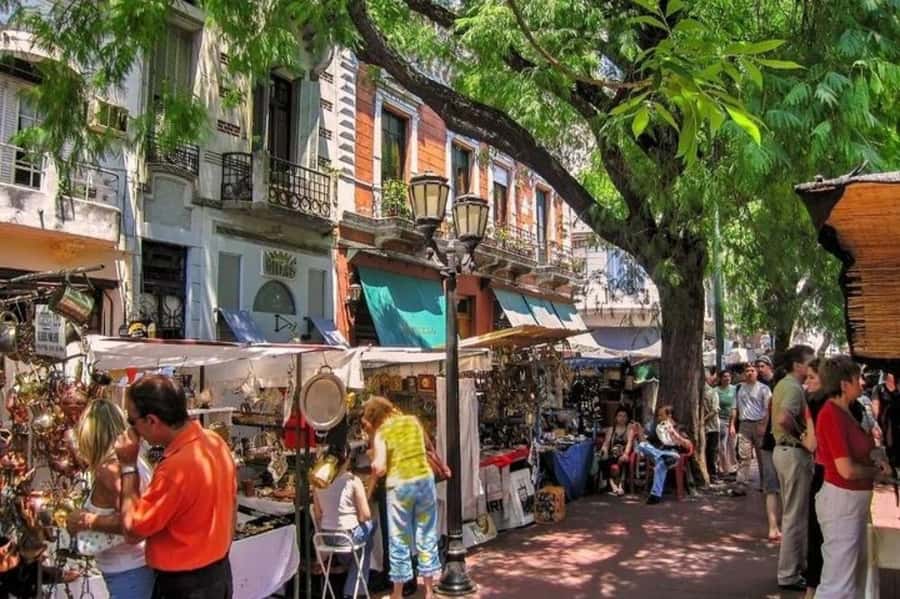
The tour then brings you into San Telmo Market, inaugurated in 1897. Markets like this aren’t just about browsing antiques. They’re local food and daily-life ecosystems. You’ll also have time to check out antique shops, small restaurants, and fruit-and-vegetable stalls, so you can decide what kind of San Telmo you want that day.
Before you continue, Plaza Dorrego is another key stop. It’s described as the second oldest square in the city, and nearby you’ll come across Ezeiza’s house. The French Passage is also mentioned as a great photo backdrop, so if you like architectural details and covered walkways, this is a good moment to slow down.
If you want a meal, this is one of the more logical places to do it during the tour. The tour notes that the area is ideal for getting something to eat, even though food isn’t included.
La Boca: Boca Juniors Stadium area, Caminito color, and tango atmosphere
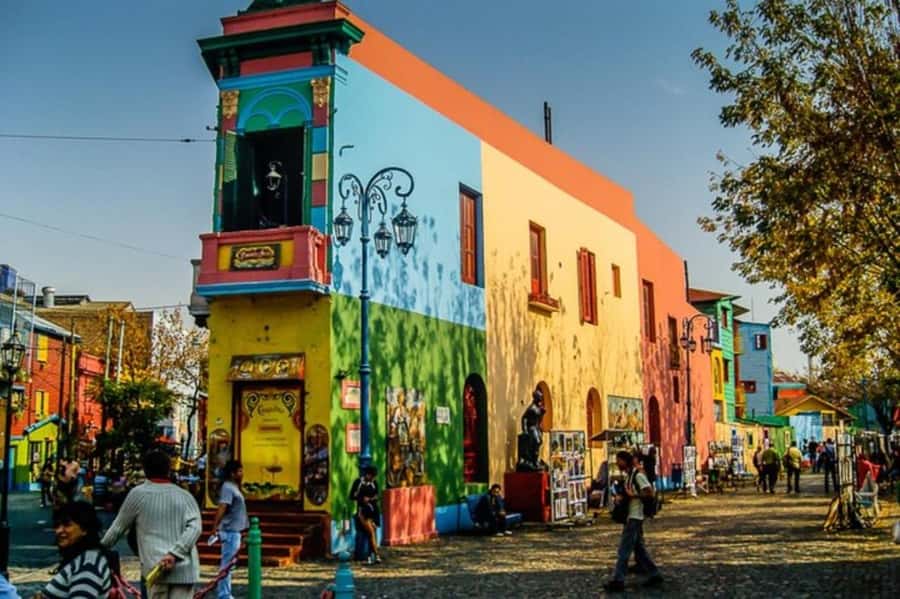
La Boca is where Buenos Aires leans loud. This is the neighborhood linked to Boca Juniors, and the tour highlights the iconic Boca Juniors Stadium and the football club’s role in local identity.
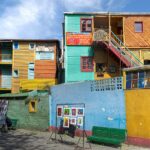
Then you’ll head toward Caminito, the colorful street that functions like an open-air gallery. It’s famous for its color and its street performers, but what makes it more than a photo stop is the way tango culture is woven into the scene.
The tour notes that La Boca is tied to tango’s birthplace and that you may even spot tango dancers in traditional restaurants. That matters because tango in Buenos Aires isn’t only a show. It’s a living tradition you often find at neighborhood level.
Practical note: La Boca can attract lots of visitors, so treat Caminito as the “snapshots” segment of your day. If you want the mood without the crowds, use the walking time around the edges and nearby streets rather than staying only in the most obvious spot.
Souvenirs are also common here, but try to focus on small, local crafts rather than generic stuff. When you’re in a place with strong cultural identity like this, the best buys often feel connected to the street, not just the market.
Puerto Madero and Puente de la Mujer: Calatrava’s landmark finish
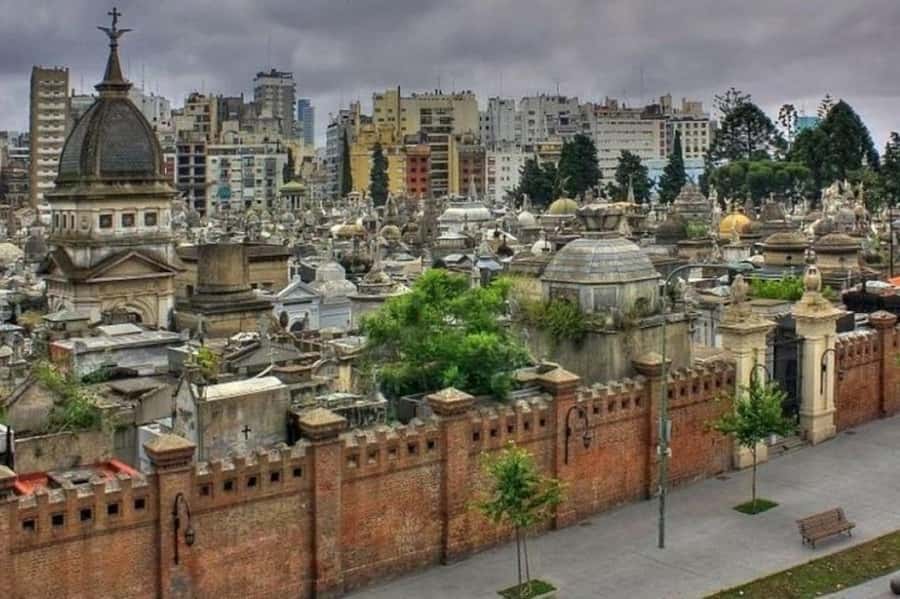
Puerto Madero is a dramatic shift from the older neighborhoods. It used to be an abandoned port project, and now it’s a modern district with tall skyline views and a riverside promenade packed with bars and restaurants.
Finishing here makes sense because Puerto Madero gives you a “present-day Buenos Aires” perspective. It’s the city showing what it’s capable of building when it pivots toward new uses for old spaces.
The headline stop is Puente de la Mujer, designed by architect Santiago Calatrava. The tour frames it as a stunning architectural work, and it’s the kind of structure that looks better the more you walk around it. Even if you’re not an architecture nerd, it’s the easiest way to end a tour because it gives you a clean visual memory.
You’ll also get a dose of port history. The tour mentions historical treasures like the frigate Sarmiento and the corvette Uruguay. If you’ve ever wondered how Puerto Madero’s modern skyline connects to Argentina’s maritime story, these are the kinds of anchors that help you connect past and present without needing a museum ticket for everything.
And because Puerto Madero includes a riverside promenade setting, it’s a good place to exhale after the walking intensity of the older districts.

Costanera Sur Ecological Reserve: a short nature break that matters
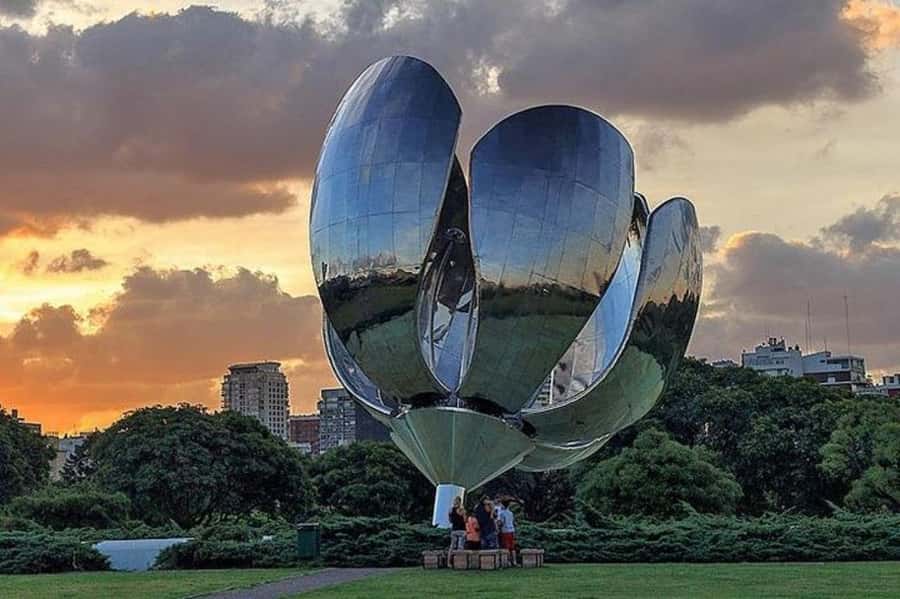
One highlight listed for this experience is the Costanera Sur Ecological Reserve, a natural space near the city center. Even if you treat it as a quick reset rather than a full nature day, it’s a useful contrast to the urban intensity of Montserrat, San Telmo, and La Boca.
Buenos Aires can feel dense. A stop like this helps you rebalance—fresh air, different sights, and a reminder that the city doesn’t only exist in concrete and monuments.
Just don’t expect a long hike. This is a 4-hour walking route, so think of Costanera Sur as a meaningful pause, not the main event.
Price and logistics: what you really get for about $100 per person
At around $100 per person for a 4-hour guided walking experience, you’re paying for two things: tight organization and a route that links multiple neighborhoods with high recognition value. You’re also paying for the guide’s ability to make sense of what you’re seeing in plain language.
What makes the value feel fair is the mix:
- big civic sights like Plaza de Mayo and Avenida de Mayo
- neighborhood texture in San Telmo
- identity-driven culture in La Boca
- a modern architectural closer in Puerto Madero
It’s also a good choice if you want the highlights without spending a whole day commuting between separate areas. The tour timing is designed so you get about an hour in each neighborhood segment, with short transfers between them.
One note for planning: Café Tortoni is subject to availability. So if your dream is to step inside for a coffee, keep expectations flexible.
Language options are also a plus: the guide can operate in English, Spanish, or Portuguese. If you’re traveling with friends who prefer different languages, this can make coordination easier.
Who should book this Buenos Aires walk?
This fits best if you:
- like neighborhoods more than only museums
- want an organized route with clear stop points
- enjoy street-level history, not just big monuments
- care about culture links like football identity and tango atmosphere
It’s less ideal if you:
- need wheelchair access (the experience is not suitable for wheelchair users)
- hate walking in uneven sidewalks
- want long free time at one single attraction (this tour is built for multiple short chapters)
If you’re a first-time visitor, this is a strong way to get your bearings. If you’ve been before, it can still work because it connects the older layers of the city with a modern ending in Puerto Madero.
Should you book VIP TOURS BA for Montserrat, San Telmo, La Boca, and Puerto Madero?
I’d book it if you want the “Buenos Aires best of both worlds” feeling: old civic heart, classic neighborhoods, football-and-tango energy, and a modern architectural finish. The strongest upside is pacing plus context, and the guide can make the details land—especially if you end up with Alejandra, who has been praised for being friendly and delivering history and culture in a way that sticks. Sebastian has also been mentioned for taking care of the group and helping the experience run smoothly.
Choose another option only if you’re not comfortable with walking, or if you want a slower, single-neighborhood deep focus instead of a four-neighborhood overview.
FAQ
How long is this tour?
It lasts 4 hours.
Where does the tour start?
It starts at Catedral Metropolitana de Buenos Aires.
Where does the tour end?
It finishes at Puente de la Mujer.
What neighborhoods and areas are included?
You’ll cover Montserrat, San Telmo, La Boca, and Puerto Madero, with stops that include Plaza de Mayo, Avenida de Mayo, and Caminito.
Is Boca Juniors Stadium included?
Yes. The tour includes the Boca Juniors Stadium area.
Does the tour include Puente de la Mujer?
Yes. Puente de la Mujer is included as part of the Puerto Madero visit.
Are meals included?
No. Meals and drinks are not included.
What about Café Tortoni?
Café Tortoni is included only subject to availability.
What languages are offered?
The live guide operates in English, Spanish, or Portuguese.
Is it suitable for wheelchair users?
No, it is not suitable for wheelchair users.