REVIEW · BUENOS AIRES
Buenos Aires: Hop-On Hop-Off City Bus Tour
Book on GetYourGuide →Operated by Gray Line Argentina · Bookable on GetYourGuide
Buenos Aires changes fast block to block, and this bus lets you keep up. The big win is the hop-on hop-off format paired with a multilingual audio guide, so you can build your own route across old favorites like La Boca and San Telmo plus newer areas like Palermo and Belgrano. I also like that the buses run frequently and you get the option to ride the open-top deck for nonstop city views instead of constantly walking. One thing to keep in mind: it’s a long loop, so if you want multiple stops, you’ll need a bit of strategy so you don’t only hop off once.
The route also hits the major sights you’re likely trying to see on a short trip. You’ll pass by Argentina’s National Congress, catch landmark-photo territory around Puerto Madero, and get in the Recoleta/Teatro Colón orbit without juggling multiple transit apps. Still, there are real-world tradeoffs: buses can get delayed by traffic, and the WiFi onboard has been unreliable for some days and users.
If you want an easy way to get your bearings fast, this is one of the better-value ways to do it in Buenos Aires. It’s not an admission ticket, and you won’t replace local guides for museums. But as a flexible city overview and transport tool, it’s a strong plan.
In This Review
- Key Things I’d Emphasize Before You Ride
- Why This Hop-On Hop-Off Loop Works in Buenos Aires
- Ticket Value: What You Really Get for Around $35
- The Operating Window and How It Affects Your Day
- Where You Can Start: Stop 0 vs Stop 12 (and Stop 1 for El Gato Negro)
- Comfort, WiFi, and the Audio You’ll Actually Hear
- The Route: 25 Stops That Map Buenos Aires Fast
- Smart Ways to Hop Off Without Losing Half Your Day
- Route Reality Checks: Stadium Days and Tour Suspensions
- Should You Book This Buenos Aires Hop-On Hop-Off Bus?
- FAQ
- How long is the hop-on hop-off ticket valid?
- When does the bus operate each day?
- How often does the bus run?
- Where can I start the tour?
- Is there an audio guide on the bus?
- Is WiFi included?
- Are attraction tickets included?
- What happens on Boca or River match days?
Key Things I’d Emphasize Before You Ride
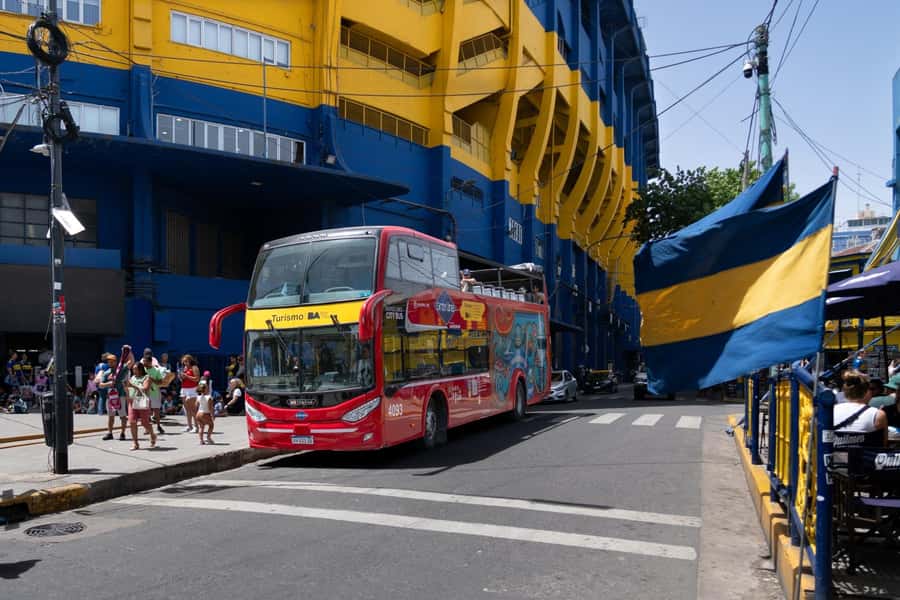
- 25 stops across classic and modern neighborhoods, with a loop you can ride all day or use like city transit
- Multilingual audio guide (plus live guidance in Spanish, English, and Portuguese) so you can follow along easily
- Every ~25 minutes service during the day, with open-deck views and air-conditioned comfort
- Free WiFi onboard and at bus stops, though it may be spotty at times
- Targeted stadium coverage with notes about match days (some routes are affected)
Why This Hop-On Hop-Off Loop Works in Buenos Aires
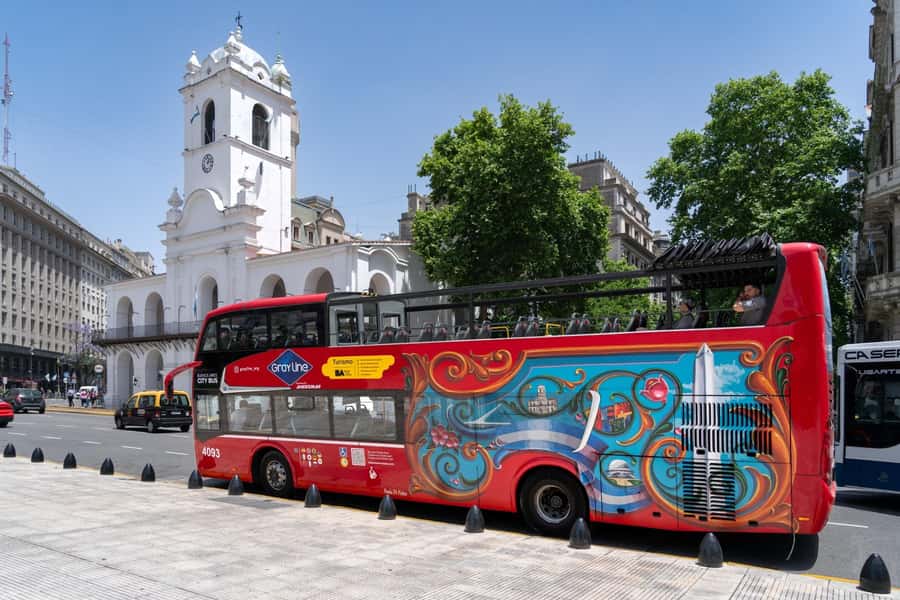
Buenos Aires is wide, and neighborhoods have their own personality. This bus helps you connect those dots without committing to one fixed walking plan. You get a ride that’s part sightseeing, part transport, and it’s designed for you to choose your pace.
What I like most is how the audio guide approach fits the city. You hear what you’re seeing as you move, not after. That means you can decide on the next stop while the context is fresh: stay longer, get off to explore, or just keep rolling.
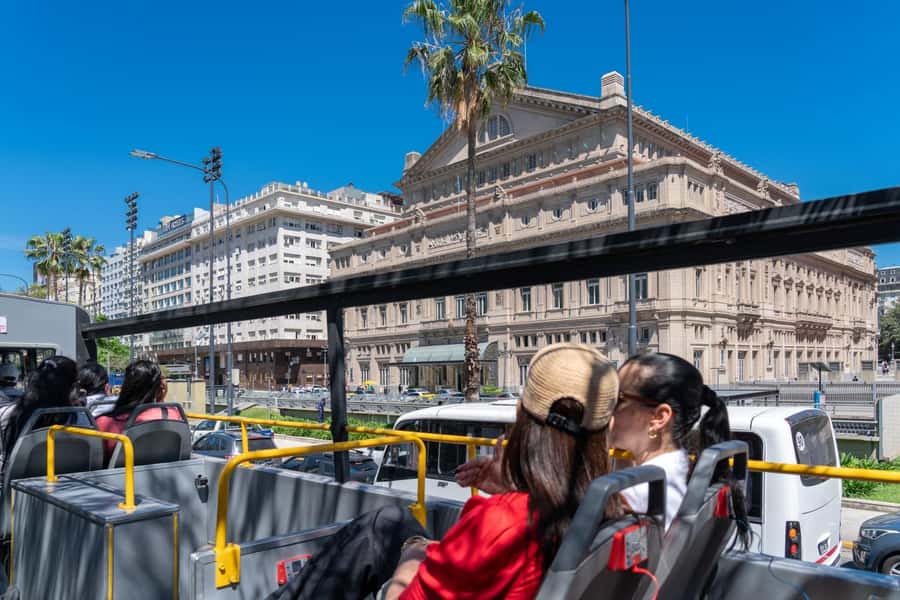
Also, the buses are open-top double-deckers with air conditioning and a sunroof. That matters because Buenos Aires weather can swing, and you don’t want to bake up top and then suffer downstairs. The typical pattern is: cool off when needed, then head up for the views.
You can also read our reviews of more city tours in Buenos Aires


Ticket Value: What You Really Get for Around $35
You’re paying roughly $35 per person (for the hop-on hop-off bus ticket), and the value depends on which validity option you choose: 24, 48, or 72 hours. The ticket includes the ride, the audio guide, and the hop-on hop-off flexibility. It does not include entry tickets to attractions or food.
So the math is simple: this pays off when you use the bus more than once per day, and when you hop off to actually do neighborhood time. If you only ride a single section, it’s convenient but not a bargain. If you’re trying to stitch together La Boca, Puerto Madero, Recoleta, and more within a tight schedule, the extra hours turn the bus into your backbone.
A practical bonus: the ticket includes skip-the-ticket-line style access for boarding, and it’s a low-stress way to avoid guessing which buses to catch in traffic.
The Operating Window and How It Affects Your Day
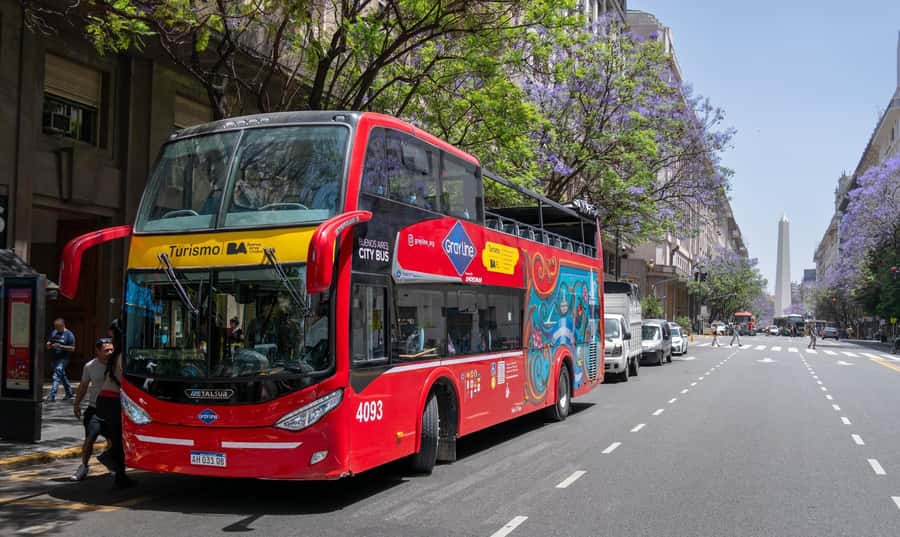
This bus runs Monday to Sunday from 9:30 a.m. to 6:00 p.m. The buses begin circulating at 9:20 a.m. from the main starting points (stop 0 and stop 12). During the day, service is frequent, about every 25 minutes.
One detail that can trip people up: the last buses leave at 5:30 p.m. and only make a half return along the route. That means if you plan to hop off near the far end of the loop late in the afternoon, you may need to work backwards and be sure you’re not stranded on the wrong side.
In real life, traffic happens. Even with the 25-minute plan, you might sometimes wait longer. I treat this bus like a helpful rhythm, not a rail schedule.
Where You Can Start: Stop 0 vs Stop 12 (and Stop 1 for El Gato Negro)
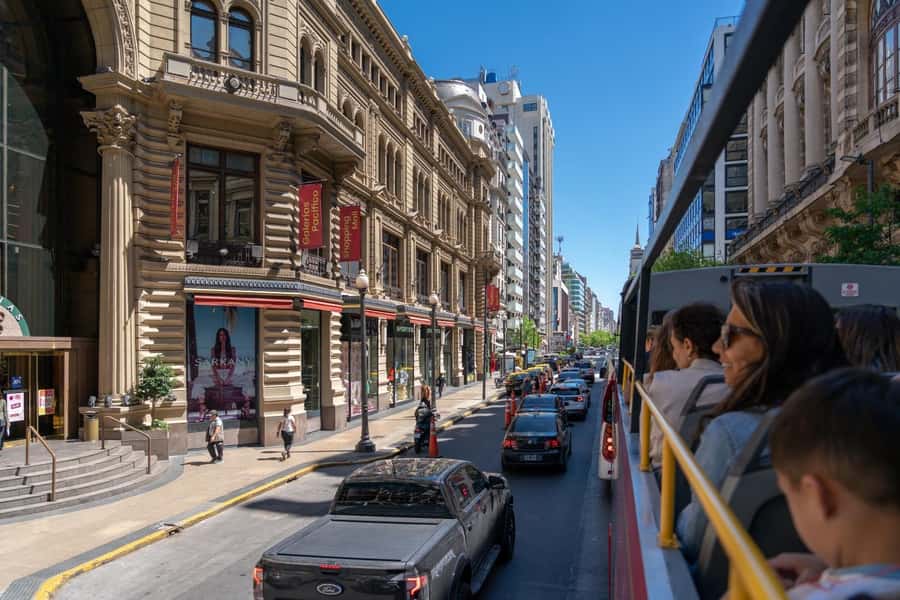
You can start at any of the bus stops. There are two easy “first day” choices:
- Stop 0 (Diagonal Norte): Av. Pres. Roque Sáenz Peña 728
- Stop 12 (Office / Plaza San Martín): Av. Santa Fe 808
If you’re staying near a major avenue, starting from the closest stop is smart. It saves time and lets you get your first loop started earlier without detours.
If your plans include the area around El Gato Negro, the nearest bus stop is stop 1 (Congreso). That’s useful if you’re combining bus time with a nearby meal or evening activity.
Comfort, WiFi, and the Audio You’ll Actually Hear
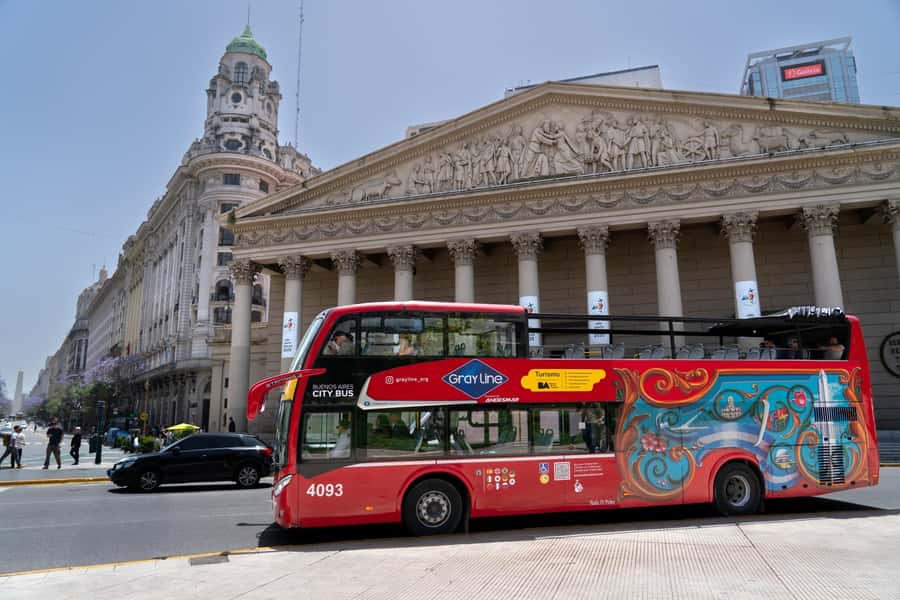
The buses are air-conditioned with a sunroof and open-air deck options. That’s a good combination in Buenos Aires because you’re not stuck with only one temperature.
You’ll also have a multilingual audio guide. The audio is available in Spanish, English, Portuguese, and more, including Japanese, Chinese, Russian, Italian, French, German, Ukrainian, and Korean. There’s also a live tour guide in Spanish, English, and Portuguese.
A couple of practical listening notes from on-the-ground experience: sometimes the commentary can be delivered when you’re already near a stop, so you might miss part of it if you’re looking down at your phone schedule. In other cases, bus-stop announcements and audio can overlap a bit, so keep the volume at a level where you can follow both comfortably.
WiFi is advertised as free onboard and at bus stops, but it has not been consistently reliable for everyone over multiple days. I’d plan as if you’re mostly using your own data, and treat WiFi as a bonus.



The Route: 25 Stops That Map Buenos Aires Fast
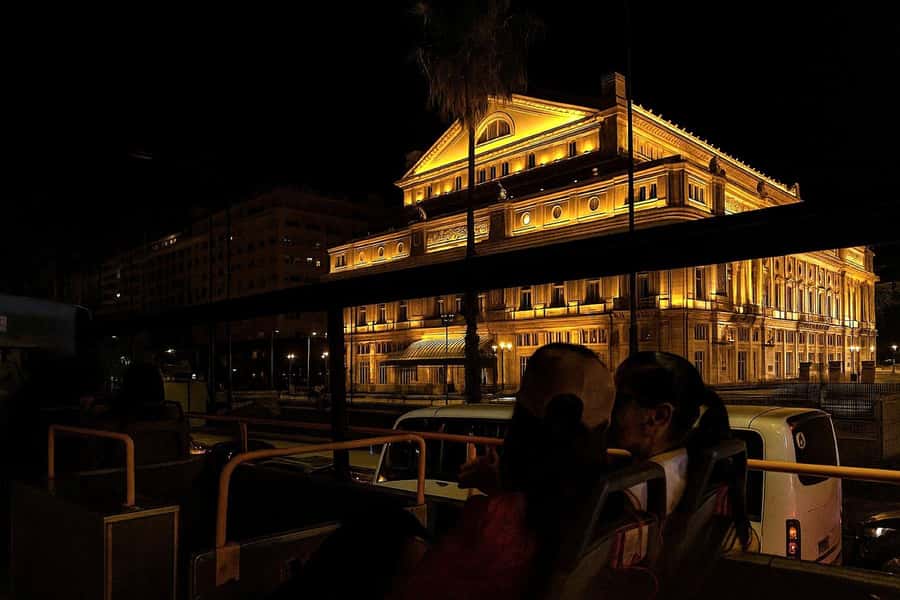
Here’s how I’d think about the loop. You can ride the whole thing straight through (it takes hours), or treat it like a pick-up-and-drop-off line for key neighborhoods. Either way, you’ll get a sweep of what Buenos Aires looks like from street level.
Stop 0: Av. Pres. Roque Sáenz Peña 728 (Diagonal Norte area)
A strong start point if you want to be in the city center immediately. It’s also where the bus begins circulating early, so you can get going without waiting as long.
Stop 1: Av. Pres. Roque Sáenz Peña / Congreso area (Main starting option and El Gato Negro proximity)
Good for timing your day. This is the stop that also acts like your pointer for getting close to El Gato Negro.
Stop 2: Palace of the Argentine National Congress
A classic landmark passing-by moment. You’ll likely want to note the area for photos and orientation, even if you don’t hop off.
Stop 3: El Loco Chávez – Paseo de la Historieta
A fun stop if you like street-level culture and playful local themes. It’s the kind of place you can use as a quick break from big monuments.
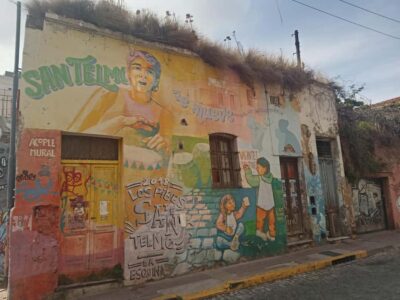
Stop 4: Plaza Dorrego
This is the sort of place where hopping off makes sense, because plazas are natural hangout zones. It’s also a key stop for old-town energy.
Stop 5: Usina del Arte
A cultural stop you can pair with an exhibition plan. Even if you don’t enter, it helps you learn the city’s modern arts footprint.
Stop 6: La Bombonera
One of the most photogenic football icons in the city. If you’re into the stadium atmosphere, this is the moment to get off and look around. On match days, note that tours won’t run.
Stop 7: Caminito
Color, street scenes, and a neighborhood that draws people for a reason. If you only hop off once, this is often the best candidate because it’s visually distinct.
Stop 8: Costanera Sur
A riverside area feel, especially if you’re used to Buenos Aires being more “streets-first.” This stop is useful for a slower vibe and a change of scenery.
Stop 9: Puerto Madero
Modern docks and polished city views. It’s a good stop for understanding how Buenos Aires presents itself as new-world modern and old-world historic at the same time.
Stop 10: Bus Turístico Circuito Rojo y Amarillo – Estación Fluvial
A practical transfer-style stop for connections. If you’re also using other tours, this helps you keep your plans coherent.
Stop 11: Galerías Pacífico
A central stop with a shopping-arcade feel. It’s a smart option when you need a break from outdoor walking, especially if the day turns warm.
Stop 12: Plaza General San Martín
A key reference point for the city center. If you start here, you’ll be anchored near a classic planning hub.
Stop 13: Floralis Genérica
A standout landmark for photos and a quick “wow, that’s different” moment. Even short stops here work because it’s visually clear.
Stop 14: Museum of Latin American Art of Buenos Aires
This is your museum-area marker. If you plan to enter, check opening hours in advance since admission isn’t included in the bus ticket.
Stop 15: Planetario Galileo Galilei
A good stop for families or anyone who wants a different angle on the city beyond architecture and plazas.
Stop 16: Club de Pescadores
A local-flavor type of stop near the waterfront zone. It can be a nice quick hop-off to see a more everyday Buenos Aires setting.
Stop 17: Jorge Newbery Airfield
This helps you understand the city’s geography and transport links. If your travel includes flights from the area, it can help you visualize distances.
Stop 18: Parque de la Memoria de Buenos Aires
A meaningful park stop if you want a reflective break. Even if you don’t go deep into the grounds, it’s helpful for context.
Stop 19: Monumental area (Access to the River Museum)
This is explicitly where you can access the River Museum. If you’re a football fan, this is a key stop, but remember: match days affect whether tours run.
Stop 20: Estadio Monumental Antonio Vespucio Liberti
A stadium-focused stop, again tied to River Plate. It’s a strong photo moment, especially if you’re planning your match-day logistics around the tour schedule.
Stop 21: Chinatown, Buenos Aires
This is one of the best “get off, eat, and wander” stops. It’s also a nice switch from the historic-and-grand sights.
Stop 22: Argentine Polo Association
A niche but interesting stop if you want to see how different lifestyles and sports culture show up in the cityscape.
Stop 23: Carta Magna Monument
A landmark you’ll recognize because it’s unmistakably a commemorative piece. Good for a short hop-off stretch and a quick photo stop.
Stop 24: Recoleta
Recoleta is a classic Buenos Aires neighborhood, and this is where you’ll feel the city’s more formal, old-world vibe. Hop off if you want neighborhood time and building-level photos.
Stop 25: Teatro Colón
A major icon stop. Even if you don’t book an interior visit, the exterior area is enough to make the stop worth it.
Smart Ways to Hop Off Without Losing Half Your Day
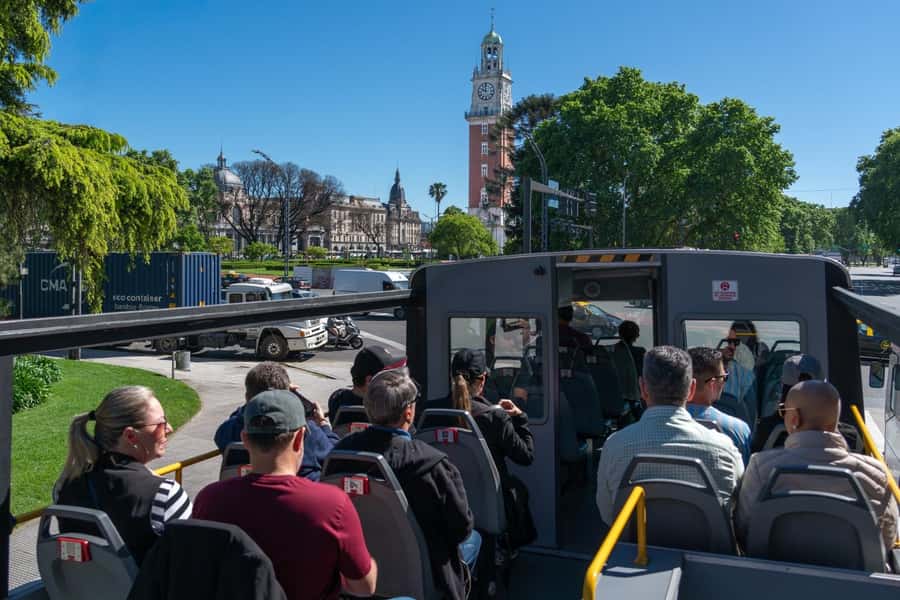
The bus is at its best when you treat it like a planning tool, not a sit-and-forget ride. Here’s how to use it efficiently:
- If you want a full first-day overview, ride the loop once and pick 2 to 3 stops for hop-off time.
- If you have 48 hours, do one loop day 1, then use day 2 for targeted deeper exploration in the neighborhoods that clicked for you.
- For lunch, plan a hop-off near a stop that gives you options (shopping arcades or food streets). Then get back on when the next bus arrives instead of rushing.
One real-world detail: the loop can be long, and some passengers only hop off once for lunch because the whole circuit takes time. If you’re short on time, don’t try to do “everything.” Pick your top 2 or 3 areas and commit.
Route Reality Checks: Stadium Days and Tour Suspensions
Two stadium areas matter for schedule planning:
- Boca matches (La Bombonera / Caminito area context)
- River matches (Monumental / River Museum access context)
On days when River or Boca play at their stadiums, no tours will take place. That’s a big operational detail for football fans. If your trip overlaps a match day, you’ll want to adjust your sightseeing plan.
Also, if you’re museum-minded:
- You can access the River Museum from stop 19 (Monumental).
- You can access the Boca Museum from stop 5 (near the Bombonera area).
Should You Book This Buenos Aires Hop-On Hop-Off Bus?
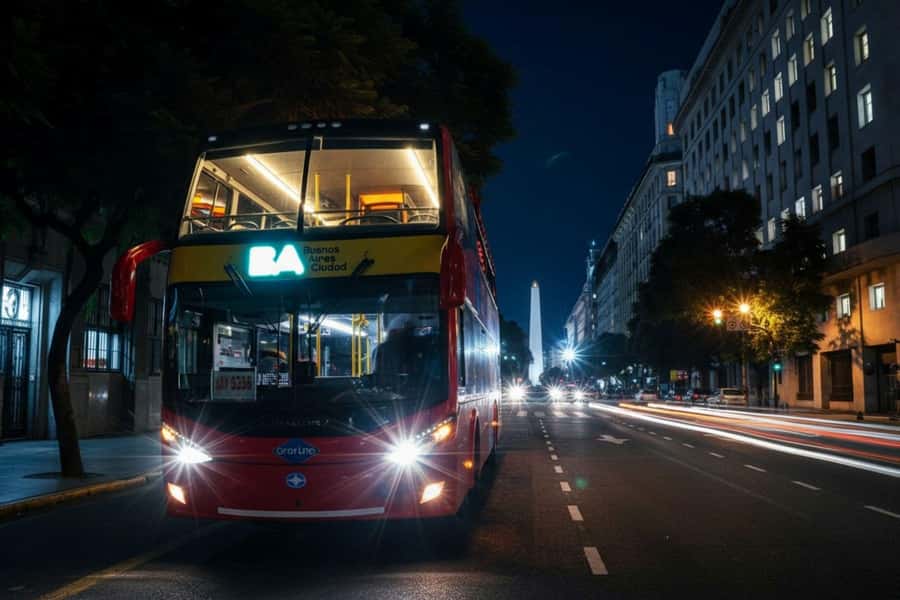
Book it if you:
- Want a low-effort way to learn the city’s layout across multiple neighborhoods
- Are trying to see big-name landmarks like Teatro Colón, Puerto Madero, La Boca, and Recoleta without complex transit planning
- Like the idea of riding top deck for city views and using hop-off stops to customize your day
Skip it (or rethink your schedule) if you:
- Only have a few hours and you won’t hop off much
- You expect the bus to cover everything inside museums and attractions (admission is not included)
- You rely on onboard WiFi for essential tasks, since it has been inconsistent for some people
For most first-time visitors, this bus is a practical way to get your bearings, then build a second day around what you liked most.
FAQ
How long is the hop-on hop-off ticket valid?
Your ticket is valid for 24, 48, or 72 hours, depending on the option you choose. The time starts when you first board the bus on your initial reserved day.
When does the bus operate each day?
The bus runs Monday to Sunday from 9:30 a.m. to 6:00 p.m. It begins circulating at 9:20 a.m. from the main start points, and the last buses leave at 5:30 p.m. with only a half return.
How often does the bus run?
During the day, buses run about every 25 minutes.
Where can I start the tour?
You can start at any bus stop. The two listed starting options are stop 0 at Av. Pres. Roque Sáenz Peña 728 and stop 12 at Plaza San Martín (Av. Santa Fe 808).
Is there an audio guide on the bus?
Yes. The audio guide is included and is available in multiple languages, including Spanish, English, and Portuguese (plus additional languages listed by the operator).
Is WiFi included?
Yes. WiFi is included onboard and also at bus stops, though it may not work reliably for everyone.
Are attraction tickets included?
No. Admission to attractions and food and beverages are not included.
What happens on Boca or River match days?
On days when River or Boca play at their stadiums, tours will not take place.