REVIEW · BUENOS AIRES
Buenos Aires: Private City Tour by Car with Hotel or Pickup
Book on GetYourGuide →Operated by BsAs Travelers · Bookable on GetYourGuide
Buenos Aires can feel big on your first day. This private car tour gives you a guided hit of the city’s big symbols and working neighborhoods without the stress of figuring out transport.
I especially like the way this route builds an instant sense of place, from Plaza de Mayo to government landmarks, and then shifts into neighborhood life with La Boca and San Telmo. You also get a mix of viewpoints and photo chances plus guided walking moments, so your photos match the stories.
One consideration: the day has extra paid items. Recoleta Cemetery entry isn’t included, and you’ll also need to handle lunch and water on your own.
In This Review
- Key takeaways before you go
- Why a private car tour works so well in Buenos Aires
- Getting picked up: hotel or cruise terminal, plus practical limits
- Plaza de Mayo and Casa Rosada: fast orientation with real context
- Puerto Madero and Puente de la Mujer for the modern Buenos Aires feel
- La Boca: tango roots, colorful streets, and built-in break time
- Recoleta: cemetery tickets and the elegant mansion vibe
- San Telmo: antiques, bohemian energy, and a market-style break
- Obelisco and Teatro Colón: iconic exteriors in the right amount of time
- Customizing your route: how to choose what you care about
- Price and value for up to two people
- Who this tour suits best (and who should skip it)
- Should you book this private Buenos Aires car tour?
- FAQ
- How long is the private city tour?
- Where can pickup happen?
- Can the itinerary be customized?
- What’s included in the price?
- What costs extra during the tour?
- What places will the tour stop at?
- Is the tour wheelchair accessible?
Key takeaways before you go
- Private pickup and drop-off by air-conditioned vehicle from your hotel (or the cruise terminal).
- Guided stops at Argentina’s power center around Plaza de Mayo, Casa Rosada, and more.
- A smart neighborhood mix: La Boca, San Telmo, and Recoleta in one relaxed sweep.
- Time for markets and shopping along the way, with breaks built in.
- Recoleta Cemetery visit needs tickets bought at the entrance.
- Icon photo stops at Obelisco and Teatro Colón without rushing through crowds.
Why a private car tour works so well in Buenos Aires
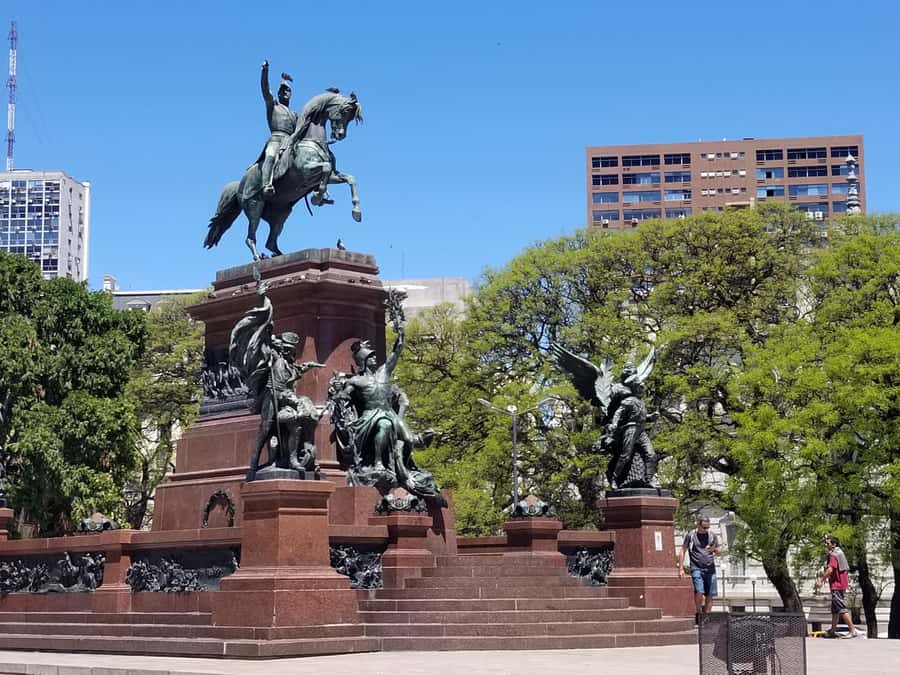
Buenos Aires is spread out. Even when a city feels walkable, neighborhoods are often far enough apart that buses or taxis can turn “a good day” into “a transit day.” With a private car, you get the freedom of your own pace and the convenience of not hunting for the next connection.
This tour is also set up for real orientation. You’re not just doing a checklist—you’re moving through the political center, the port-side tango area, the older market quarter, and the elegant cemetery-and-mansion zone. That flow helps you understand how Buenos Aires reinvented itself over time, from power and immigration to arts and identity.
The “private” part matters too. For a group of up to two, you’re paying for guidance and comfort, not for filling seats. It’s a strong choice if you have limited time and want the city’s main themes covered with fewer compromises.
You can also read our reviews of more city tours in Buenos Aires

Getting picked up: hotel or cruise terminal, plus practical limits
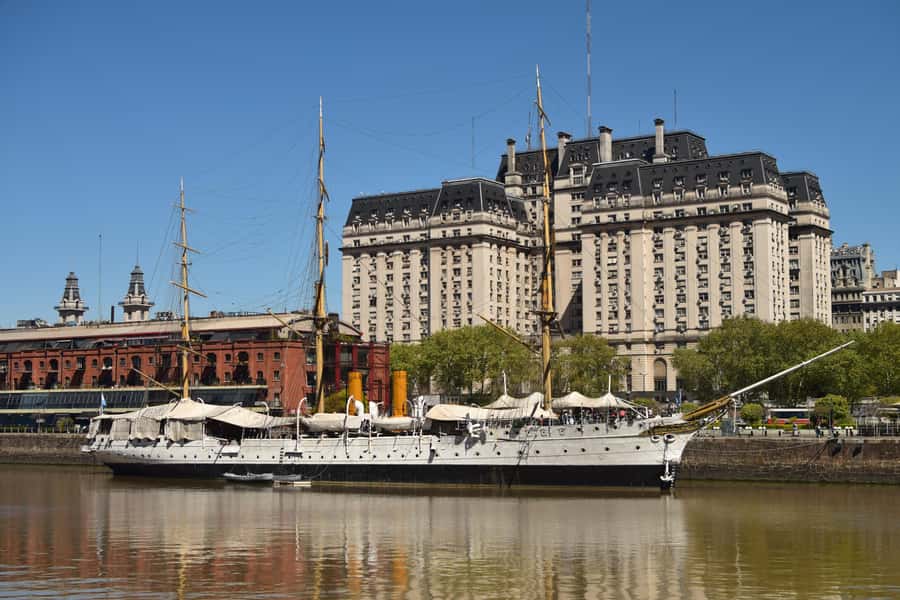
Pickup is simple: you’re picked up from your hotel in Buenos Aires Downtown, or from the cruise terminal (Terminal de Cruceros Quinquela Martín). Drop-off can be at your hotel in Buenos Aires, or back at the same cruise terminal—handy if you’re trying to avoid stress near departure time.
If you’re flying in and want airport transfer, that’s available on request with extra charges. The materials also note extra charges for hotels near EZE Airport, with the setup described as one airport transfer each way.
Two practical details to plan around:
- Luggage limit: 1 suitcase and 1 carry-on per person (maximum).
- Comfort rules in the vehicle: no smoking, and food/drinks aren’t allowed in the car.
Also, this tour isn’t wheelchair-friendly (and mobility scooters aren’t allowed). If you’re traveling with anyone who needs step-free access, this is the kind of detail you’ll want to confirm before booking.
Plaza de Mayo and Casa Rosada: fast orientation with real context
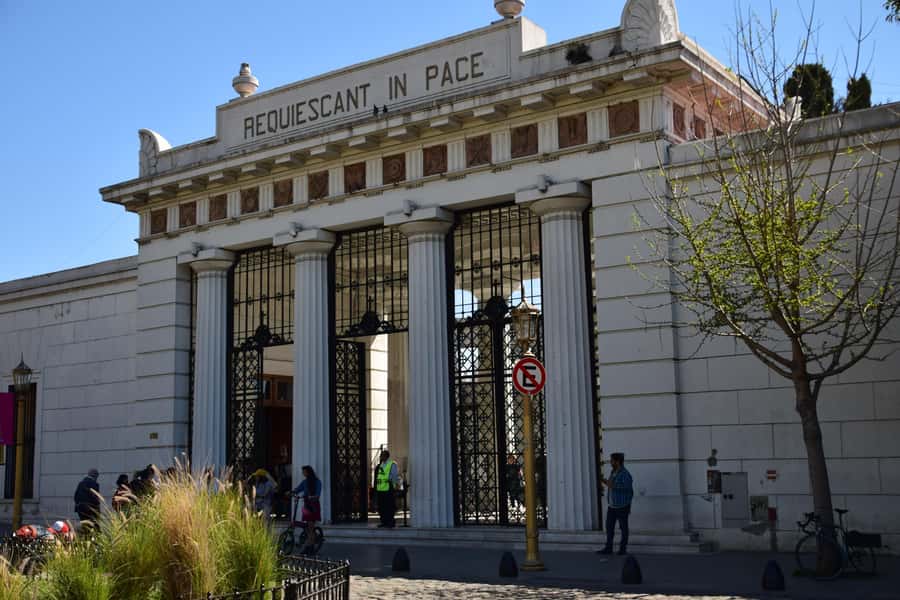
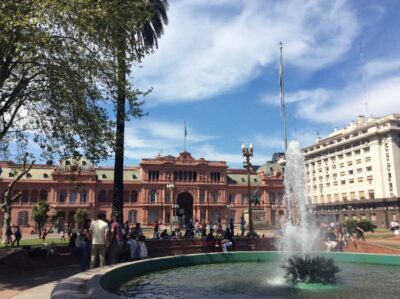
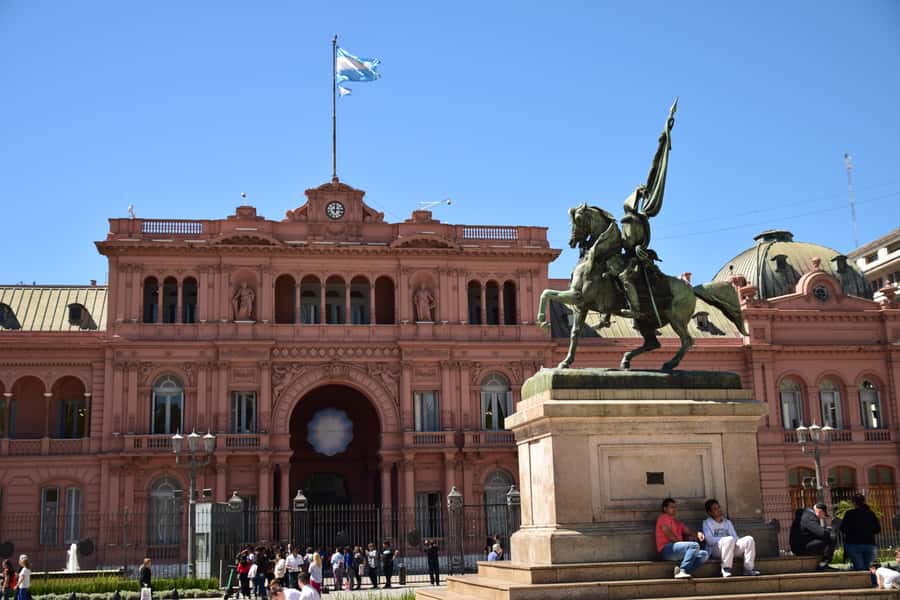
The day’s backbone is the stop at Plaza de Mayo, Argentina’s political heart. You’ll start with a photo stop and then a guided tour around the square, with a focus on history, economy, politics, and culture—not just architecture.
Here’s what you can expect to see:
- Catedral Primada, the church where Pope Francis used to celebrate mass.
- Mausoleum of General San Martín, honoring Argentina’s liberator.
- Stops around key Plaza de Mayo monuments, including the Pirámide de Mayo (May Pyramid).
- A look at how politics and public protest shaped modern Argentina, including the weekly gatherings tied to the Mothers of the Plaza de Mayo.
From there, you head to Casa Rosada, Argentina’s Government House. You’ll have photo time and guided context, including the famous balcony associated with Evita and the way the building became part of the national story.
This segment is valuable because it gives you the “why” behind the landmarks. Without that context, you’d get impressive views and photos—but you might miss what these places mean to locals and how the city talks to itself through politics.
Puerto Madero and Puente de la Mujer for the modern Buenos Aires feel
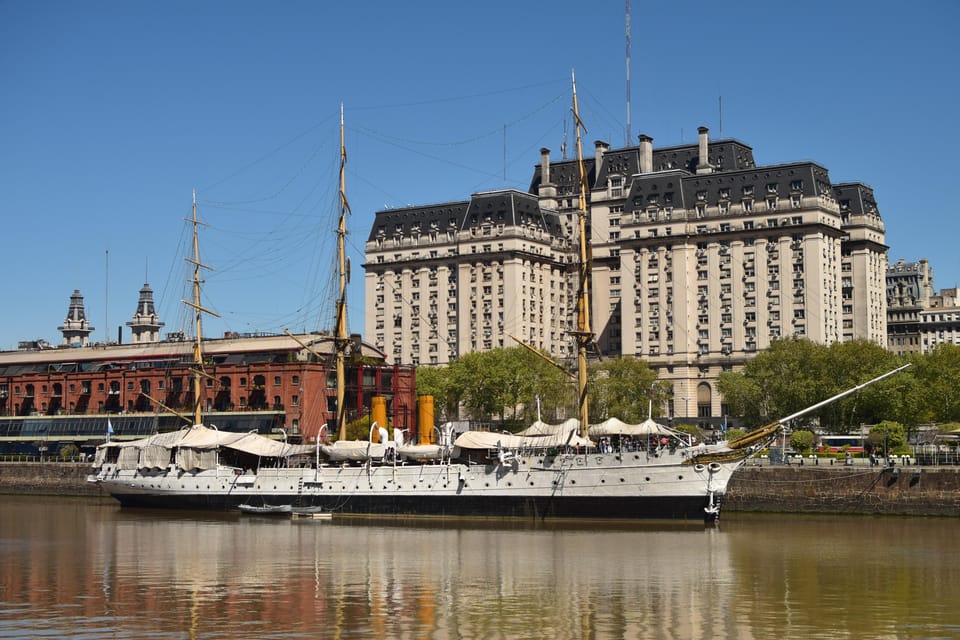
After the political center, the route pivots toward modern Buenos Aires with a stop in Puerto Madero. This area is newer than much of the city and is presented here as a waterfront zone dedicated to women. Even if you don’t spend a long time on the water, you get a noticeable contrast from Plaza de Mayo.
You’ll also pass the Puente de la Mujer (The Woman’s Bridge), designed by architect Santiago Calatrava. Since it’s listed as a photo stop, you’ll likely get a quick chance to frame the bridge and waterfront views from a good angle—enough to catch the design without eating up your day.
This isn’t just “nice buildings.” Pairing Puerto Madero with the older neighborhoods later on gives you a fuller picture of how Buenos Aires balances tradition and reinvention.
La Boca: tango roots, colorful streets, and built-in break time
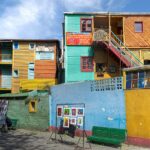
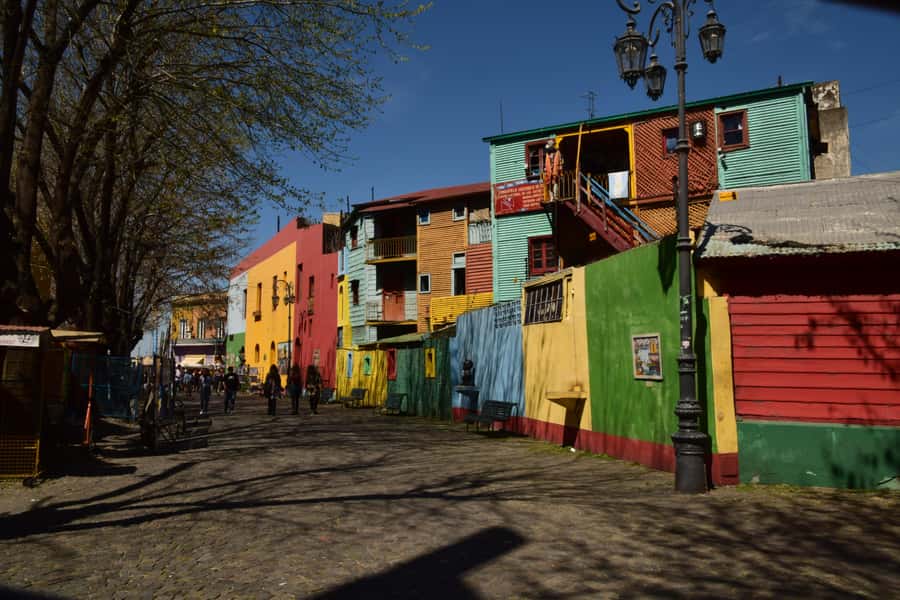
Then comes La Boca, the old port area where tango took hold and where immigrant stories shaped the neighborhood. You’ll have a break time and both photo and guided time as part of the visit.
What makes La Boca worth your attention is the mix of performance culture and immigrant heritage. The colorful houses aren’t random; they connect to how communities made a home in a working port district. And since tango is tied to this area’s story, even a brief look helps you understand why the neighborhood became a symbol of Buenos Aires identity.
A smart way to use your time here: slow down for a street-level look. The city’s “big attraction” reputation can sometimes push people to only chase photos. Instead, aim to notice the small signs of everyday life—shopfronts, storefront rhythm, and the street atmosphere that locals live with.
Also, plan for shopping and markets. The tour description mentions markets and boutiques along the way, and your breaks in La Boca and San Telmo are the natural windows to browse.
You can also read our reviews of more private tours in Buenos Aires



Recoleta: cemetery tickets and the elegant mansion vibe
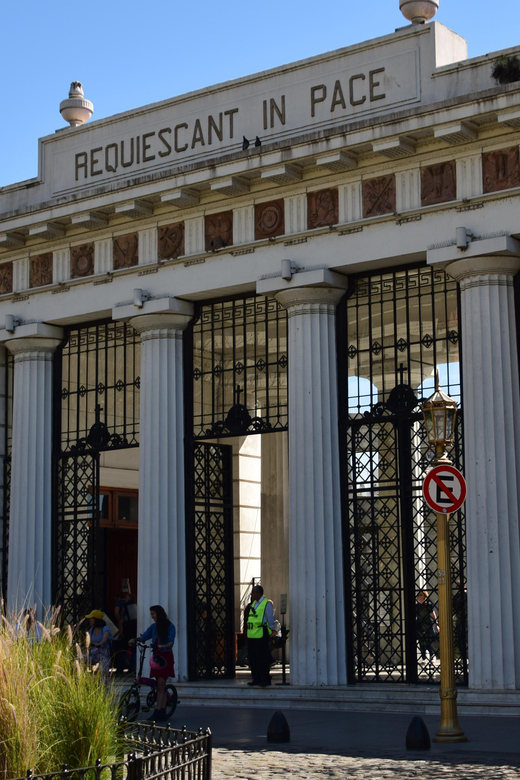
Next is Recoleta, which is known for elegant streets and those famous “French mansion” style homes. You’ll get photo time and guided time here as well.
The big name in this area is Cementerio de la Recoleta. This stop is described as a must-see and even an open-air kind of art museum vibe. You’ll also hear the key connection people come for: Evita Perón is buried here.
Important money detail: cemetery admission isn’t included. You buy your tickets at the entrance. The materials give a ticket price figure of about USD 6 per person, and another note lists USD 12 per person—so expect to pay at the gate and don’t plan your budget on a single exact number. Bring a credit or debit card, since payment is described as card-based.
If you’re short on time, your best move is to treat Recoleta as a “focus” stop. Decide in advance what you want most: the cemetery’s family-lot symbolism and art-like layout, or the mansion-lined street vibe outside. You can do both, but moving with intention makes it feel easier.
Recoleta also ties into nearby areas described as part of the day’s pass-by options, like Palermo Chico (embassies and an upscale feel) and, if there’s time, gardens such as the Rosedal de Palermo. Those extras depend on the schedule that day.
San Telmo: antiques, bohemian energy, and a market-style break
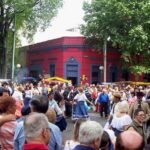
After Recoleta, you’ll head to San Telmo, described as the oldest neighborhood, full of antique shops and a bohemian atmosphere. Your time includes photo time, a guided segment, and a break.
San Telmo is the neighborhood for browsing. Even if you don’t buy anything, the streets tend to reward curiosity: old-store fronts, small bars, and the sense of a place that still feels like a living market quarter.
There’s a Sunday-specific detail worth knowing: on Sundays, San Telmo has a famous flea market. If your visit lines up with Sunday, this stop can feel extra lively.
The balance here is good. You’re not trying to do museum time and party time at once. You’re doing wandering, shopping, and a guided walk that helps you place what you’re seeing.
Obelisco and Teatro Colón: iconic exteriors in the right amount of time
Toward the end, you get city symbols that help you remember Buenos Aires even after you’ve left:
- The Obelisco, built in 1936, photographed as an icon of the city.
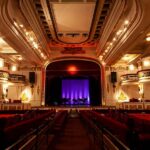
- Teatro Colón, one of the most famous opera houses in the world, also framed as a photo stop.
These aren’t described as long museum-style visits. That’s a strength of this tour format. The day stays weighted toward guided understanding of neighborhoods and key political and cultural nodes, while keeping these legends as quick hits.
If you want your photos to make sense later, these two stops do that. They give you anchor points—big, recognizable shapes—that help you build a mental map of the city.
Customizing your route: how to choose what you care about
This is a flexible private tour, and that’s useful in Buenos Aires because different visitors want different things. You might be more interested in politics and architecture, or you might prefer tango roots, antiques, and shopping.
Here’s how I’d decide what to emphasize:
- If it’s your first time: prioritize Plaza de Mayo and Casa Rosada, then keep the neighborhood sequence intact for context.
- If you love street-level Buenos Aires: lean into La Boca and San Telmo browsing time.
- If you want a quieter, symbolic stop: make the most of Recoleta Cemetery (and don’t forget to budget for tickets).
Also, remember lunch and snacks aren’t included. You’ll have breaks, but you should plan to buy water and food during stops or in the areas you pass through.
If you get the optional timing—like Palermo gardens or additional scenery—take it if it fits your mood. If you’re tired or want shopping time, it’s reasonable to treat “extra pass-by” options as optional rather than required.
Price and value for up to two people
The price is $440 per group up to 2, for about a half-day to full-day city sweep by private vehicle. At first glance, that might sound high compared to public transit. But in Buenos Aires, the trade-off is time and stress: you’re paying for a car, a professional guide, pickup and drop-off, and a structured route that covers multiple major neighborhoods.
For two people, private guiding can be good value when you’d otherwise pay for separate taxis plus pay-as-you-go entry and navigation. You also get help with what to look for and where to spend your limited time—especially around Plaza de Mayo and the Recoleta cemetery.
If you’re traveling as a couple or two friends with a tight schedule, this is one of those “pay once, relax” formats. If you’re traveling in a larger group, the per-person math changes, and a different style of tour might be cheaper.
Who this tour suits best (and who should skip it)
This tour fits best if you want:
- A guided introduction to Buenos Aires without hopping between multiple vehicles.
- A blend of landmarks and neighborhoods, including Plaza de Mayo, La Boca, San Telmo, and Recoleta.
- A paced day with breaks for browsing and photo stops.
It may not suit you if:
- You need wheelchair access or mobility equipment (it’s not suitable as described).
- You’re hoping for long, unsupervised wandering without guidance—this is a guided route with planned stops.
- You hate ticket surprises, since Recoleta Cemetery admission is extra.
Should you book this private Buenos Aires car tour?
If your goal is to get your bearings fast and still come away with meaningful stories—not just screenshots—this is a smart booking. The route covers the political center, the immigrant-and-tango neighborhood identity, the antiques-and-market atmosphere, and the elegant cemetery stop in a single day.
Book it if you’re:
- On a first trip.
- Short on time (around 6 hours).
- Traveling as two and want the convenience of pickup and drop-off.
Skip it (or ask more questions first) if accessibility is a concern or if you’d rather spend a full afternoon inside one neighborhood instead of doing multiple districts. And when you do book, plan your budget for Recoleta Cemetery tickets and your own lunch/water stops.
If you’re lucky enough to tour with a guide named Alexandra, the pace is described as relaxed and unhurried—exactly what you want when a city is new and you don’t want the day to feel like a sprint.
FAQ
How long is the private city tour?
It runs for about 6 hours, and you’ll check availability for the starting times.
Where can pickup happen?
You can be picked up from your hotel in Buenos Aires Downtown or from the cruise terminal (Terminal de Cruceros Quinquela Martín).
Can the itinerary be customized?
Yes. The tour is described as flexible and can be customized to match your preferences and interests.
What’s included in the price?
Pickup and drop-off, transport in a private air-conditioned vehicle, and a professional guide (English/Spanish spoken) are included.
What costs extra during the tour?
Recoleta Cemetery admission tickets are not included (you buy at the entrance). Bottled water and lunch/snacks are also not included.
What places will the tour stop at?
You’ll visit key landmarks like Plaza de Mayo and Casa Rosada, and you’ll have time around Puerto Madero, Puente de la Mujer, La Boca, Recoleta (including the cemetery stop), San Telmo, plus photo stops for Obelisco and Teatro Colón.
Is the tour wheelchair accessible?
No. Wheelchair users aren’t suitable for this tour, and mobility scooters aren’t allowed.