REVIEW · BUENOS AIRES
Buenos Aires Hop-On Hop-Off Bus, Free Walking Tours & Discounts
Book on Viator →Operated by Gray Line Argentina · Bookable on Viator
Buenos Aires is too big for guesswork. This hop-on hop-off loop is a fast way to get your bearings across many neighborhoods, with an onboard multilingual audio guide and stop-based exploring. I like that the buses cover a huge sweep of the city without you constantly re-planning transport. I also like the practical comfort: open-top views plus an air-conditioned front area for when the sun wins. The main drawback to plan for is stop-finding: some pick-up points can be hard to locate, and the audio/stop numbering can be off at times.
You can pick a 1-, 2-, or 3-day pass, and the full route is about 3 hours when traffic isn’t fighting you. You’ll save time by doing a full run first, then choosing where to hop off for longer walks.
Gray Line Argentina also folds in optional walking tours and a voucherbook of benefits. That’s a nice add-on, but the walking tours are voluntary-payment, weather-dependent, and you need to be at the right stop to join—no show means no fix later.
In This Review
- Key takeaways before you board
- How the Buenos Aires hop-on hop-off loop works in practice
- Worth the $39? Value for bus rides, audio, discounts, and walking tours
- Stop hunting in BA: how to avoid the long hot wait
- Stops 0–4: Diagonal Norte, Congreso, and the central-city starter move
- Stops 5–9: Usina del Arte, Bombonera, La Boca, and the Costanera Sur swap
- Stops 10–14: Puerto Madero, Estación Fluvial, Galerías Pacífico, El Ateneo, Plaza San Martín
- Stops 15–17: Floralis Genérica, MALBA, and the Planetario angle
- Stops 18–21: Club de Pescadores, Aeroparque, Parque de la Memoria, Monumental
- Stops 22–27: Barrio Chino, polo fields, Monumento a los Españoles, and Teatro Colón
- Walking tours and the voucherbook: the add-ons that can be worth it
- Smooth ride, but not perfect: what to expect day-to-day
- Should you book this Buenos Aires hop-on hop-off bus?
- FAQ
- How long is the Buenos Aires hop-on hop-off bus tour?
- What’s included with my ticket?
- Do I get hotel pickup and drop-off?
- Can I choose to ride for more than one day?
- Are the walking tours free?
- Is food or drinks included?
- Can I cancel for a full refund?
Key takeaways before you board
- A wide city sweep in one ride: plan your day using the loop, then hop off where you actually want to linger.
- Open-top views with real heat relief: you’re not stuck in a stuffy bus the whole time.
- Audio guide plus stop numbers: helpful, but not perfect—expect occasional mismatches.
- Stops may be tough to find: some are not clearly signed, so arrive with extra patience.
- Route timing depends on traffic: allow more time if you’re trying to finish the full circuit.
- Optional walking tours at select stops: great if weather cooperates and you’re on time at the meet point.
How the Buenos Aires hop-on hop-off loop works in practice
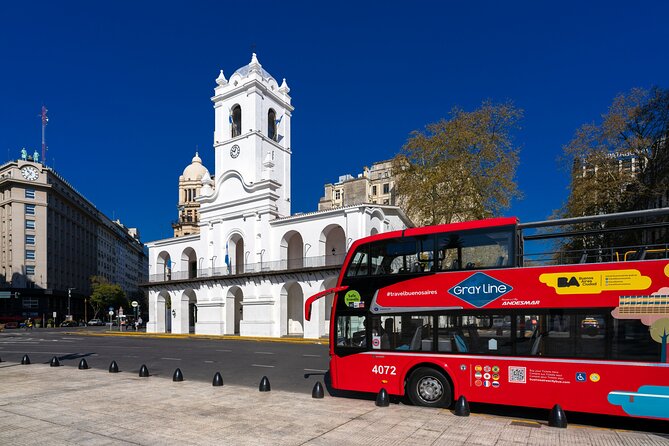
Think of this as your moving “orientation line.” You board, get the audio and stop numbering, then hop off when something catches your eye. If you’re trying to do a lot in a short stay, this format beats spending your limited hours figuring out the best routes between far-flung neighborhoods.
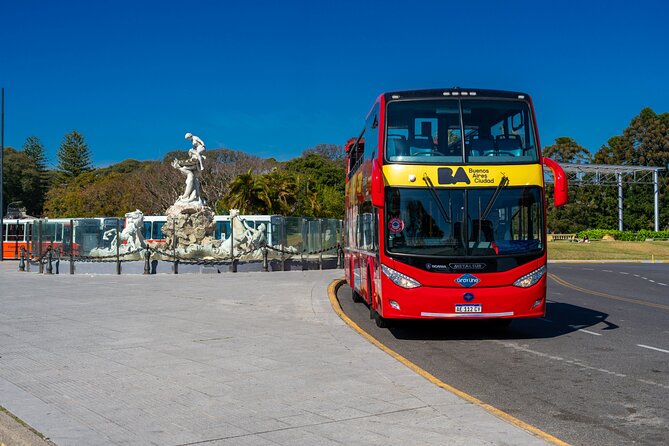
The buses are open-top double-deckers with air conditioning and a sunroof, so you can switch between sightseeing from above and staying comfortable at the front. The service is designed for an independent pace: you’re not tied to one guided block, and your ticket matches that.
There’s no hotel pickup or drop-off. You’re near public transportation, but you still have to get yourself to the bus stops. That matters because a lot of frustration with hop-on hop-off tours comes from the “where exactly is the stop” moment—more on that next.
You can also read our reviews of more tours and experiences in Buenos Aires.

Worth the $39? Value for bus rides, audio, discounts, and walking tours
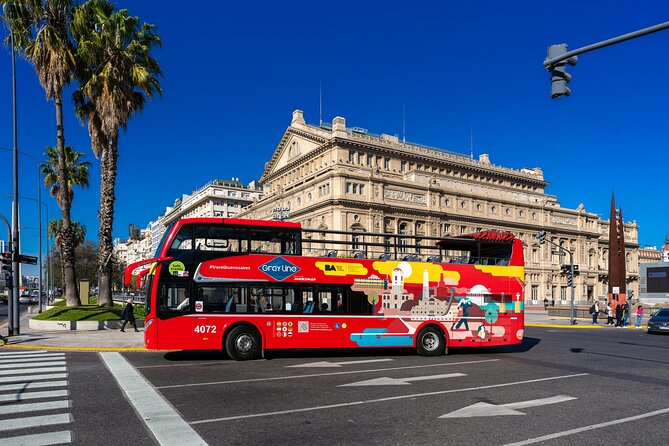
$39 per person is the kind of price that only makes sense when you’ll use the flexibility. Here’s what you’re actually buying: bus access for the duration you choose (1, 2, or 3 days), an onboard multilingual audio guide, plus access to exclusive fee walking tours and a voucherbook of selected discounts.
That package can be strong value if you:
- want to cover many neighborhoods without committing to long walks in the heat
- plan to do at least one full circuit, then spend the rest of your time hopping off
- like having backup ideas (walking tours and discounts) instead of only the bus loop
It can be weaker value if you only want one stop or you hate the idea of hunting for pick-up points. Also note: the buses provide transport and audio, but food and beverages aren’t included, so you’ll still budget meals separately.
If you’re the type who likes to “see first, decide later,” this ticket style usually pays off.
Stop hunting in BA: how to avoid the long hot wait
This tour’s biggest real-world challenge is not the ride. It’s the start of the ride: finding the correct stop quickly. Some locations in the route are easy to spot, while others aren’t clearly marked. That can turn a simple transfer into waiting in sun and traffic heat.
Here’s what helps:
- arrive a bit early and expect that the “right spot” might not be obvious
- watch the stop number system carefully once you’re on board
- use the bus map as a reference, but be ready for occasional stop-number confusion (there have been reports of the announced stop number being off by one)
- don’t count on perfect audio timing—audio can lag behind where you are, or it can feel less clear in some sections
- if the route updates along the day, ask on board what’s changing so you can re-plan your hop-offs
One more practical note: in Buenos Aires, there can be more than one hop-on hop-off operation. So when you see buses at stops, double-check you’re boarding the correct service for your ticket. That one step prevents a lot of wasted time.
Stops 0–4: Diagonal Norte, Congreso, and the central-city starter move
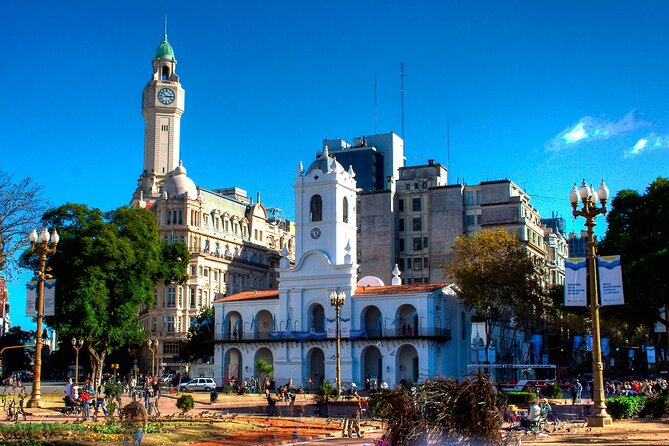
This early segment is your “set the map” phase. Even if you only ride through, you’ll build a mental picture of how Buenos Aires spreads out.
Stop 0 – Diagonal Norte
Diagonal Norte is a central starting anchor. Use it to get oriented without committing to a long walk right away.
Stop 1 – Av. Pres. Roque Sáenz Peña 728
This stop puts you into a major avenue zone. It’s handy for planning because you can quickly connect to other parts of the city on foot once you decide where you want to go next.
Stop 2 – Av. Rivadavia 1545 (Congreso)
The Congreso area is where many people get their “downtown” orientation. If you’re aiming to see government-area streets and then move toward older districts later, this is a useful pivot point.
Stop 3 – Av. Independencia 311 (Paseo de la Historieta)
This is a stop tied to a specific attraction by name. If you’re interested in it, hop off and keep that visit short and focused—then re-board so you don’t lose your place in the loop.
Stop 4 – Av. San Juan 350 (San Telmo / Plaza Dorrego)
San Telmo is a classic neighborhood target on a BA itinerary. Plaza Dorrego is a strong “walk-and-stroll” goal. The trade-off is that popular areas can feel slow when you’re trying to cross streets or find your way back to the stop, so give yourself extra minutes.
Practical tip: if you only have time for one longer “on-foot” block, this is one of the best sections to choose. You’re already close to a district people typically want to explore after the bus orientation.
Stops 5–9: Usina del Arte, Bombonera, La Boca, and the Costanera Sur swap
This is the most dramatic mood shift in the route. You go from central avenues toward iconic Buenos Aires images and waterfront energy.
Stop 5 – Agustín R. Caffarena 51 (Usina del Arte)
Usina del Arte is an art-focused stop. If you want a break from street walking and want to do something in a more structured setting, hop here.
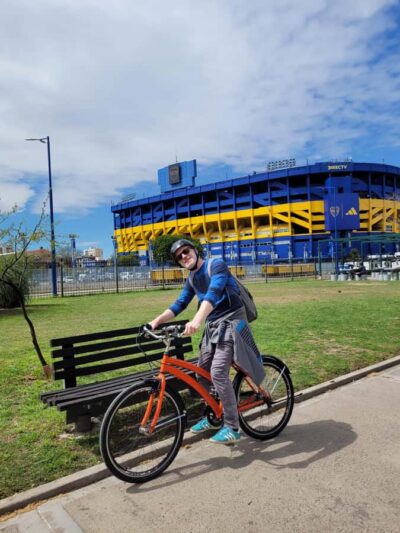
Stop 6 – Brandsen 805 (Bombonera)
Bombonera is a huge BA draw. If you’re into the idea of seeing the stadium area, this is your meet point. If you’re not, you can still use the stop as a timing checkpoint: get off for a quick look, or stay on and keep the momentum.
Stop 7 – Av. Don Pedro de Mendoza 2163 (La Boca – Caminito)
La Boca and Caminito are what many people imagine when they think of Buenos Aires photos. This is usually where the bus ride feels most “touristy in a good way”—you’ll want to hop off, wander, and take your time before heading to the water.
Stop 8 – Av. Dr. Tristán Achával Rodríguez 337 (Costanera Sur, Monday to Friday)
Stop 9 – Julieta Lanteri 1700 (Costanera Sur, Saturday and Sunday)
This is important: the Costanera Sur stop changes depending on the day. If you’re planning a weekend visit, make sure you’re using the right stop for your day. Otherwise you’ll end up hunting for the wrong meet point, which defeats the whole hop-on logic.
The Costanera Sur side is a good “recharge stop.” Once you’re close to the waterfront, you can stretch your legs and reset after the denser street areas.


Stops 10–14: Puerto Madero, Estación Fluvial, Galerías Pacífico, El Ateneo, Plaza San Martín
Now you move into BA’s more polished and photo-friendly zones. This segment is excellent for first-timers because it’s a mix: waterfront views, landmark buildings, and strolling-friendly blocks.
Stop 10 – Av. Alicia Moreau de Justo 930 (Puerto Madero)
Puerto Madero is an easy place to walk, and it’s a good section to explore without committing to a long maze of backstreets.
Stop 11 – Cecilia Grierson 320 (Estación Fluvial)
This is a specific-name stop that works well for a short visit—especially if you want to combine it with time in Puerto Madero. If you like waterfront breaks, build your hop-off plan around this.
Stop 12 – Av. Córdoba 787 (Galerías Pacífico)
Galerías Pacífico is an indoor-outdoor style stop. It’s useful if you want to get out of sun or rain for a bit, even if your main goal is just to see it and continue.
Stop 13 – Av. Callao 927 (El Ateneo)
El Ateneo is one of those Buenos Aires spots people travel specifically to see by name. Treat it like a “must check” stop if it’s on your personal list. If it isn’t, you can still benefit from the area as a central reboarding point.
Stop 14 – Av. Sta. Fe 808 (Plaza San Martín)
This is a stroll-and-sit kind of stop. If you’ve been hopping all morning, Plaza San Martín gives you a moment to slow down and plan your next move.
On this stretch, you can also be strategic about heat. Use the bus ride as transport, then hop off for short, timed blocks.
Stops 15–17: Floralis Genérica, MALBA, and the Planetario angle
This section tilts toward “art + landmark shapes” and feels like a different BA chapter than the football and waterfront stops.
Stop 15 – Av. Pres. Figueroa Alcorta 2800 (Floralis Genérica)
Floralis Genérica is a recognizable, photo-forward stop. If you like landmark silhouettes, this is a good place to stop briefly and get your shots, then re-board without turning it into a half-day detour.
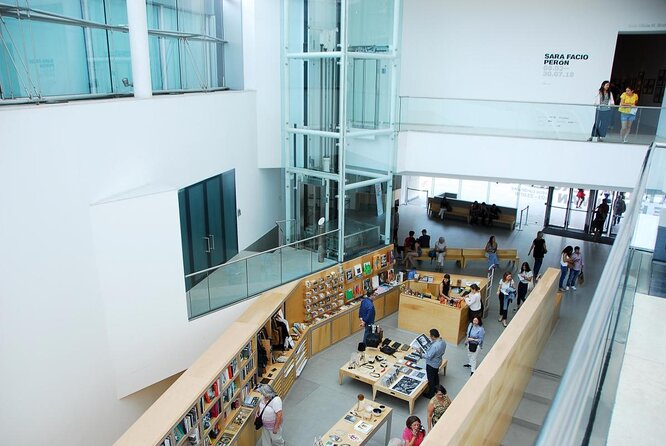
Stop 16 – Av. Pres. Figueroa Alcorta 3465 (MALBA)
MALBA is another name-based destination. If museum time is your thing, this is where the bus becomes more than transport—it becomes your schedule tool.
Stop 17 – Av. Sarmiento 3866 (Planetario)
The Planetario stop fits well if you want a structured activity. It also works as a “useful appointment” stop because you can plan your timing around it while still keeping the bus as your flexible backup.
This trio is a nice set for travelers who want more than street scenes.
Stops 18–21: Club de Pescadores, Aeroparque, Parque de la Memoria, Monumental
Here the route stretches along the river side and pushes back toward major landmarks.
Stop 18 – Av. Costanera Rafael Obligado 2610 (Club de Pescadores)
This stop is aimed at the waterfront vibe. If you want sea-breeze style walks, hop on this side and enjoy it before the rest of your day fills up.
Stop 19 – Av. Costanera Rafael Obligado 1055 (Aeroparque)
Aeroparque is a useful stop for anyone who needs that area as an anchor. Even if you’re not going to the airport itself, this stop can help you understand where the waterfront transitions back into city routes.
Stop 20 – Av. Costanera Rafael Obligado 6745 (Parque de la Memoria)
A park stop like this is a strong “take a breath” choice. It also gives you a break from the stop-and-go hopping cycle and helps you avoid burn-out.
Stop 21 – Av. Pres. Figueroa Alcorta 7576 (Monumental)
Monumental is a name-based stop tied to a major landmark zone. It can be a strong “final big sight” choice before you move into Palermo-style exploration.
A timing note: traffic can make the full circuit feel longer than expected. If you’re aiming to finish the whole loop, don’t schedule another tight activity after your last hop-off.
Stops 22–27: Barrio Chino, polo fields, Monumento a los Españoles, and Teatro Colón
This finale takes you into BA’s grand avenues and cultural-showstopper territory.
Stop 22 – Avenida Virrey Vértiz & Echeverría (Barrio Chino)
Barrio Chino is a fun food-and-walk neighborhood by reputation. Even if you’re not planning a specific meal, hopping here gives you a change of pace and a calmer dinner-plan option.
Stop 23 – Av. del Libertador 4000 (Campo Argentino de Polo)
This stop is for polo-field territory. If you’re curious about BA’s sports-and-grounds side, this is your access point.
Stop 24 – Av. del Libertador 3250 (Monumento a los Españoles)
Monumento a los Españoles is another landmark-name stop. It works well for a quick photo pause and then moving on while you still have energy.
Stop 25 – Av. del Libertador 1920 (Museo Nacional de Arte Decorativo)
A museum stop is a good fit if you want your day to include something indoors. It’s also a stop where you can drop your luggage-free “tour fatigue” and reset.
Stop 26 – Av. del Libertador 1480 (Recoleta)
Recoleta as a neighborhood name is a major BA bucket-list area. Treat this as your “wandering neighborhood” hop-off—ideal for strolling and browsing as you decide what you want next.
Stop 27 – Cerrito 892 (Teatro Colón)
Teatro Colón is a perfect final stop. If you want one headline cultural landmark to end your route, this is the place to do it. Even if you just walk around the outside, it’s a strong finish.
For many people, this last stretch is the best time to hop off, because you’re already emotionally invested in the city by then.
Walking tours and the voucherbook: the add-ons that can be worth it
The walking tours are optional and operate on a voluntary-payment system for the guide. That means you don’t just get handed a script and forgotten—you can choose to tip based on what you felt you got. They run based on weather and operating conditions, and if you don’t take the tour, there’s no refund.
In practice, I suggest you treat the walking tours as a bonus plan, not the only plan. Use your bus day to get to the area first, then decide whether you want the guided walk on the spot.
You’ll also get a voucherbook of exclusive benefits with discounts at selected Buenos Aires locations. If you like getting a little extra value from your time, scan it when you’re planning where to eat or what to visit next.
A real practical note: walking tours are not always available in every language. If you’re counting on English, expect you might need to rely more on the bus audio and stop notes for your main info.
Smooth ride, but not perfect: what to expect day-to-day
This kind of city bus is a trade: you gain speed and coverage, and you accept some imperfections. Based on the patterns people run into, here’s what you should watch.
- Audio can be off: it may not match exactly when you reach a stop, and some sections may be harder to hear.
- Stop numbers can be inconsistent: there have been reports of mismatches between the map and what’s announced.
- Route changes can happen: if a stop moves, you need to ask on board so you can re-plan rather than waste time.
- Air conditioning limits exist: the buses are air-cooled, but you shouldn’t expect to control every setting.
- Wait time varies: in some cases buses are frequent; in others, you might wait longer. If you’re on a tight schedule, build in buffer time.
The good news: when everything lines up, the ride gives you a comfortable big-picture view fast, and the bus helps a lot when Buenos Aires feels too wide to manage on foot.
Should you book this Buenos Aires hop-on hop-off bus?
I’d book this if your priority is coverage and flexibility. It’s especially useful if you want to spend limited time doing big-scope sightseeing, then turn that into deeper walks at a few standout neighborhoods like San Telmo/Plaza Dorrego, La Boca/Caminito, Puerto Madero, or Recoleta.
I’d skip it (or at least treat it as backup) if you know you’ll struggle with finding stops, you’re expecting perfectly synced narration, or you hate rerouting when something changes. In those cases, the bus can feel like work instead of help.
If you want a practical way to make it work: do one full loop for orientation, then use your second hop-off blocks for the places that genuinely interest you. That’s where the $39 value clicks into place.
FAQ
How long is the Buenos Aires hop-on hop-off bus tour?
The bus experience is listed as approximately 3 hours.
What’s included with my ticket?
Your ticket includes open-top double-decker buses with air conditioning and sunroof, a multilingual audio-guide, the bus ticket for the option you choose, access to exclusive fee walking tours, and a voucherbook of benefits with discounts at selected locations.
Do I get hotel pickup and drop-off?
No. Hotel pickup and drop-off are not included.
Can I choose to ride for more than one day?
Yes. You can choose from 1-, 2-, or 3-day pass options.
Are the walking tours free?
They are free and optional, but the guide operates on a voluntary payment system. You must arrive at the corresponding stop to take part, and tours are subject to weather and operating conditions.
Is food or drinks included?
No. Food and beverages are not included.
Can I cancel for a full refund?
Yes. You can cancel up to 24 hours in advance for a full refund. If you cancel less than 24 hours before the start time, the amount paid is not refunded.