REVIEW · BUENOS AIRES
Buenos Aires: 7 Hour Small Group “BA 101” Walk
Book on GetYourGuide →Operated by BuenosTours · Bookable on GetYourGuide
Seven hours can feel like a sprint in Buenos Aires.
This semi-private BA 101 walk strings together the city’s key neighborhoods with an English-speaking guide, plus coffee, local lunch, metro rides, and paid-entry stops so you spend less time planning and more time seeing. I especially like the way the route mixes landmark photo stops with neighborhood texture, and the guide-focused format that helps you understand what you’re looking at instead of just moving from one building to the next. One thing to consider: you’re on your feet for the full day, so comfortable shoes matter, and the tour isn’t a good fit for wheelchair users or people with a cold.
What makes it worth your time is that it’s built for a realistic day plan: big sights like Recoleta Cemetery and Plaza de Mayo plus the kind of details you miss solo, such as why certain buildings matter and how Buenos Aires got its character. On tours with guides such as Tracy and Chris, the emphasis is on practical answers to your questions and story-style history (the kind with humor and attitude), not a dry lecture. The possible drawback is simple: you don’t get transport to/from the start or finish, and you end the day in San Telmo, so you’ll want an easy plan for getting home after 5pm.
In This Review
- Key Points to Know Before You Go
- A One-Day Route From Recoleta to San Telmo
- Why the Small Group Matters in Buenos Aires
- Barrio Norte First: El Ateneo Grand Splendid and Plaza Rodriguez Peña
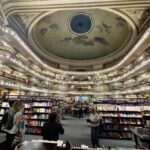
- El Ateneo Grand Splendid (the bookstore you’ll want to photograph)
- Plaza Rodriguez Peña and Palacio Sarmiento
- Palacio de Aguas Corrientes (a surprise building with a story)
- Recoleta Cemetery and Plaza Francia: Marble, Memory, and Evita
- Evita’s resting place
- Plaza Francia and Our Lady of Pilar Church
- Teatro Colón, Courts, and Avenida 9 de Julio: the City’s Grand Middle Act
- Teatro Colón
- Plaza Lavalle and the Supreme Court building
- Avenida 9 de Julio and the Obelisk
- Avenida Corrientes and Confiteria La Ideal
- Florida Street and Galería Güemes: Shopping Arcade Energy
- Plaza de Mayo and Casa Rosada: Government, Founding, and Symbol Power
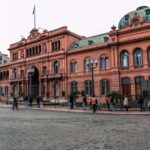
- Casa Rosada (the Pink House) and its balcony
- Buenos Aires Cathedral and Pope Francis
- Oldest subway line in the southern hemisphere
- San Telmo: Plaza Dorrego, the Indoor Market, and Defensa Street
- Plaza Dorrego
- San Telmo Indoor Market
- Defensa Street cobblestones and antique dealers
- Food and Coffee Included: What You’ll Really Notice
- Price and Value: How $160 Adds Up
- Who This Tour Suits (and Who Should Skip It)
- Should You Book This BA 101 Walk?
- FAQ
- How long is the BA 101 walking tour?
- What does the tour cost?
- Where do you meet, and where does the tour end?
- Is the tour guided, and what language is it in?
- Is it a small group?
- What is included in the price?
- What food and drink should I expect during the day?
- What should I bring?
- Is smoking allowed?
- What’s the cancellation policy?
Key Points to Know Before You Go
- Small group (max 7): more conversation time, easier pacing, fewer “where is everyone?” moments
- Entrance fees included: including Recoleta Cemetery (listed value $15+ per person)
- Local lunch + coffee: you don’t waste time hunting mid-tour
- Metro and public transport included: the route uses the city’s actual transit style
- Route from Recoleta/Barrio Norte to San Telmo: classic sights with a gradual shift from government to markets and antiques
- English live guide: you’ll get context for what you’re seeing, not just names on signs
A One-Day Route From Recoleta to San Telmo
This tour is structured like a day you could actually pull off on your own, but with the planning done for you. It starts at 10am in the Recoleta/Barrio Norte area (near Av. Santa Fe and Av. Callao) and ends at 5pm in San Telmo, where you’ll find plenty of places to keep eating, drinking, or shopping.
The value here is that you cover multiple Buenos Aires “moods” in one go. You move from elegant streets and formal architecture into the civic core around Plaza de Mayo, and then you finish in the slower, older-feeling streets of San Telmo with markets and antiques.
You can also read our reviews of more tours and experiences in Buenos Aires.
Why the Small Group Matters in Buenos Aires
Buenos Aires can be big, and neighborhoods can feel like different cities. In a small group of up to 7 participants, you’re more likely to hear the guide’s explanations clearly and ask follow-up questions without the whole group waiting.
The guide is live, in English, and the best part is the focus on understanding. On this style of tour, guides like Tracy and Chris are known for answering questions in a way that makes you feel like you’re in conversation, not taking notes. That’s especially helpful when you’re looking at landmarks with layers of political, social, and architectural meaning.
If your travel style is “tell me what I’m seeing and why it matters,” this is the right format. If you prefer total freedom and zero structure, you may find the planned pace a little limiting.
Barrio Norte First: El Ateneo Grand Splendid and Plaza Rodriguez Peña
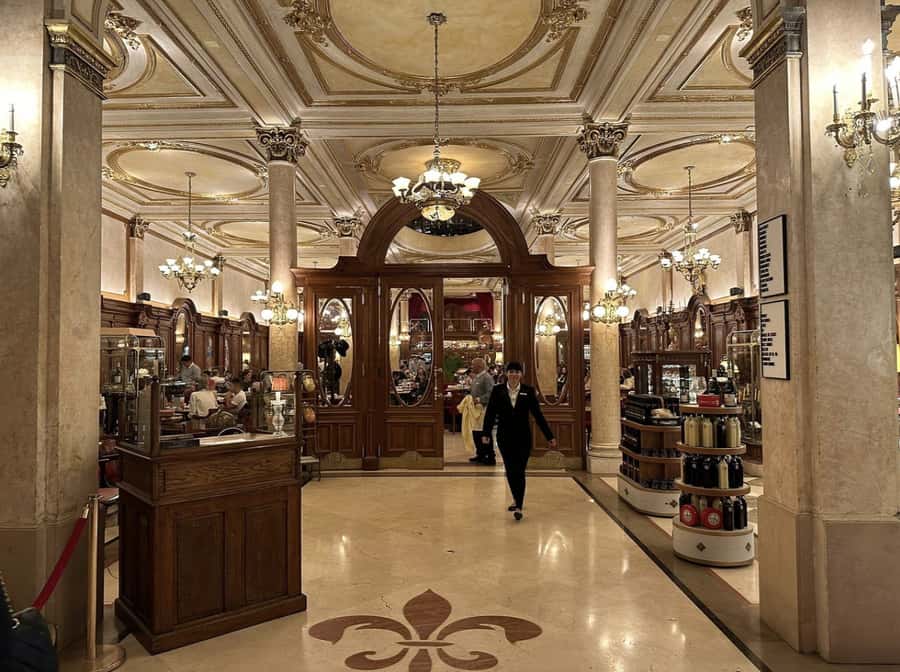
You begin in Barrio Norte, a great choice because it lets the day start with streets that feel polished and easy to orient yourself in.
El Ateneo Grand Splendid (the bookstore you’ll want to photograph)
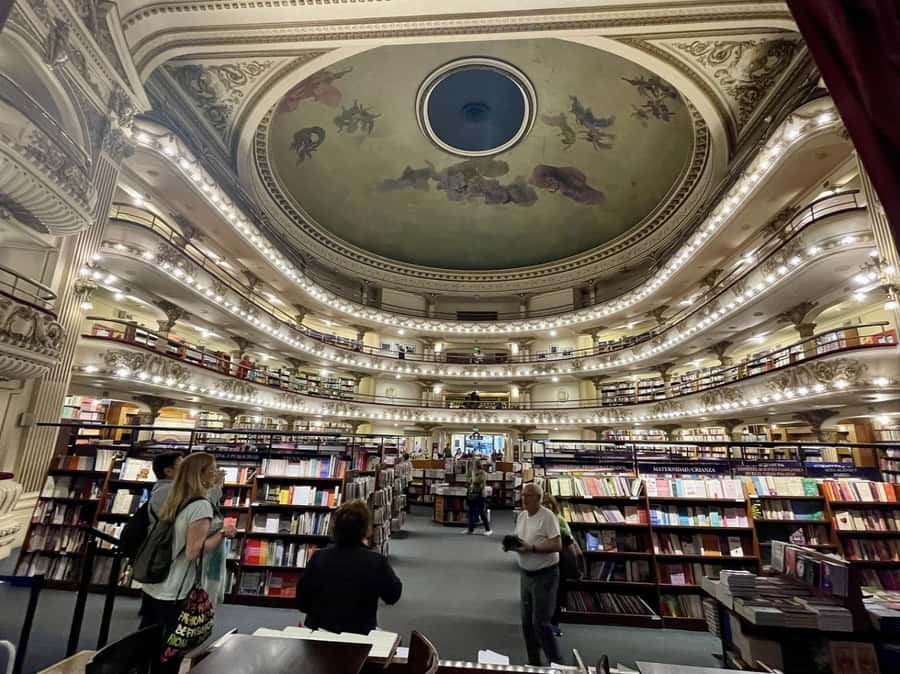
You’ll see El Ateneo Grand Splendid, one of the most beautiful bookstores in the world. What makes this stop more than a quick photo is the contrast: an iconic theater shell repurposed into a bookstore, so you get that “Buenos Aires creativity” feeling early on.
Plaza Rodriguez Peña and Palacio Sarmiento
Next comes Plaza Rodriguez Peña, a leafy green pocket in the city, followed by Palacio Sarmiento, tied to Argentina’s Ministry of Education. Even if you’re not an architecture person, this is a smart way to start reading the city: plazas and government buildings tell you how Buenos Aires organizes public life.
Palacio de Aguas Corrientes (a surprise building with a story)
Then you’ll visit Palacio de Aguas Corrientes, one of those buildings that can look like a set piece until you learn what it was created to do. The tour’s angle is clear: you’ll notice details you’d otherwise miss—decor, layout, and the “why” behind the grandeur.
Practical tip: this part of the day is where good walking shoes pay off, because you’ll want your legs ready for the transitions.
Recoleta Cemetery and Plaza Francia: Marble, Memory, and Evita
Recoleta is the neighborhood most people picture first, but the real star here is Recoleta Cemetery. It’s not just a cemetery with famous names—it’s described as a city within a city, packed with elaborate tombs that reflect status, art, and the way families shaped public memory.
Evita’s resting place
You’ll visit the final resting place of Eva Perón (Evita). This stop lands differently when you learn the broader context around how she became an icon, and how the cemetery functions as both a place of mourning and a monument to cultural power.
Plaza Francia and Our Lady of Pilar Church
After the cemetery, the tour shifts to Plaza Francia and Our Lady of Pilar Church, highlighted as one of the best-preserved examples of colonial architecture. That pairing works well: you go from 19th- and 20th-century prominence in the cemetery to a different historical layer outside it.
Where this tour scores: the guide style matters. A strong guide turns a “must-see” site into something you can interpret in real time—like noticing what you’re looking at, and why it’s arranged the way it is.
Teatro Colón, Courts, and Avenida 9 de Julio: the City’s Grand Middle Act
After Recoleta, the route moves toward San Nicolás, where the city starts feeling more central and governmental.
Teatro Colón
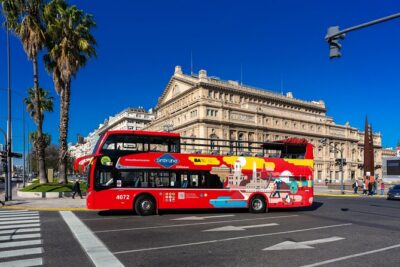
You’ll see Teatro Colón, one of the most famous opera houses in the world. The stop here is a classic Buenos Aires moment: big cultural heritage right in the middle of regular city life.
Plaza Lavalle and the Supreme Court building
Then you’ll stroll Plaza Lavalle, including Palacio de Justicia de la Nación, home to Argentina’s Supreme Court. It’s a useful contrast to everything you’ve already seen: Buenos Aires isn’t just art and romance. It’s law, policy, and public authority, expressed in monumental architecture.
Avenida 9 de Julio and the Obelisk
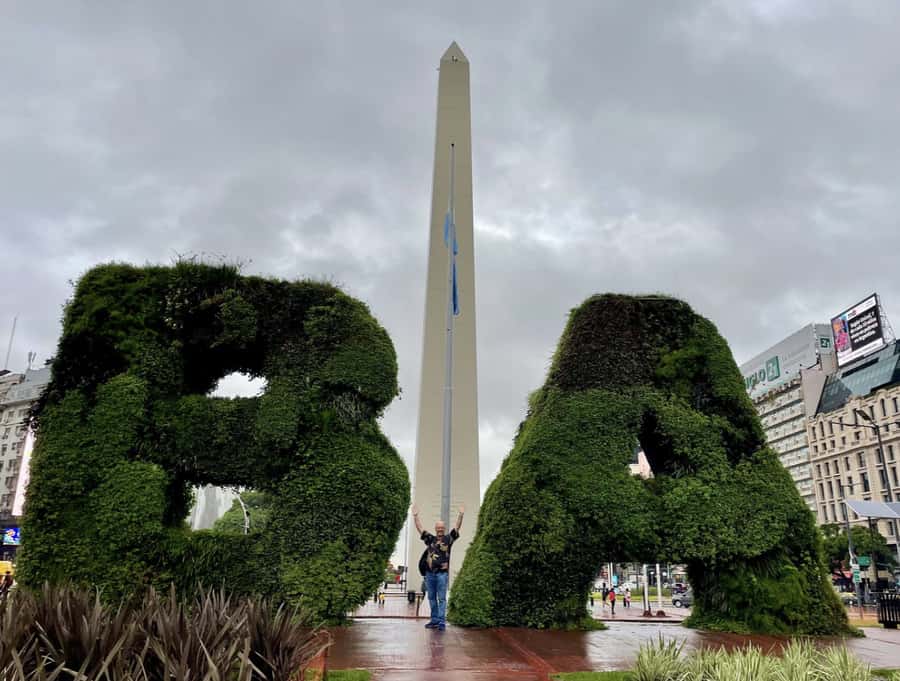
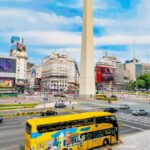
Next up: the widest avenue in the world, Avenida 9 de Julio, and the Buenos Aires Obelisco. Yes, you’ll take a photo with the iconic green BA sign, but the bigger value is learning to “read” the space. Wide avenues like this explain how Buenos Aires stages movement and visibility.
Avenida Corrientes and Confiteria La Ideal
Finally in this middle stretch, you’ll walk down Avenida Corrientes, known as the street that never sleeps. You’ll also see Confiteria La Ideal, described as a beautifully restored old cafe—exactly the kind of place you’d walk past without realizing how significant it is to the city’s food-and-fun story.
Florida Street and Galería Güemes: Shopping Arcade Energy
From the big-avenue drama, the tour steps into a more human scale. You’ll visit Florida Street, the main pedestrian shopping area, and then check out Galería Güemes.
This is one of those stops that helps you balance the day. You’ve already taken in cemeteries, churches, and opera-house grandeur. Now you get a sense of everyday Buenos Aires commerce—arcades, storefronts, and that “morning-to-night” rhythm the city has.
Plaza de Mayo and Casa Rosada: Government, Founding, and Symbol Power
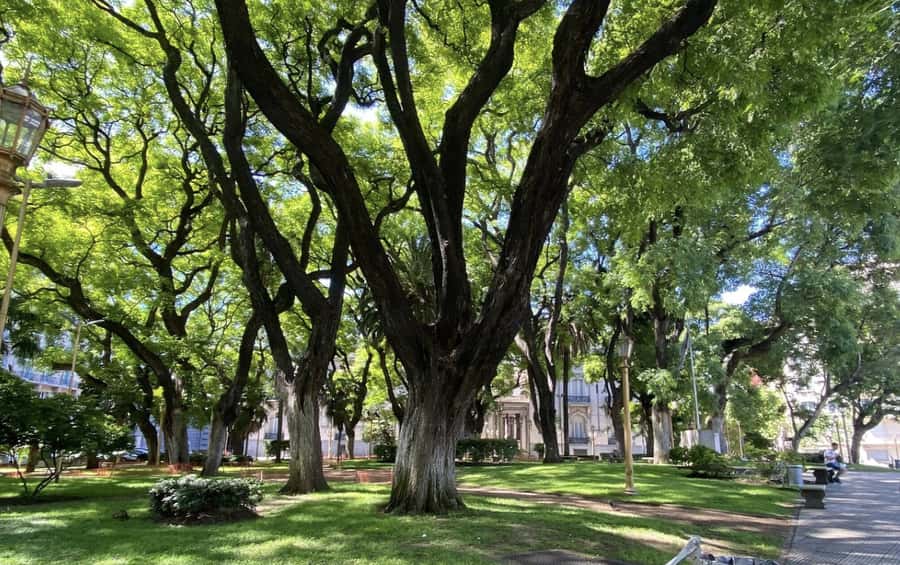
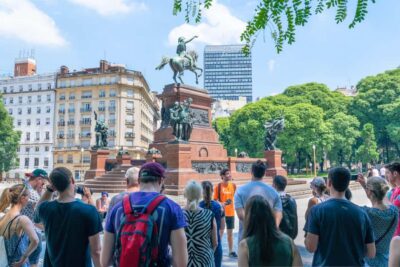
Then you hit Monserrat and the heart of the city: Plaza de Mayo. This is where history becomes visible. The tour points out that the city was founded in 1580, and it’s from this square that Buenos Aires began to grow.
Casa Rosada (the Pink House) and its balcony
You’ll see Casa Rosada, the executive government branch, and the famous balcony associated with President Perón and first lady Evita addressing crowds. The reason this stop works on a walking tour is that you’re standing in the place where political emotion was staged—so the building makes sense, not just the story.
Buenos Aires Cathedral and Pope Francis
Next is Buenos Aires Cathedral, described as the last resting place of Argentina’s independence hero. It’s also noted for being a place where Pope Francis used to give mass, which adds another layer: this isn’t only national history; it’s international religious attention too.
Oldest subway line in the southern hemisphere
The tour also highlights oldest sites in Buenos Aires, including the first church, street, and business in the city, plus the oldest subway line in the southern hemisphere. Even if you don’t stop for a long look at every detail, you leave with a clearer timeline of how the city evolved.
Good to know: this part of the day is ideal if you like context. If your main goal is photos only, you might wish you had more time at each building. But if you want to understand why these places are famous, the guide’s explanations are a big part of the payoff.
San Telmo: Plaza Dorrego, the Indoor Market, and Defensa Street
You finish where many visitors start wishing they had more time: San Telmo. The atmosphere shifts. The streets feel older, and the sights lean toward food, crafts, and antiques.
Plaza Dorrego
You’ll visit Plaza Dorrego, one of the city’s oldest and most popular squares. It’s described as dotted with bars, restaurants, and handicraft sellers—perfect for a gentle end-of-tour vibe where you can slow down and decide what you want to explore longer.
San Telmo Indoor Market
Next comes the San Telmo Indoor Market, an iron structure built in 1897. You’ll see antiques, souvenirs, and restaurants, plus local vendors of fresh food and produce. This is the kind of market stop that works even if you don’t buy anything, because you get a sense of how locals shop and socialize.
Defensa Street cobblestones and antique dealers
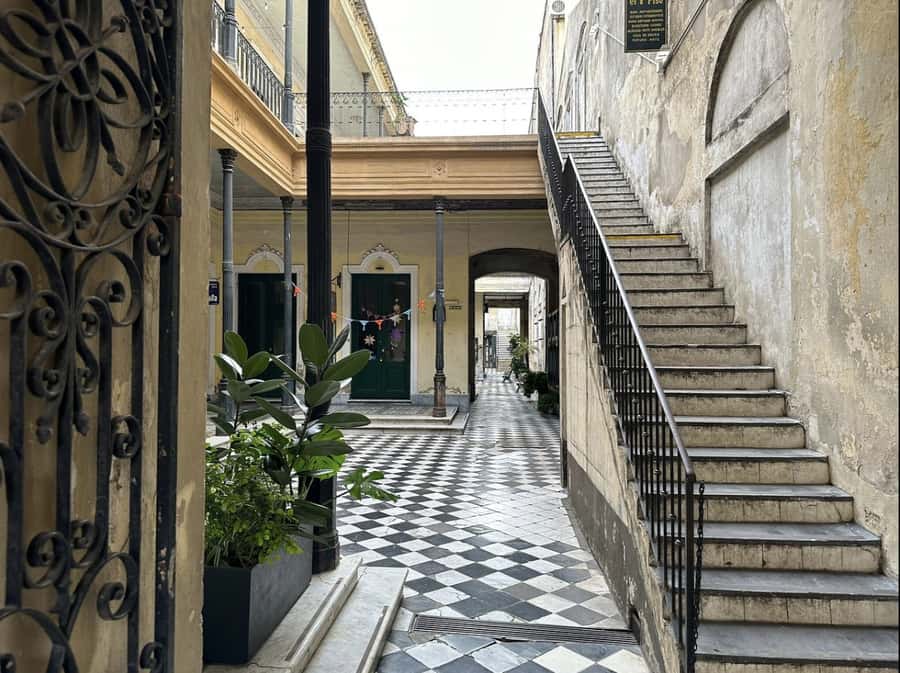
Finally, you’ll walk Defensa Street, known for its cobblestones, antique dealers, and original Spanish and Italian architecture. The architecture detail is what makes it more than a shopping street—this is a sense of place you can feel in your steps.
Food and Coffee Included: What You’ll Really Notice
The tour includes morning coffee (or an equivalent-priced drink), plus a local lunch with main and beverage. That sounds simple, but it changes the day. You don’t have to plan meals across multiple neighborhoods, and you avoid the common “we’ll eat later” trap that turns into a late, overpriced meal.
Water is included too, which helps on a long walking day in a city where you may not always get the chance to stop quickly.
Price and Value: How $160 Adds Up
At $160 per person for 7 hours, you’re paying for more than walking and photos. Here’s what’s effectively bundled into that price:
- Entrance fees included, including Recoleta Cemetery (noted as value $15+ per person)
- A guided experience in English, with an expert guide ready to answer questions
- Local lunch and coffee, so you’re not budgeting for every meal stop
- All public transport used during the tour (bus and subway)
- Water for hydration
If you were to replicate this on your own, you’d pay for entry tickets, transit, and a guide or audio plan—and you’d still spend time figuring out the flow of neighborhoods. The best value is for people who want a structured day without feeling locked into a bus tour.
Who This Tour Suits (and Who Should Skip It)
This BA 101 walk is best for adults (or older teens) who like guided context and want to see a lot without micromanaging.
It’s listed as not suitable for:
- Children under 10
- Wheelchair users
- People with a cold
- People over 95
It’s also a walking tour, so if you’re dealing with mobility limits, it’s worth thinking carefully before booking.
If you’re traveling solo and want help making sense of Buenos Aires, the small group format is a big advantage. And if you’re planning a shorter trip—say, one main day in the city—this route gives you a solid “where should I go back?” map.
Should You Book This BA 101 Walk?
Book it if you want a guided, efficient day that connects the famous sights with understandable context, from Recoleta’s marble stories to Plaza de Mayo’s political symbolism and San Telmo’s antiques-and-market energy.
Skip it (or choose something else) if you hate structured pacing, want zero transit (because you will use public transport), or need an accessibility-friendly route.
For most first-timers, I think this is a smart way to start. You’ll leave with better instincts about Buenos Aires—what’s important, what’s worth revisiting, and how the neighborhoods connect.
FAQ
How long is the BA 101 walking tour?
The tour duration is 7 hours.
What does the tour cost?
The price is $160 per person.
Where do you meet, and where does the tour end?
You start at 10am at an easy-to-find spot in the Recoleta/Barrio Norte area near the corner of Av. Santa Fe and Av. Callao. You end around 5pm in San Telmo near fun places to eat, drink, and shop.
Is the tour guided, and what language is it in?
Yes, it’s a live guided tour in English.
Is it a small group?
Yes. The group is limited to 7 participants.
What is included in the price?
Included are entrance fees to historical sites (including Recoleta Cemetery), a tasty local lunch (main + beverage), coffee (or an equivalent-priced drink), all public transport used during the tour, and a bottle of water.
What food and drink should I expect during the day?
You’ll have morning coffee (or a similar-priced drink) and a local lunch with a main and beverage. Any additional food or drink beyond that is not included.
What should I bring?
Wear comfortable shoes.
Is smoking allowed?
No, smoking is not allowed.
What’s the cancellation policy?
You can cancel up to 24 hours in advance for a full refund.