REVIEW · BUENOS AIRES
Bike Tour: Buenos Aires to the South
Book on GetYourGuide →Operated by La Bicicleta Naranja · Bookable on GetYourGuide
Buenos Aires by bike feels like you’re reading the city in real time. This 3-hour south-side ride is a smart way to cover major neighborhoods on your own timeline, with a guide who keeps the story clear and the pace realistic. I especially liked the bilingual guidance and the way you can bounce between old-world streets and Argentina’s biggest obsessions—football and tango—without getting stuck in traffic.
The biggest plus is the mix: cobblestones and immigrant-era streets in San Telmo, the culture around Caminito and Boca Juniors at La Bombonera, then a proper nature break at the Reserva Ecologica. A possible drawback: if you’re hoping for a long, slow wander in just one stop (San Telmo is a common wish), the tour is designed to move, so some areas can feel brief when streets get busy.
In This Review
- Key highlights worth your time
- Buenos Aires to the South by Bike: a compact route that still feels complete
- Price and logistics: what $48 really buys you
- Meeting points: Dr. José Modesto Giuffra 370 or Parque Lezama
- San Telmo: cobblestones, tango mood, and the city’s early layers
- La Boca and Caminito: the neighborhood’s culture in motion
- La Bombonera: why football feels bigger than a match
- Puerto Madero: modern architecture and a waterfront breather
- Reserva Ecologica: nature on the Río de la Plata
- Plaza de Mayo and Montserrat: where the city’s political heartbeat sits
- Timing and pacing: short rides, strong explanations
- What to wear and how to ride comfortably
- Who this tour suits best (and who should skip it)
- Should you book Buenos Aires to the South by bike?
- FAQ
- How long is the Buenos Aires to the South bike tour?
- What does the tour cost?
- What’s included in the price?
- Are food and drinks included?
- Where do we meet?
- What languages are offered?
- Are electric bikes available?
- What should I bring?
- Is the tour suitable for mobility impairments?
- Can I cancel for a full refund?
Key highlights worth your time
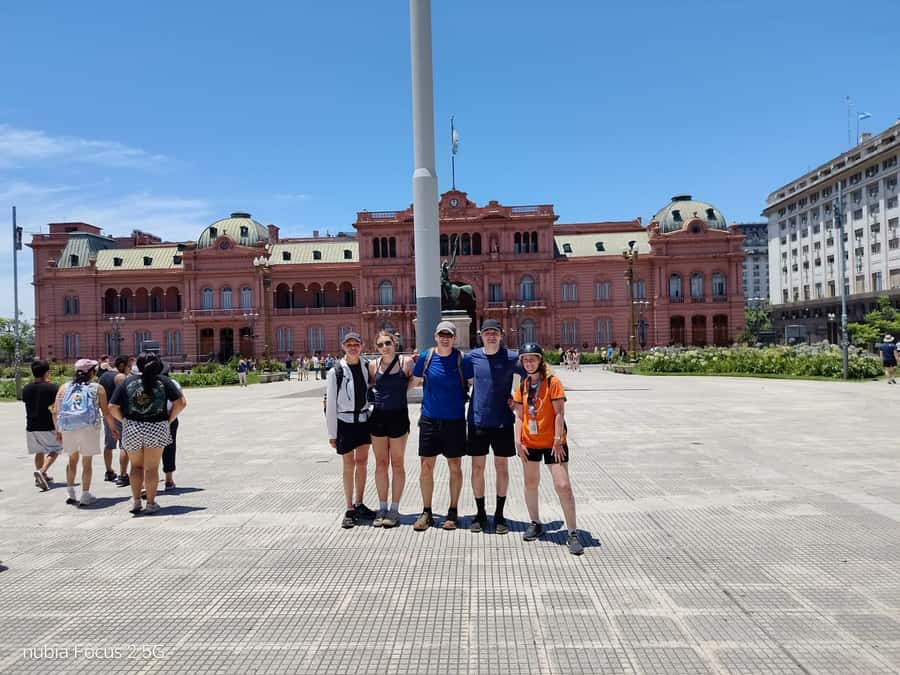
- San Telmo cobblestones and immigrant-era stories as you pedal through the oldest streets
- La Boca + Caminito for color, character, and the neighborhood’s identity
- La Bombonera to understand why football is more than a sport here
- Puerto Madero’s waterfront contrast between modern skyline and old dock vibes
- Reserva Ecologica for Río de la Plata views and local biodiversity
- A tight, guided route that fits a lot into about 3 hours
Buenos Aires to the South by Bike: a compact route that still feels complete
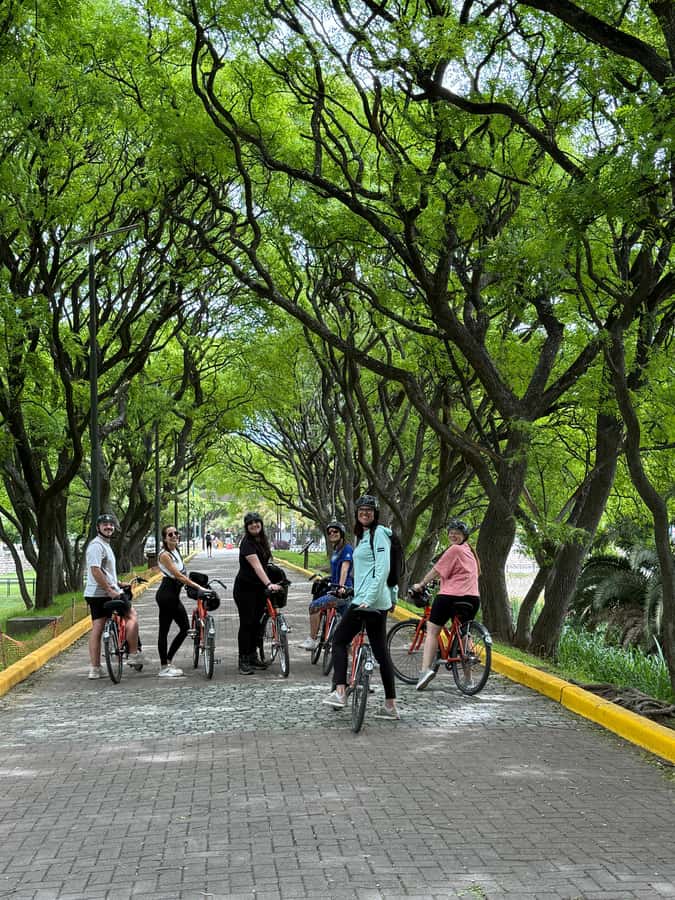
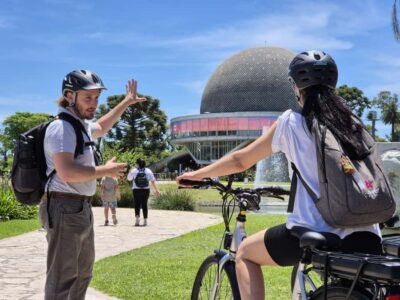
This is the kind of tour that works when you have limited time but still want more than a photo run. In about 210 minutes, you’ll cycle through several of the city’s best-known districts on the south side, guided in English and Spanish. The format is simple: short rides between stops, then focused time on what you’re seeing and why it matters.
What I liked most is the balance. You get the city’s personality on the street—tango-era atmosphere in San Telmo, Boca’s football energy around La Bombonera—and then a change of pace at the Reserva Ecologica. That shift matters. It keeps the tour from feeling like only monuments and landmarks.
You can also read our reviews of more cycling tours in Buenos Aires
Price and logistics: what $48 really buys you
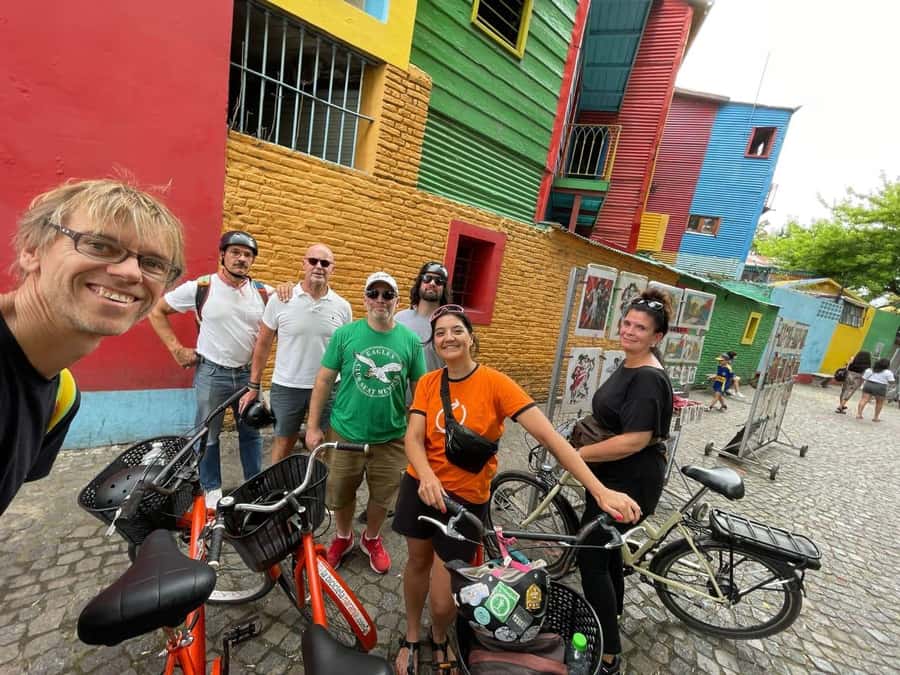
At $48 per person for a 3-hour guided bike tour, the value is in the included gear and the route efficiency. You get a bike, helmet, and lock, plus a water bottle and a bilingual guide. You’re not paying extra for the equipment piece, and the guide helps you see connections between neighborhoods instead of treating each one like a separate postcard.
What you should plan for: food and drinks are not included, and there’s no hotel pickup/drop-off. You’ll either start at the address on Calle Doctor Jose M. Giuffra 370 (Dr. José Modesto Giuffra 370) or at Parque Lezama, depending on the option you book. If you arrive hungry, grab something nearby before you meet up.
Also note the small but real detail: electric bikes are subject to availability. If you think you might need one, it’s worth booking with that in mind so you’re not stuck deciding last minute.
Meeting points: Dr. José Modesto Giuffra 370 or Parque Lezama
This tour is designed with two starting options, and it changes how your day flows. One meeting point is Calle Doctor Jose M. Giuffra 370 (Dr. José Modesto Giuffra 370), and another starts at Parque Lezama.
Either way, the structure is the same: you cycle to the major south-side stops and return to a drop-off at the Calle Doctor Jose M. Giuffra 370 address. Since the meeting point can vary by option, check your specific booking before you head out so you don’t waste time in the wrong neighborhood.
San Telmo: cobblestones, tango mood, and the city’s early layers
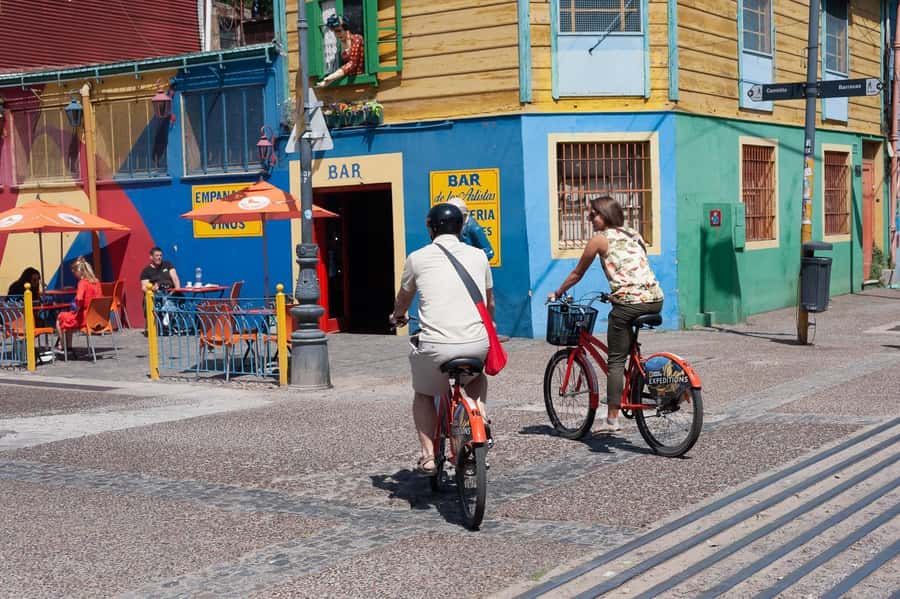
Even when the tour doesn’t linger forever at each stop, San Telmo is one of those areas where you instantly get the point. You’re on narrow, cobblestone streets, and the guide frames what you see as part of a bigger story—how the oldest parts of Buenos Aires evolved from early settlements to the arrival of Italian immigrants.
The tango connection is handled the practical way: you’re not just told about tango as an idea. You learn how it ties into the neighborhood’s atmosphere, street life, and cultural memory. In recent tours, guides such as Deborah have been singled out for showing riders the corners of the colorful streets with the right amount of context.
If you like walking-like street texture (instead of just landmark sightseeing), San Telmo is where this tour feels most authentic. If you’re the type who wants to stop and browse shops for an hour, consider that the tour moves on on a schedule.
La Boca and Caminito: the neighborhood’s culture in motion
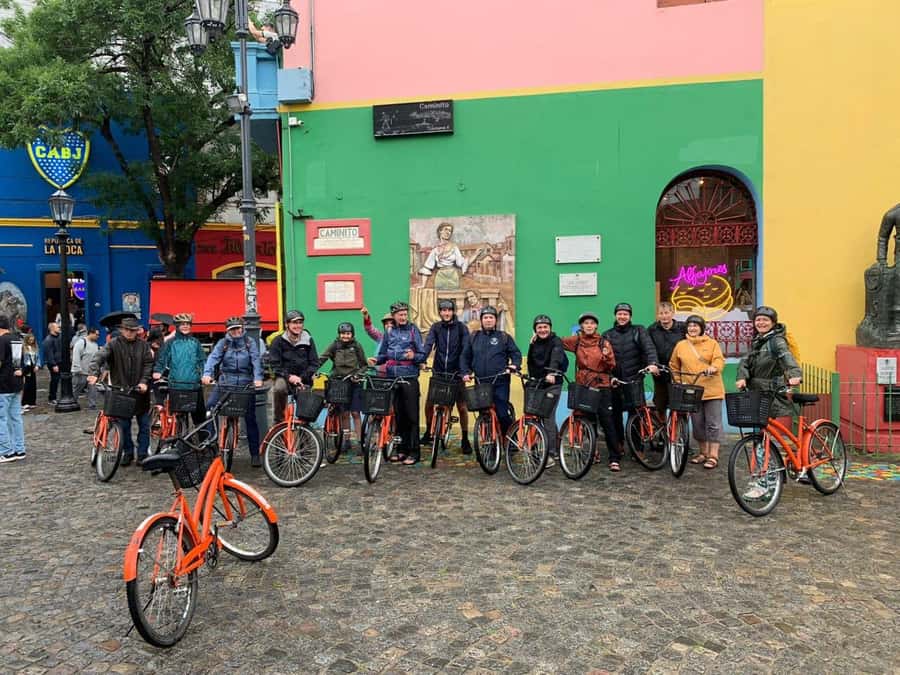
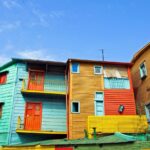
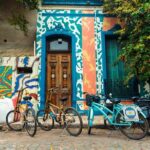
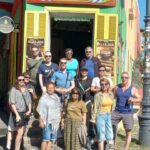
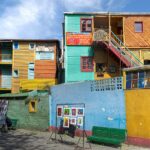
From there, the tour shifts into Argentina’s big emotional volume: La Boca. You’ll spend time around Calle Caminito, one of the most recognizable streets in the area. This is the place you go to understand that La Boca’s culture isn’t only about what’s painted on walls—it’s about identity, community, and the way football and music shape daily life.
Caminito is also a good point for the guide’s pacing. A well-led bike tour helps you notice what you’d otherwise miss if you showed up on your own and rushed through for pictures. You’ll likely get the kind of street-level explanation that helps you connect the visuals to the neighborhood’s story.

La Bombonera: why football feels bigger than a match
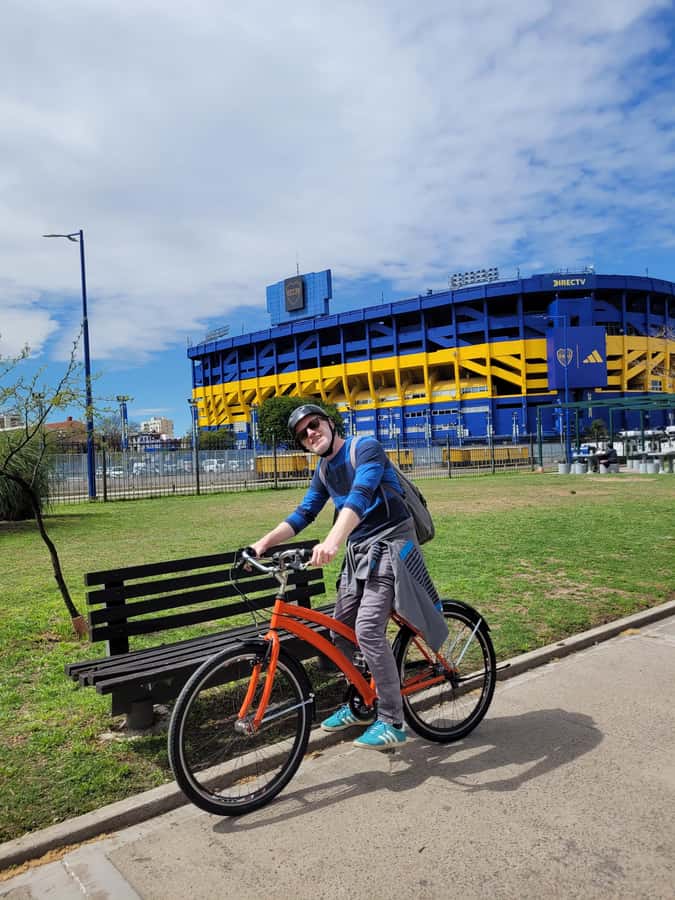
Then comes the stadium: La Bombonera, home of Boca Juniors. The tour doesn’t treat it like just another stadium stop. You learn how it became a symbol of Argentina’s football passion, and how that passion shows up in the neighborhood year-round.
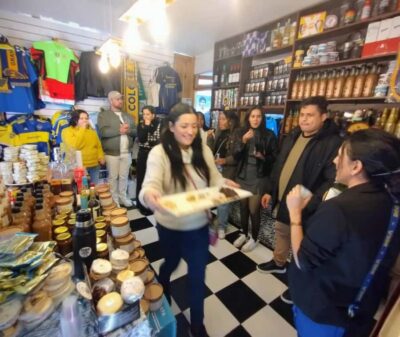
This is one of the stops where the guide’s job is most important. If you’re into football, you’ll enjoy the energy. If you’re not, you’ll still leave understanding why this place matters to locals. In tours led by guides like Flor, people appreciated that the information is clear and the pacing feels right—enough detail to stick, not so much that you stop seeing the street.
Practical tip: take a moment to look around before you take the first photo. Bike-level viewpoint can make buildings and streets look different than they do from sidewalks.
Puerto Madero: modern architecture and a waterfront breather
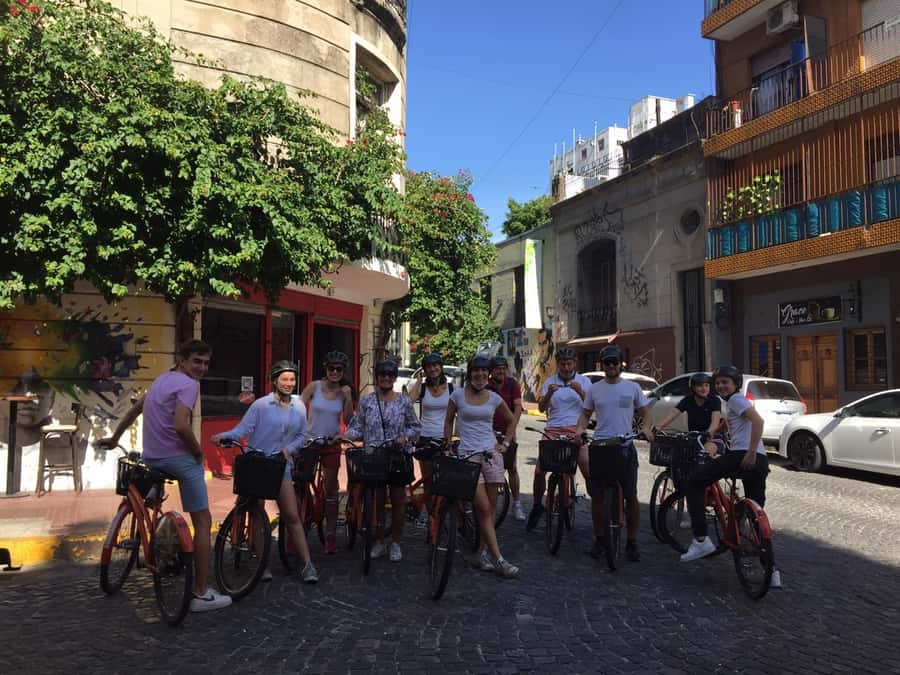
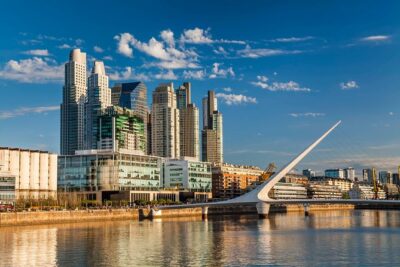
Next you cycle to Puerto Madero, and the contrast is immediate. This area feels like a different Buenos Aires—more modern architecture, plus the riverside character that comes from the old dock spaces turned into restaurants and offices.
I like Puerto Madero on a bike because it’s a change of rhythm. After the emotional intensity of football culture, you get a calmer scene where you can watch how the city modernized. You’ll still get guiding context, but it’s less about legend and more about urban planning and the way the city repurposed waterfront space.
If you’re photographing, bring patience. Some views are best from slightly angled positions, and with a bike tour you can often get those natural angles without backtracking.
Reserva Ecologica: nature on the Río de la Plata
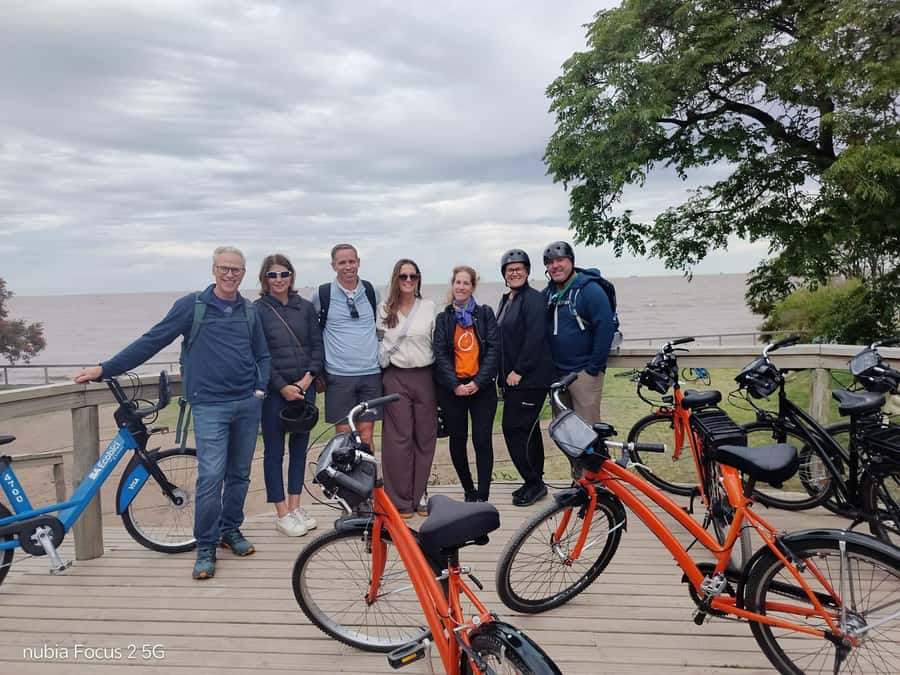
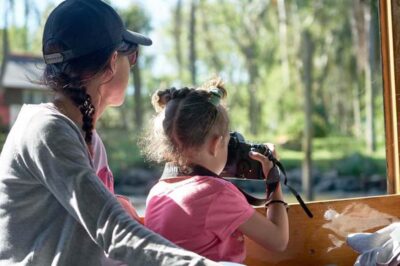
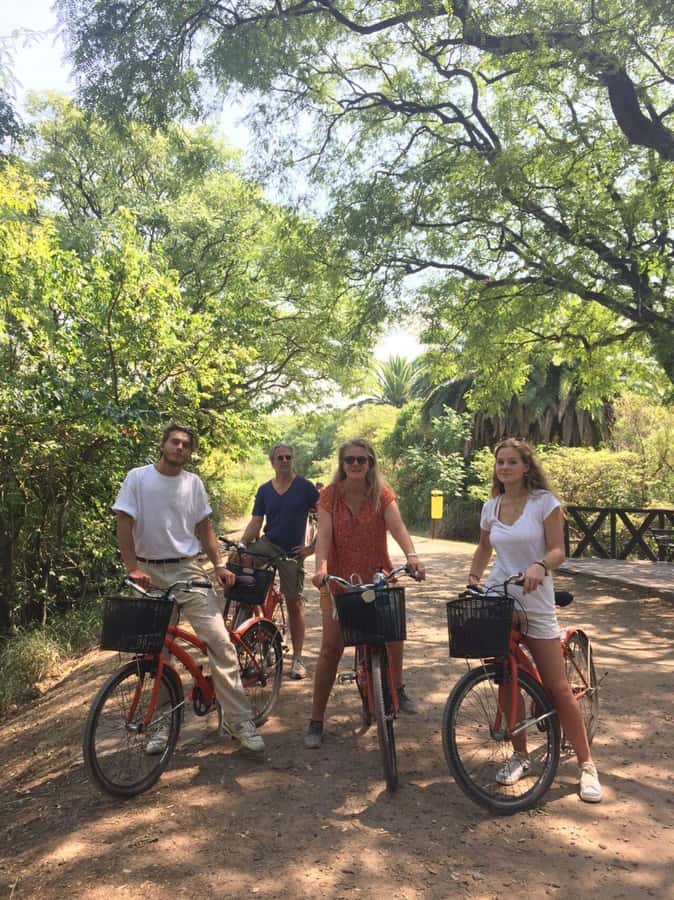
This is where the tour earns its name and earns its breathing room. At the Reserva Ecologica, you trade dense city streets for a more nature-forward setting. The tour includes a stop there that gives you a chance to appreciate the ecosystem and the views over the Río de la Plata.
The key value here is perspective. Buenos Aires can feel all pavement and buildings, and then suddenly you’re in a place that functions like an ecological haven inside the city. The guide frames it as a spot for nature lovers and for observing local biodiversity, and even when you’re not a hardcore birdwatcher, it’s a refreshing reset.
The time window isn’t huge, so don’t plan on hours of wandering. But for a 3-hour overview tour, this stop is a strong reason to choose this itinerary over a pure “south landmarks only” loop.
Plaza de Mayo and Montserrat: where the city’s political heartbeat sits
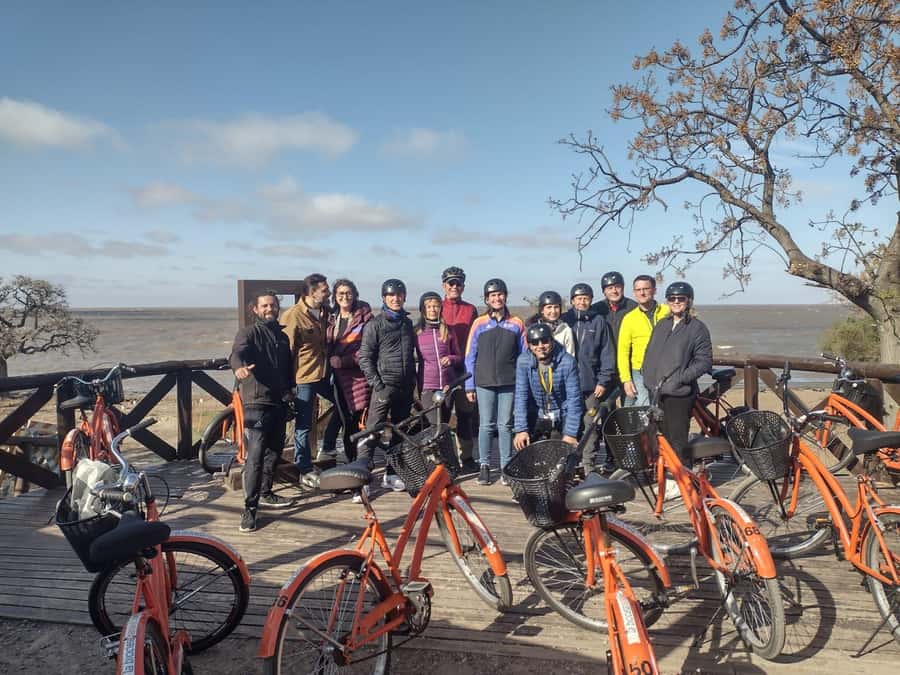
The tour rounds out toward Plaza de Mayo and the Montserrat area. Here, you get a mix of colonial architecture and modern skyscrapers, which is a big part of why the center of Buenos Aires feels so layered.
Even without spending a long time inside museums, you can understand how this area works. It’s not only about old facades or official buildings; it’s about how public space shapes identity and daily movement. The guide’s explanation helps you interpret the contrasts you see as you pedal through.
If you like finishing a tour with a sense of place and scale, this is a good ending. You’re moving out of the football-and-neighborhood mood into a more civic, architectural one.
Timing and pacing: short rides, strong explanations
The schedule is built from short bike segments—about 10 minutes at many of the main stops, and about 20 minutes at Caminito. That doesn’t mean the tour rushes. It means you get a tour that keeps momentum.
In plain terms: you’ll cover multiple districts, and each stop is long enough to feel it, but not long enough to turn the day into a half-day research project. People who value this structure tend to like it most because it prevents decision fatigue. Your guide handles the what and why, and you handle the riding and noticing.
If you’re the type who wants more time at one neighborhood, just be strategic. Pick your top choice ahead of time. For many people, San Telmo and La Boca are the top two. For others, the Reserva Ecologica wins.
What to wear and how to ride comfortably
You’ll be cycling for a good chunk of the tour, so go with comfortable shoes. The details are simple, but they make a real difference when you’re on cobblestones and uneven streets.
If you’re deciding between an electric bike and a standard one, remember that e-bikes are subject to availability. If you’re unsure, ask when you arrive and go with what feels easiest for your comfort level.
This tour isn’t suitable for people with mobility impairments, so if that applies to you, it’s best to look for a different format that fits your needs.
Who this tour suits best (and who should skip it)
This is a great fit for you if:
- You want a guided overview of the south side with practical context.
- You like switching atmospheres: tango mood, football landmarks, waterfront views, then a nature stop.
- You appreciate a guide who can answer questions without turning it into a lecture. People have highlighted that some guides keep the pacing right and explain the story clearly.
You might want to skip it if:
- You need a fully accessible route or mobility-friendly setup.
- You’re hoping for long, unstructured wandering time in one neighborhood. This tour is structured around movement and coverage.
Should you book Buenos Aires to the South by bike?
I’d book this tour if you want a high-value, low-friction way to see multiple iconic areas in one go—especially if you like the blend of street culture (San Telmo and La Boca), football symbolism (La Bombonera), and the surprising nature break at the Reserva Ecologica.
If you’re the kind of visitor who only wants to spend time in one district and soak it up for hours, you might feel the edges of the schedule. But if you want a guided loop that helps you get oriented fast and understand how the neighborhoods connect, this one is a strong choice for a first trip or a short stay.
One more practical note: bring comfortable shoes and make sure you’re at the correct meeting point for your selected option. That one detail keeps your day smooth.
FAQ
How long is the Buenos Aires to the South bike tour?
It runs about 3 hours, listed as 210 minutes.
What does the tour cost?
The price is $48 per person.
What’s included in the price?
You get a bike, helmet, and lock, a bilingual tour guide (English and Spanish), and a water bottle.
Are food and drinks included?
No. Food and drinks are not included.
Where do we meet?
Meeting point can vary depending on the option booked. Options include a start at Parque Lezama or at Calle Doctor Jose M. Giuffra 370 (Dr. José Modesto Giuffra 370). Drop-off is at Calle Doctor Jose M. Giuffra 370.
What languages are offered?
The tour guide speaks English and Spanish.
Are electric bikes available?
Electric bikes are subject to availability.
What should I bring?
Comfortable shoes are recommended.
Is the tour suitable for mobility impairments?
No, it is not suitable for people with mobility impairments.
Can I cancel for a full refund?
Yes. Free cancellation is available up to 24 hours in advance for a full refund. You can also reserve now and pay later.
If you tell me your travel dates and which neighborhoods you’re most excited about (football, tango, nature, or architecture), I can help you decide whether this route is your best first loop or if you’d be better off doing a different focus tour.