REVIEW · BUENOS AIRES
Classic City Tour of Buenos Aires: Neighborhoods and Emblems
Book on GetYourGuide →Operated by Gray Line Argentina · Bookable on GetYourGuide
Buenos Aires hits different when you see it as neighborhoods, not just landmarks. This classic 4-hour tour strings together six iconic areas with a guide’s commentary and the city’s big-picture architecture. I love that it gives you a fast sense of how Buenos Aires shifts from Recoleta polish to San Telmo charm to La Boca color, and I also like the built-in photo stops at Plaza de Mayo and Caminito that keep the momentum moving. One thing to consider: hotel pickup can take longer than you expect, so build in a little patience before the bus finally rolls.
What makes it work is the pairing of major emblems and the small moments you can actually use later. The guide-led narration is live in Spanish, and in practice I’ve seen guides flex for English speakers too, which helps you get your bearings fast. Still, the trade-off for the short duration is that you won’t get deep, inside-the-building visits at every stop, and the drop-off points aren’t the same as door-to-door return.
In This Review
- Key points at a glance
- Why this 4-hour Buenos Aires loop is such good value
- Pickup and drop-off: plan for a little independence
- Recoleta and Retiro: elegant streets and the city’s polished face
- San Nicolás and Montserrat: the Obelisk and the Plaza de Mayo gravity
- San Telmo: narrow streets, old-town character, and quick photo chances
- La Boca and Caminito: the color stop that actually earns its fame
- Puerto Madero and Alvear Avenue: modern polish and the contrast effect
- How the guide experience affects your day (and what I’d watch for)
- Making the photo stops count: Plaza de Mayo and Caminito
- Price, timing, and the trade-offs of a “highlights” tour
- Who should book this tour, and who should choose something else
- Should you book the Classic City Tour of Buenos Aires?
- FAQ
- How long is the Classic City Tour of Buenos Aires?
- What does the tour cost?
- Is pickup from my hotel included?
- Where do you get dropped off at the end of the tour?
- What photo stops are included?
- What language is the tour guide?
- Are food and beverages included?
- Can I cancel for a refund?
- Can I reserve now and pay later?
- What if my hotel isn’t included in the pickup area?
Key points at a glance
- A strong first-day orientation across Recoleta, Retiro, San Nicolás, Montserrat, San Telmo, and La Boca
- Big Buenos Aires emblems like the Obelisk, Teatro Colón, Plaza de Mayo, Casa Rosada, and the Cabildo area
- Two dedicated photo stops (about 20 minutes each) at Plaza de Mayo and Caminito
- Real time on foot in key areas, so you can actually look, not just watch from a bus window
- Spanish live guide, with helpful translation depending on your group
- Central pickup and drop-off, but not a guaranteed same-hotel return
Why this 4-hour Buenos Aires loop is such good value
At $45 per person for a half-day, you’re paying for two things: transportation plus a guided route that hits the highest-impact sights. Buenos Aires is huge, and your first instinct is usually to spend time zigzagging by taxi or bus. This tour saves you that early confusion by grouping the city’s most famous “stations” into one logical run.
I especially like the payoff: you come away with a mental map. Once you’ve stood near the Obelisk, walked (briefly) around Plaza de Mayo, and seen Caminito’s famous facades, you start to understand why locals talk about the city in neighborhoods first. Then, on the rest of your trip, you can choose what deserves a second visit.
The other value is pacing. You get a panoramic look at main avenues and emblem zones, plus short breaks where you can stop and look around. You’re not stuck in a long museum line or trapped in one area all day. If your schedule is tight, this is a smart way to spend it.
You can also read our reviews of more city tours in Buenos Aires

Pickup and drop-off: plan for a little independence
Hotel pickup is included, but it’s not universal. The tour uses pickup from centrally located hotels, and it specifically notes there’s no pickup from hostels, aparthotels, or private homes. Some hotels are also not included on the pickup route (Palermo is mentioned as an example), and in that case you’re directed to wait in the lobby of a nearby meeting hotel.
This is where you want to be practical. A handful of experiences described pickup running late or taking longer than expected to collect everyone. The most common fix is simple: be ready early, and treat pickup time as a window, not a promise carved in stone.
Then comes the other detail: you’re dropped off at one of a few central points—Florida Street, Galerías Pacífico, or the Obelisco. That’s convenient for getting back around town, but it does mean you may not finish right at your hotel. If your lodging is farther out, you might need to take transit or walk a bit more than you hoped. I’d plan the rest of your day with that in mind.
Recoleta and Retiro: elegant streets and the city’s polished face
The tour starts by guiding you through neighborhoods that feel like Buenos Aires in different costumes—Recoleta is often one of the first. Think refined streets, impressive architecture, and a vibe that’s more about elegance than grit.
Recoleta also tends to be where people get the “I can’t believe this is South America” feeling. The city shows off its grand side here, and even from the bus you can sense why Recoleta became a signature destination. Some departures may also include time near the Recoleta cemetery area. If that’s part of your day, here’s a tip: if you want Eva Perón’s grave, ask for directions. It can be hard to find on your own.
From there, the route shifts toward Retiro. Retiro is all about Buenos Aires as a working capital—big-scale avenues, a sense of movement, and the way the city funnels traffic toward its center. Even when you’re just passing through, it helps you understand the city’s geography: where the grand monuments sit, and how the neighborhoods feed into downtown.
San Nicolás and Montserrat: the Obelisk and the Plaza de Mayo gravity
This is the section where Buenos Aires pulls you toward its center. You’ll encounter the Obelisk, and it’s worth treating it as your orientation marker. It’s not just a photo object—it’s a landmark that anchors your understanding of where you are in the city.
From the emblems list, you’ll also connect with Teatro Colón, one of the world’s best-known opera houses. Even if you don’t go inside on this tour, seeing its presence gives you a sense of Buenos Aires as a cultural capital, not just a nightlife city.
Then the big moment: Plaza de Mayo. This is where government, power, and colonial-era memory collide. You get a planned photo stop here for about 20 minutes, and that’s enough time to get the classic angles without the stress of a long wait.
Around Plaza de Mayo, you’ll see the Casa Rosada (seat of the national government) plus the Metropolitan Cathedral and the Cabildo area. The Cathedral and Cabildo tie the story back toward the colonial period, while Casa Rosada brings you firmly into modern Argentina. When your guide points out the links between these buildings and the city’s timeline, it’s a lot easier to connect dots than it is to read about it later.
Some groups also get short walking time in this area. That matters because it’s one thing to see the square from a bus window, and another to stand close enough to feel its size and significance. If you want to take notes for later, this is where you should.
San Telmo: narrow streets, old-town character, and quick photo chances
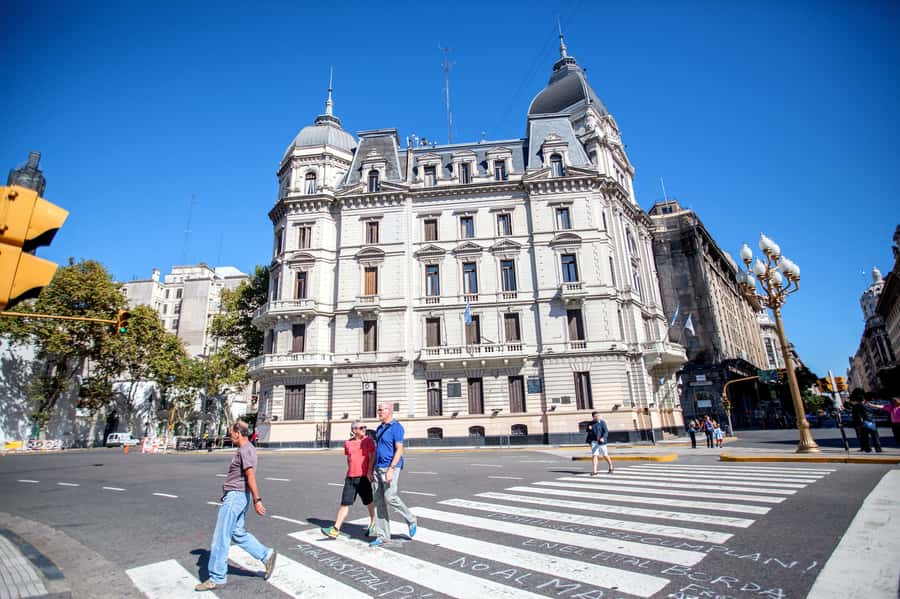
San Telmo is the “slower” mood on this route—narrow streets, older facades, and a neighborhood that often feels like it holds onto its past. This is the part of the day where you stop thinking in straight lines and start thinking in alleyways.
If your day includes a short walk, you’ll likely feel the difference immediately: sidewalks tighter than you expect, corners that force you to turn your head, and street life that makes photos look more interesting than a typical landmark stop. Even when the time is brief, it gives you enough texture to decide if you want to return later for a longer wander.
One practical note: San Telmo and La Boca involve uneven sidewalks and lots of foot traffic. Wear shoes that can handle cobbles and quick stops. You’ll thank yourself when you’re moving between photo moments.



La Boca and Caminito: the color stop that actually earns its fame
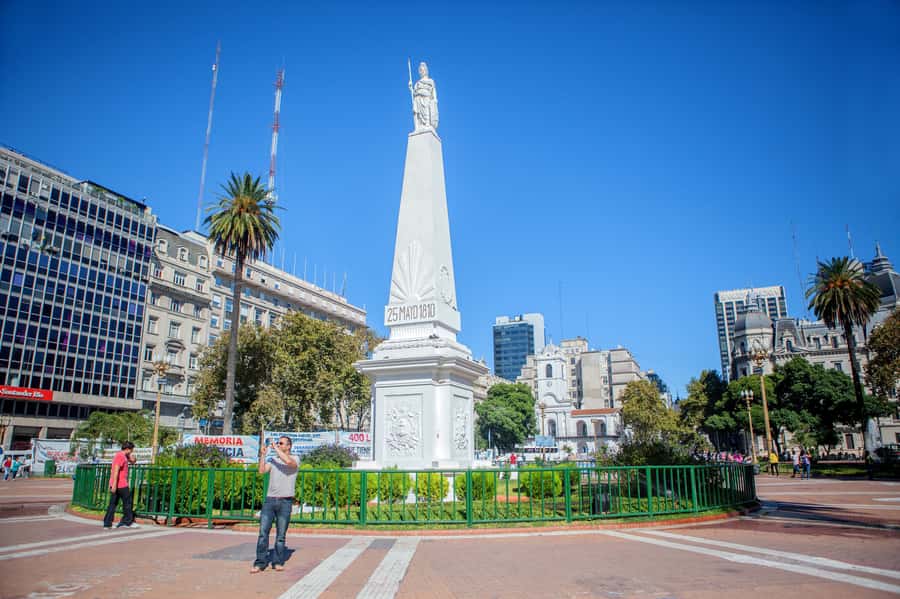
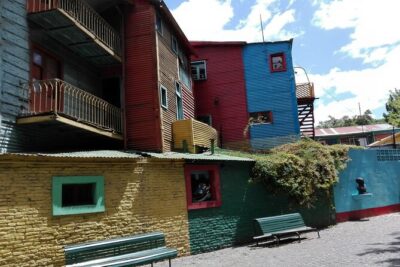
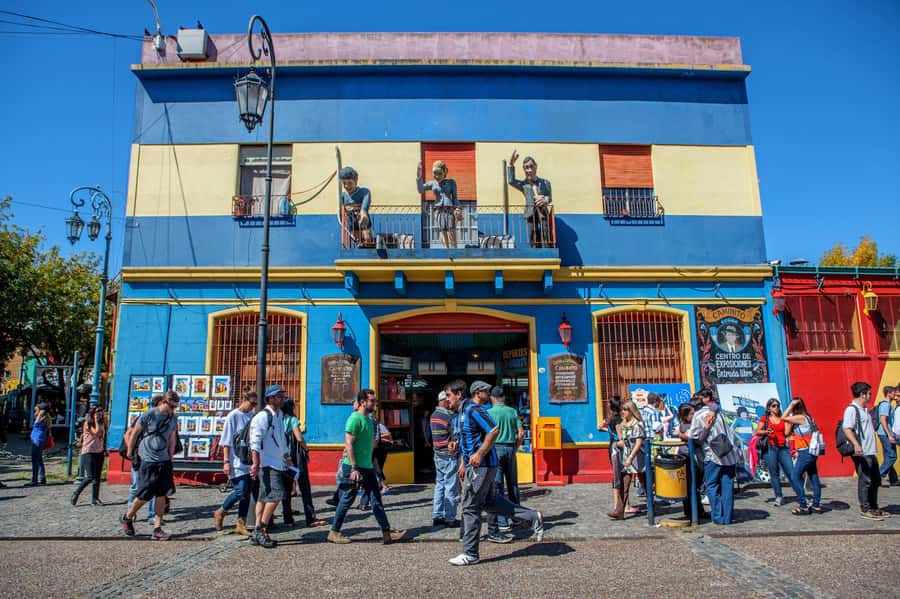
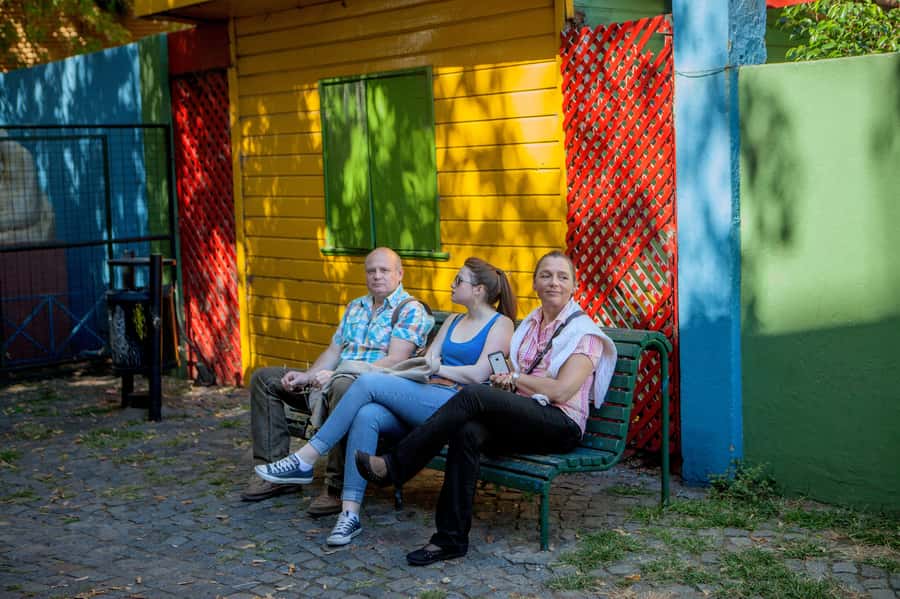
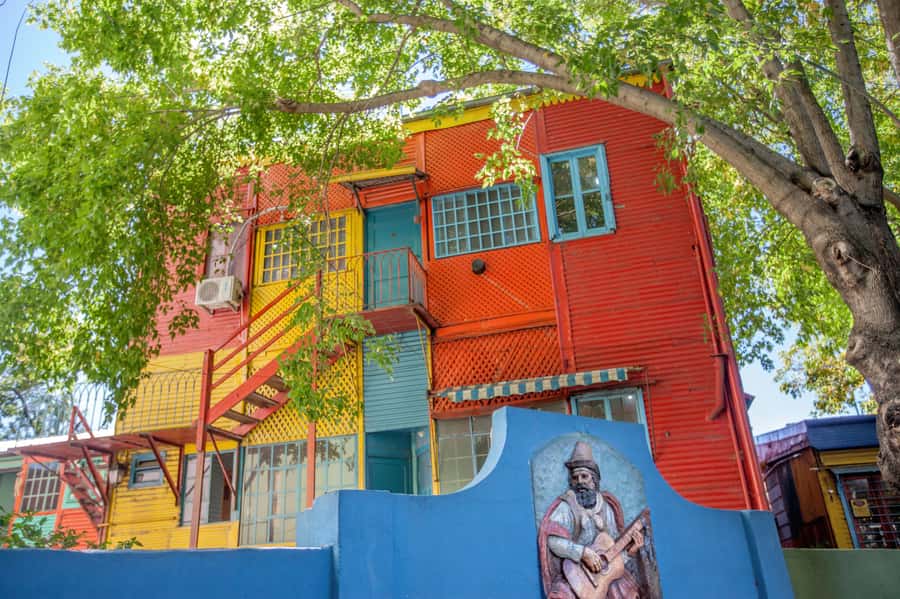
Then you hit La Boca, and more specifically Caminito. If you only had one neighborhood stop to justify the whole day, Caminito is usually it—bright facades, distinctive street character, and that unmistakable postcard look.
You’ll get a dedicated photo stop here for about 20 minutes. It’s enough time to frame a few shots, browse what’s right there, and take in the scene without feeling rushed across the whole neighborhood. I like this structure: many tours show you the area but don’t give you enough time to experience it. Here, you get a real chance to look.
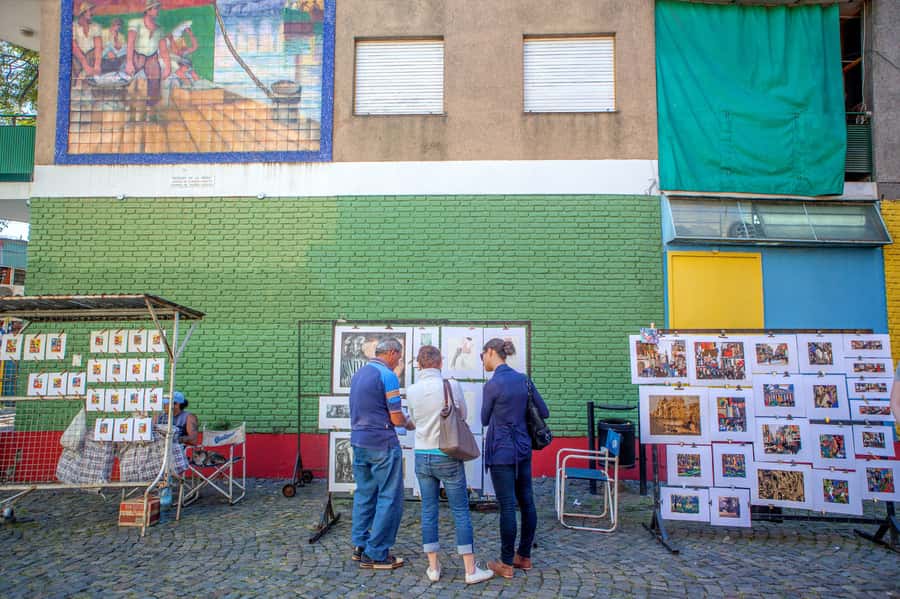
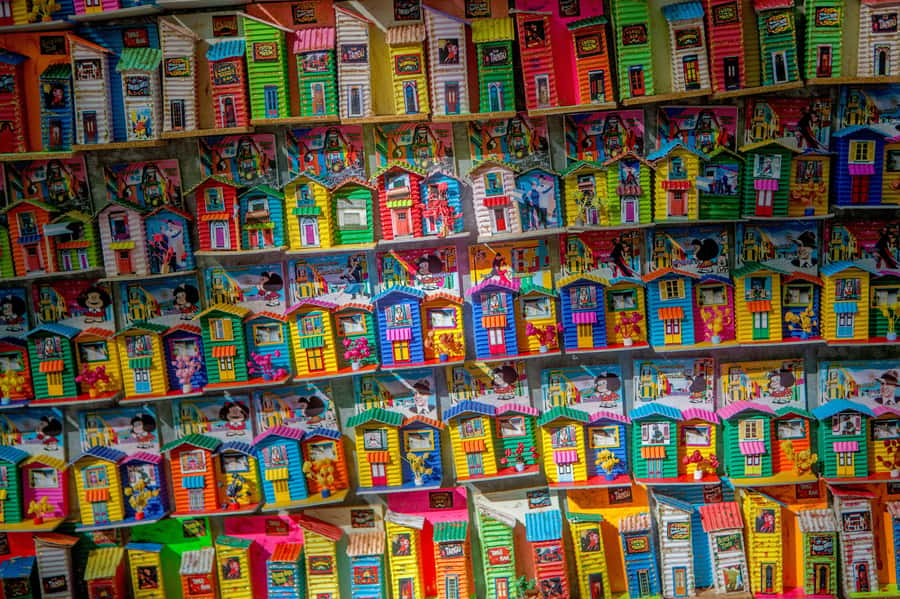
Some departures also mention chances to see areas linked to tango culture or even points near the Boca Juniors stadium zone. Even if those details vary by day, the broader takeaway stays consistent: this is where Buenos Aires looks the most theatrical, and where you’ll probably spot souvenirs, street performances, and locals working the streets.
If you’re a photography person, this is your moment. Get your wide shots first, then slow down for faces, doors, and textures. Caminito rewards that approach.
Puerto Madero and Alvear Avenue: modern polish and the contrast effect
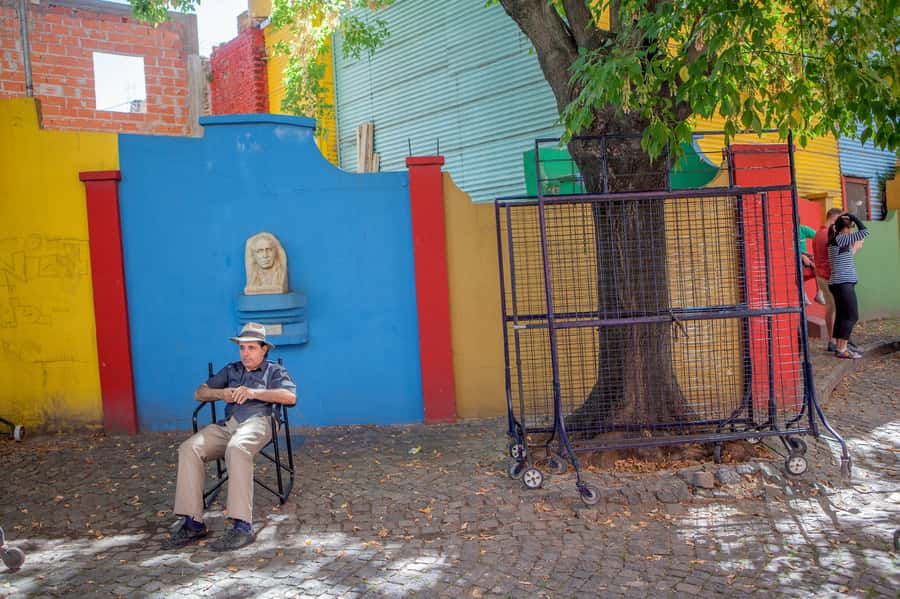
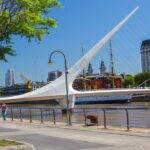
After the older neighborhoods, the tour shifts toward the city’s more modern and polished angles. Puerto Madero is the headline example: a recycled, modern waterfront area that contrasts sharply with the rougher edges of older districts.
You’ll also be guided past or toward the palaces of Alvear Avenue. This part matters because Buenos Aires loves contrast. The tour helps you see how a city can carry deep history and still build in a different language—clean lines, upscale architecture, and a different kind of view.
If you’ve only seen Buenos Aires through one lens—only Palermo cafés, only downtown monuments, only La Boca photos—you might miss this “then and now” feeling. This tour makes you see both in one half-day, so later you can choose which mood you want more of.
How the guide experience affects your day (and what I’d watch for)
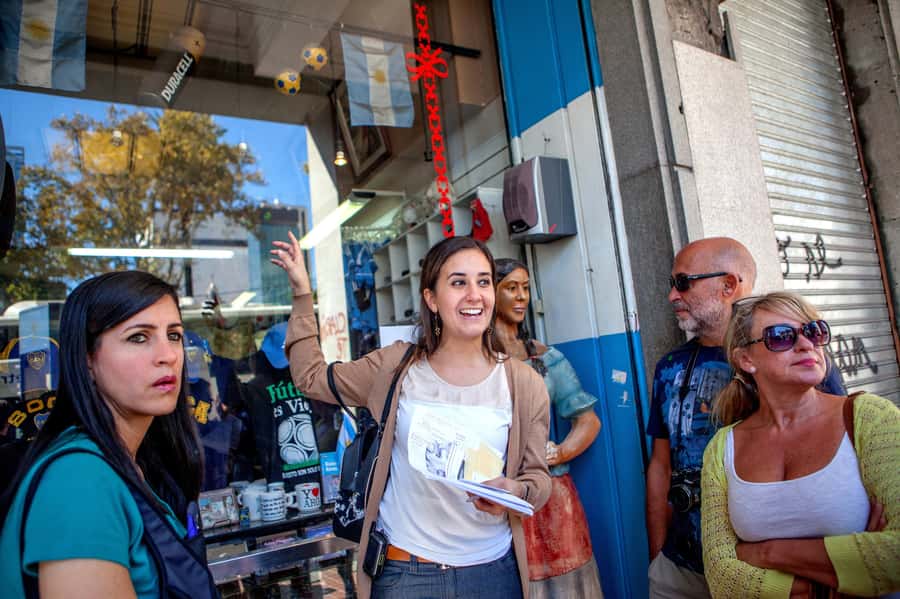
The tour runs with a live guide in Spanish. That’s important because your day’s value is tied to explanations—what the guide points out, how they connect places, and how they help you interpret what you’re seeing.
In real-world experiences from this tour, guides have shown strong competence in Spanish and English, and sometimes language flows between the two depending on the group. Named guides you may encounter include Macarena, Mercedes, Sophia, and Elba. That’s a helpful sign: you’re not just getting someone who reads a script; you’re getting someone who can explain why these places matter.
A practical tip: pay attention early. Your guide’s first explanations around central landmarks are what make the later stops click. If you zone out, the tour still shows you sights, but it’s harder to understand how they connect.
Making the photo stops count: Plaza de Mayo and Caminito
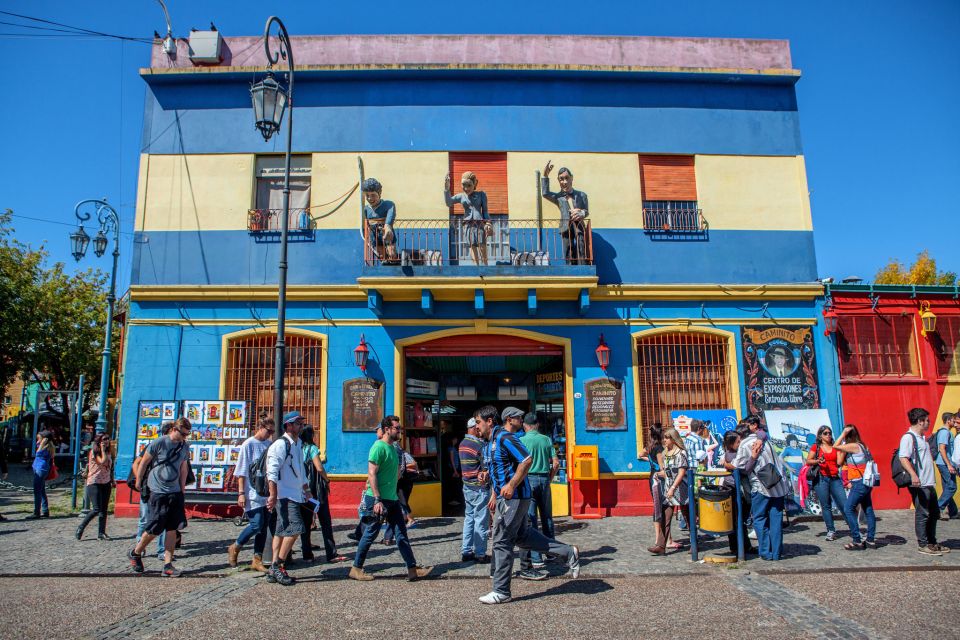
The tour builds in two photo stops, about 20 minutes each, at Plaza de Mayo and Caminito. I like that the timing is explicit, because you can plan your mental checklist instead of guessing.
At Plaza de Mayo, think angles and context. Stand where you can capture the government square feeling—Casa Rosada in the mix, with the cathedral and Cabildo nearby. If there’s on-foot time, use it to get closer than a bus window would ever allow.
At Caminito, think textures and color. Start with the big facade shots, then move in for door details and street corners. If you want souvenirs, this is where you should budget those minutes, because you’re not guaranteed long shopping time later.
And remember: two photo stops do not mean you leave without curiosity. They’re the appetizer. After this, you’ll know what deserves a return visit.
Price, timing, and the trade-offs of a “highlights” tour
Let’s talk value honestly. $45 for four hours with pickup and a guide is a fair deal for a city like Buenos Aires, especially if it’s your first time. You’re buying time saved and context gained.
But the trade-off is also clear: you won’t get the kind of slow, guided deep visit that a dedicated walking tour or museum ticket can provide. Some stops may be more of a look-from-the-road experience. Recoleta Cemetery, for instance, sounds like it can be included on certain days, but not every group gets the same cemetery time. The best way to use a highlights tour is to treat it as a scouting mission.
Timing can also vary due to pickup logistics. Some people reported waits that pushed the start back by about an hour. Again, the remedy is mindset: don’t plan a tight dinner reservation at the exact moment the tour is supposed to end.
Who should book this tour, and who should choose something else
This tour fits best if you:
- Want a first-time orientation across six iconic neighborhoods in one half-day
- Like architecture and street atmosphere more than strict museum hours
- Want enough time at Plaza de Mayo and Caminito to decide what to revisit
- Prefer a guided route that handles logistics so you can enjoy the city instead of navigating it
I’d think twice if you:
- Need door-to-door convenience back to your exact hotel
- Want long, in-depth time inside specific attractions
- Are extremely sensitive to pickup delays or fixed schedules
For many first-timers, though, this is a great starting point. It helps you stop guessing and start planning.
Should you book the Classic City Tour of Buenos Aires?
If you have limited time and want to understand Buenos Aires quickly, I’d book it. The combination of major downtown emblems (Obelisk, Plaza de Mayo, Casa Rosada, Cathedral/Cabildo area) plus neighborhood variety (Recoleta, San Telmo, La Boca, Puerto Madero) is exactly what a first trip needs.
Just go in with the right expectations: it’s a highlights-style loop with short photo and walk moments, Spanish live guiding, and central pickup/drop-off rather than full hotel convenience. If you plan the day with a little flexibility—especially around pickup and where you’re dropped off—you’ll end up with a useful map of the city and a short list of places worth returning to.
FAQ
How long is the Classic City Tour of Buenos Aires?
It lasts 4 hours.
What does the tour cost?
The price is $45 per person.
Is pickup from my hotel included?
Pickup is included from centrally located hotels. There is no pickup from hostels, aparthotels, or private homes, and some hotels (including some in Palermo) may not be on the pickup itinerary.
Where do you get dropped off at the end of the tour?
You’re dropped off at Florida Street, Galerías Pacífico, or at the Obelisco.
What photo stops are included?
There are two photo stops of approximately 20 minutes each: Plaza de Mayo and Caminito.
What language is the tour guide?
The live tour guide provides commentary in Spanish.
Are food and beverages included?
No. Food, beverages, and other services are not included unless specifically stated.
Can I cancel for a refund?
Yes. Free cancellation is available up to 24 hours in advance for a full refund.
Can I reserve now and pay later?
Yes. The option is reserve now & pay later (book your spot and pay nothing today).
What if my hotel isn’t included in the pickup area?
The operator will contact you with the nearest hotel to meet. You’ll need to wait in that hotel lobby at the indicated time.