REVIEW · BUENOS AIRES
La Boca Out off the Beaten Track
Book on GetYourGuide →Operated by Paola De Luca tuguiaenba · Bookable on GetYourGuide
La Boca can feel like a postcard. This tour slows it down and explains why the neighborhood looks the way it does. With Paola De Luca, a local guide from La Boca, I love how the day connects street art, football, religion, and immigrant life into one clear story. You also get to see murals with social context, not just color on a wall. One thing to consider: it’s not an art gallery sprint, so if you want lots of free time or a big museum visit, this may feel a bit too focused.
Here’s what makes it special: you’ll move through the working port side, duck into a corrugated-metal conventillo that once sheltered immigrants, and then jump to the community network behind La Boca’s survival. Paola even brings in neighborhood memory from her own youth, which makes the anecdotes land fast and feel real instead of rehearsed. The pace is designed for a small group, limited to 10, and that’s a big reason people leave feeling like they actually understood the place.
Still, it’s a guided walk through older streets and buildings. If you’re sensitive to heat or prefer very minimal walking, plan for that. And if you want the Quinquela Martín Museum inside La Boca, you’ll need to add that separately since the ticket isn’t included.
In This Review
- Quick hits before you go
- Starting in La Boca: the port-side loop that sets the tone
- The Conventillo: inside the corrugated-metal shelter
- The volunteer fire station: mutual aid in real rooms
- Art in the streets: murals tied to social issues
- Football outside the stadium: Boca Juniors as neighborhood soul
- Religion at street level: the Salesian Church as refuge
- A typical Boca house and artist friendships
- Caminito at the end: tango steps and fileteado in every corner
- Coffee stop: 1882 cafe time to process it all
- What’s included, what isn’t, and why the $35 feels fair
- Who this tour suits best
- Timing, pace, and comfort notes for a 2.5-hour story
- Should you book La Boca Off the Beaten Track?
- FAQ
- What is the duration of La Boca Out off the Beaten Track?
- Where does the tour start and where does it end?
- How big is the group?
- What languages is the tour guide available in?
- What is included in the price?
- Is food included?
- Is the Quinquela Martín Museum included?
- Is there a limit on participant age?
- Are there any restrictions during the tour?
- What are the cancellation and payment options?
Quick hits before you go
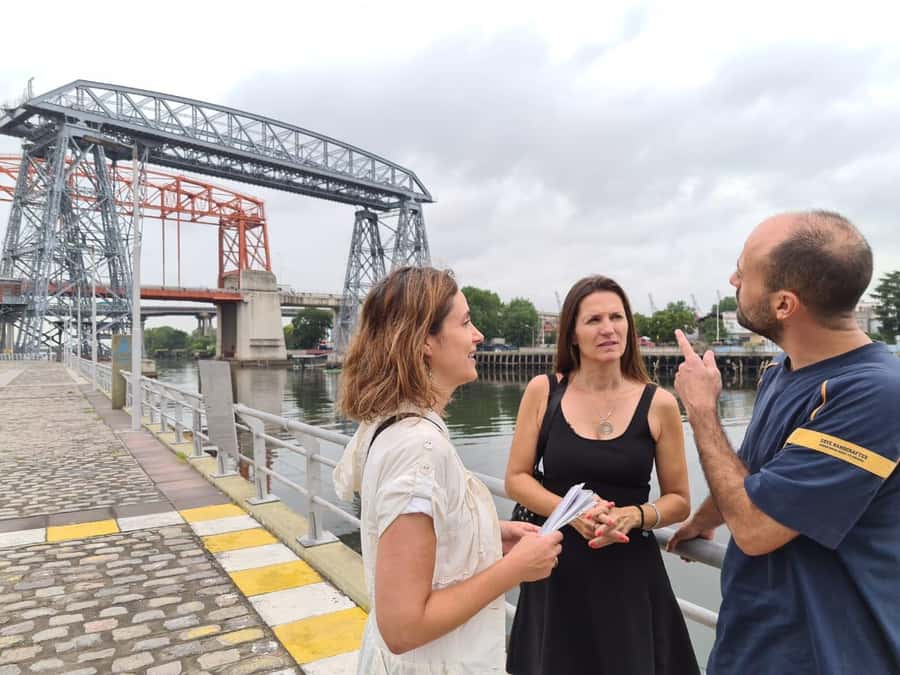
- A local guide with deep Boca roots: Paola De Luca grew up in La Boca and shares context you won’t pick up from standard sightseeing.
- Corrugated-metal immigrant housing: you’ll enter a conventillo (tenement) now serving as a cultural center.
- The first Volunteer Fire Department in Argentina: you’ll see how mutual aid helped people during hard times.
- Murals tied to real social issues: Boca’s street art isn’t just decoration; you’ll learn what it’s reacting to.
- Football and religion, not as slogans but as refuges: you’ll understand why Boca Juniors and the Salesian Church mattered to rootless communities.
- Finish in Caminito for tango and fileteado: you end right where the neighborhood’s most iconic scenes show up.
Starting in La Boca: the port-side loop that sets the tone
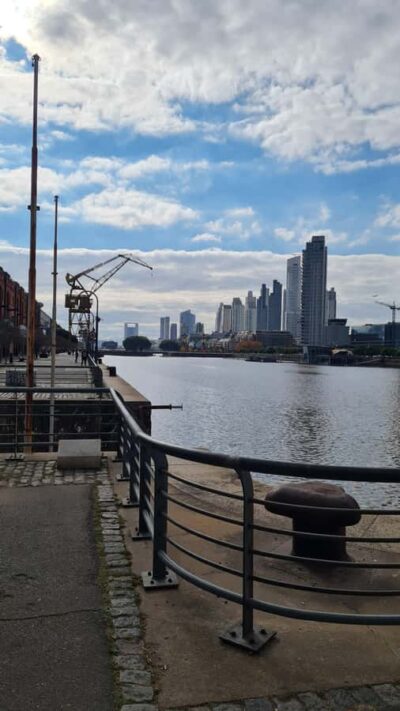
The experience begins where La Boca feels like a working neighborhood, not a theme park: at the corner of Pedro de Mendoza and Martín Rodríguez. From there, you start with the harbor/warehouse side and the picturesque train station area where waves of immigrants arrived. Even if Buenos Aires is famous for grand avenues, this part of La Boca is all angles, brick, and everyday movement.
This first stretch matters. It helps you understand that La Boca wasn’t created for tourists. It was shaped by people arriving with suitcases, finding shelter where they could, and building community institutions because the city couldn’t do it for them. Paola’s explanations use that backdrop so the later murals and buildings don’t feel random. They feel earned.
You’ll also get a sense of where the neighborhood’s identity comes from before you get pulled toward the postcard scenes.
You can also read our reviews of more tours and experiences in Buenos Aires.

The Conventillo: inside the corrugated-metal shelter
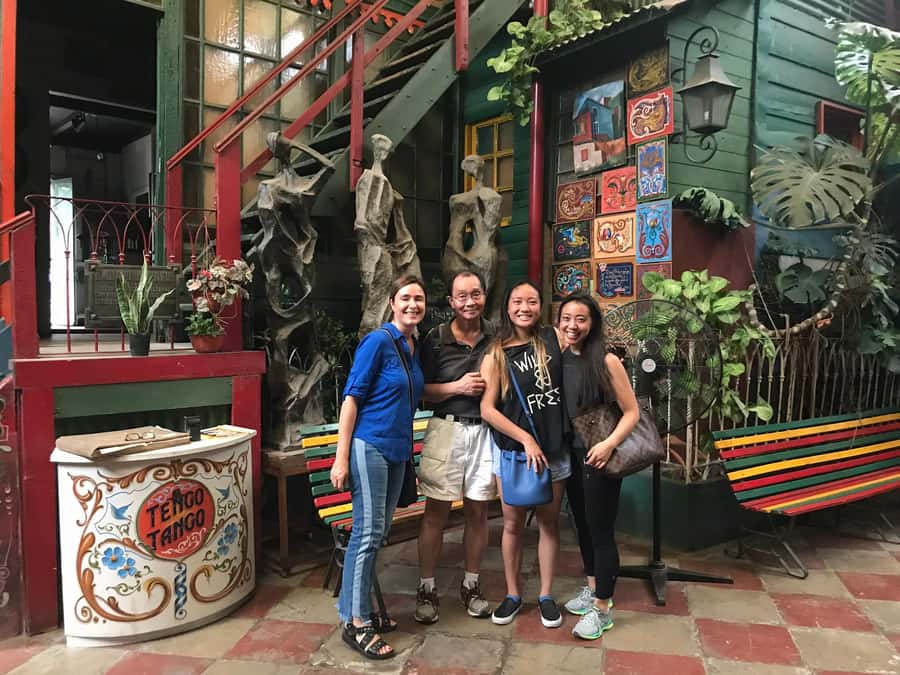
One of the biggest draws is that you don’t just look at La Boca from outside. You enter a classic conventillo, described as corrugated metal-clad tenement housing. Historically, these homes were a kind of survival system for immigrants who needed somewhere affordable to live.
In today’s version, that same space functions as a cultural center, so the building isn’t frozen in time. You’re seeing how a place can hold memory and still keep moving. If you’ve ever wondered how architecture and social life mix in Buenos Aires, this stop gives you an answer you can walk through.
Practical tip: wear something you’ll be comfortable in for an interior visit where sounds and crowds may vary. This is the part of the tour that shifts from “photo moments” to “understanding moments.”
The volunteer fire station: mutual aid in real rooms
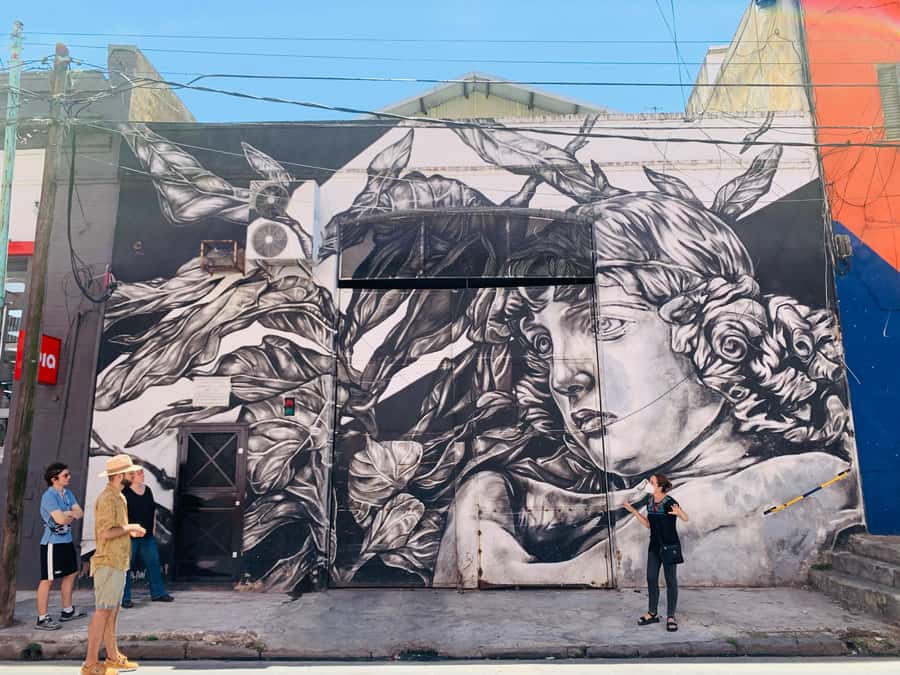
Next comes a stop that people often miss when they chase only street art: the Volunteer Fire Department, described as the first such station created in Argentina. This isn’t just a historical footnote. It’s a window into how La Boca communities organized help for each other long before modern services felt dependable.
I like this because it adds balance. Street murals can make a neighborhood feel like it’s only style and swagger. The fire station brings you back to the day-to-day reality: people needed protection, and they built systems to get it. When your guide ties it to the broader immigrant story, you start seeing La Boca less as a set of attractions and more as a lived network.
You’ll enter the station, which helps you avoid the common problem of “history” that lives only behind fences.
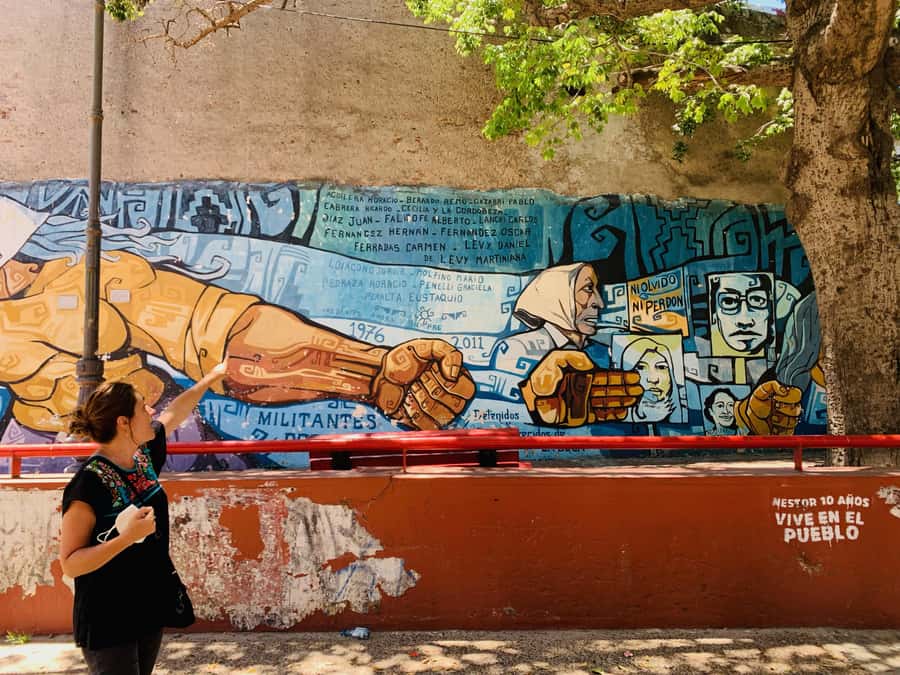
Art in the streets: murals tied to social issues
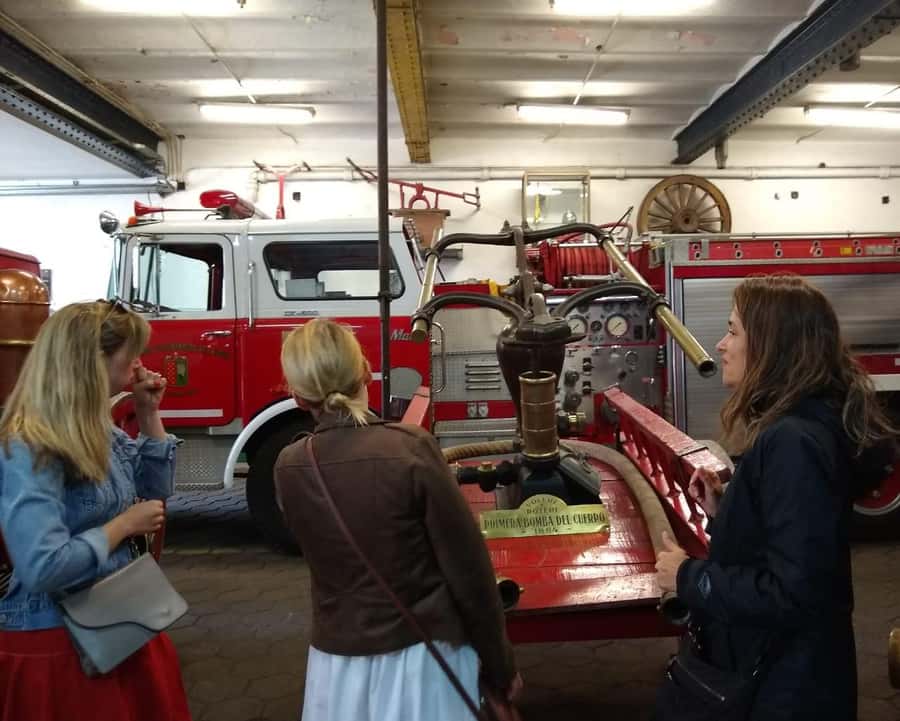
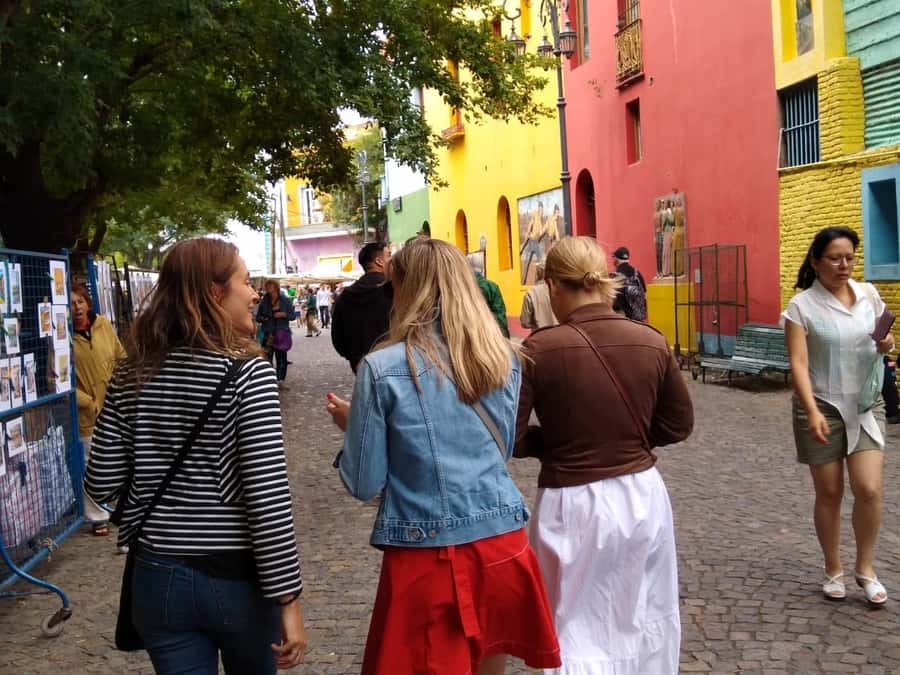
La Boca’s murals are famous. The difference here is what you learn about them. You’ll walk through areas with large murals that reflect different social issues, not just decorative scenes.
Paola’s background as a local matters for this part. She doesn’t treat street art like a generic “style.” Instead, she explains how the neighborhood used art as a commentary—an outlet for identity, politics, hardship, and pride. When you learn what you’re looking at, the murals stop being wallpaper. They become a kind of street-level newspaper.
In addition, you’ll spot older buildings connected to early 20th-century life in La Boca, including sites that once hosted anarchist newspapers and bordellos. You don’t need to agree with every chapter of that past to see its importance. It shows how far people went—how many different communities and arguments found a home in this corner of the city.
And yes, you’ll also get to see more traditional Boca symbolism, which leads nicely into football and faith.
Football outside the stadium: Boca Juniors as neighborhood soul
You’ll look at Boca Juniors Stadium from the outside, but the point isn’t the photo. The point is understanding what the club represents to locals.
In La Boca, football isn’t just entertainment. It’s tied to identity—who belongs, who supports, and how the neighborhood defines itself. Paola’s explanations connect the sport to the social fabric, so when you stand near the stadium surroundings, it feels less like you’re passing by and more like you’re watching a cultural engine.
If you’re a football fan, this will land. If you aren’t, you’ll still come away with a clearer idea of why the club is so emotionally charged for the people of the barrio.

Religion at street level: the Salesian Church as refuge
Another anchor in the tour is the Salesian Church, presented as a symbol of refuge for rootless communities. Here again, the emphasis is on context. You’re not just looking at a church building; you’re seeing why a religious institution could function as a stabilizing point when people were displaced, poor, or newly arrived.
This stop helps you connect dots between earlier immigrant housing and later street art. The tour keeps asking the same underlying question: how does a community hold itself together when life keeps breaking it apart?
Paola’s storytelling approach makes those connections feel natural rather than lecture-like.
A typical Boca house and artist friendships
You’ll also visit a typical Boca house belonging to great Boca artists friends. That’s a meaningful detail because it shifts the tour from public walls to private life—how art and daily living overlap in the barrio.
One of the best things about small-group tours is access. Here, that access shows up as a chance to see how artists and neighbors experience the neighborhood from the inside. You’re not just hearing about Boca creativity; you’re seeing it as part of a household rhythm.
If you like meeting people and connecting the dots between art styles and everyday spaces, you’ll appreciate this segment.
Caminito at the end: tango steps and fileteado in every corner
The tour finishes in Caminito. This is the part where La Boca turns more postcard-friendly—fast. But the difference is you won’t see it as a novelty. You’ll see it as a culmination of themes you’ve already learned: immigration, community institutions, social messages, and neighborhood pride.
Caminito is described as a place where you’ll find tango and fileteado in every corner. Fileteado is one of those things you can either glance at or really notice. After the earlier stops, you’ll likely catch the “why” behind the style.
You end your tour there, so you can keep exploring on your own once you’re grounded in what the neighborhood is really about.
Coffee stop: 1882 cafe time to process it all
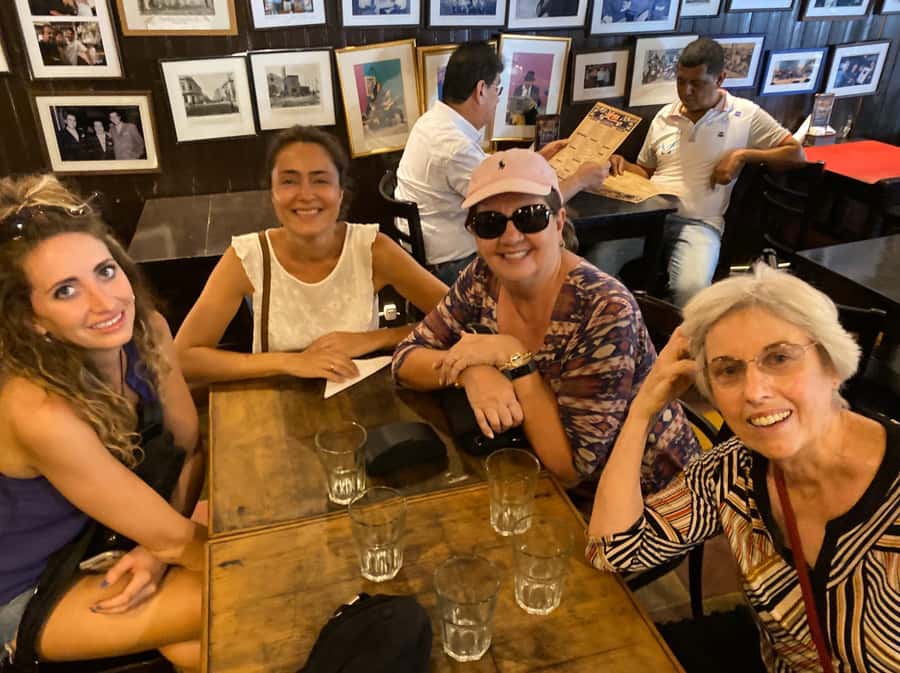
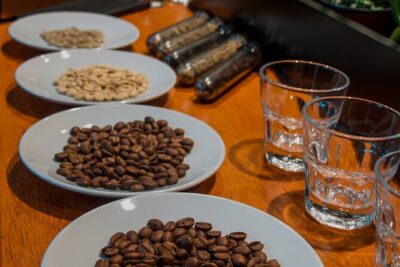
The itinerary includes a coffee stop, and it’s not treated like a throwaway. The highlight notes an old café of 1882, which adds a little extra flavor to the pause.
This is also where a lot of tours fail: they rush. Here, the coffee time helps you digest the story. You get a chance to ask follow-up questions, compare notes with your group, and decide what you want to revisit.
If you’re someone who loves street scenes but also loves context, this café break feels like the right rhythm.
What’s included, what isn’t, and why the $35 feels fair
The price is listed as $35 per person for about 150 minutes in total, with a small group capped at 10. I think that’s fair value when you look at what’s covered: entrances to the Volunteer Fire Department and the conventillo, plus coffee.
The cost only starts to feel less ideal if you were planning to make a big museum day out of La Boca. The Museum of Fine Arts of La Boca is mentioned as optional, including that part of the building was the home of Benito Quinquela Martín—but the museum ticket isn’t included. If museum time is your priority, you’ll want to plan for extra spending.
What is not included is also simple: food. Coffee is included, but you’ll still need to eat on your own. That’s not a negative; it’s just a reminder that this is more of a guided story and access tour than a full-day package.
Who this tour suits best
This experience fits best if you want La Boca to make sense. It’s perfect for:
- People who like street art with context, not just photos
- Anyone curious about immigration-era life and how communities organized themselves
- Football and culture fans who want to understand why Boca Juniors matters
- Travelers who enjoy small groups and conversation
It might be less ideal if you want:
- Long museum time (especially since the Quinquela Martín museum ticket isn’t included)
- A very casual, unstructured wandering day
Also, it’s noted as not suitable for people over 95 years, and it has rules like no jewelry and no alcohol or drugs during the tour.
Timing, pace, and comfort notes for a 2.5-hour story
The duration is 150 minutes, and the tour starts in La Boca and ends in Caminito. That timing is handy: it gives you the neighborhood context without swallowing your whole afternoon.
Because it includes interior visits (the conventillo and the fire station), the day isn’t only outdoors. Still, you will move between stops. A small group of up to 10 helps keep the pace manageable and gives your guide room to answer questions.
One review detail I found especially reassuring: Paola stays attentive to participants’ wellbeing during intense heat. If you’re visiting in hotter months, that kind of practical awareness matters.
Should you book La Boca Off the Beaten Track?
Book it if you want a La Boca tour that feels like it’s about identity, not just scenery. I’d especially recommend it when you care about understanding why the neighborhood has its murals, why institutions like the Volunteer Fire Department mattered, and how football and church life tied into refuge for displaced people.
Skip it (or at least reconsider) if your main goal is classic Caminito photos with minimal explanation, or if you want a full museum day without needing to add tickets.
If you do book, bring curiosity and a willingness to look past the obvious. This tour teaches you to read La Boca like a living document. And when you reach Caminito for tango and fileteado, it hits harder because you’ll know what you’re seeing.
FAQ
What is the duration of La Boca Out off the Beaten Track?
The tour lasts about 150 minutes.
Where does the tour start and where does it end?
It starts at the corner of Martín Rodríguez and Avenida Don Pedro de Mendoza in La Boca and finishes in Caminito.
How big is the group?
It’s a small group with a maximum of 10 participants.
What languages is the tour guide available in?
The live guide offers the tour in Spanish and English.
What is included in the price?
Entrance to the Volunteer Firefighter Station, entrance to the Conventillo, and coffee are included.
Is food included?
No. Food is not included.
Is the Quinquela Martín Museum included?
No. If you want to visit the Museum of Fine Arts of La Boca (Benito Quinquela Martín’s home part of the building), the ticket entry is not included.
Is there a limit on participant age?
Yes. It’s not suitable for people over 95 years.
Are there any restrictions during the tour?
You must not bring jewelry, and alcohol and drugs are not allowed. Electric wheelchairs are also not allowed.
What are the cancellation and payment options?
You can cancel up to 24 hours in advance for a full refund, and you can reserve now and pay later.