REVIEW · BUENOS AIRES
Free Walking Tour of Buenos Aires
Book on GetYourGuide →Operated by Swell Experiences · Bookable on GetYourGuide
Meet Buenos Aires through its big symbols. This free walking tour is a fast, low-commitment way to understand why Plaza de Mayo and Casa Rosada matter. I like that it strings together the main sights without dragging you across the whole city, and I also like the focus on recognizable buildings like Café Tortoni and Avenida de Mayo. One big drawback: the tour’s overall rating is low, and at least one report says the guide didn’t show up—so I’d plan with a backup.
You’ll walk a classic route in the center of Buenos Aires with a live guide, spending set time at each stop (from about 10 minutes at Café Tortoni to 35 minutes at the Cathedral). You’ll meet the guide at Pirámide de Mayo, look for a black umbrella, and follow the group toward the National Congress of Argentina.
In This Review
- Key highlights to know before you go
- Starting at Pirámide de Mayo: the perfect launch point
- Casa Rosada and Evita Perón: politics with street-level drama
- Buenos Aires Metropolitan Cathedral: a 35-minute reality check on scale
- Avenida de Mayo for one full hour: European charm at walking speed
- Obelisco, La Prensa, and the quick hits between anchors
- Café Tortoni: a short stop that breaks up the walking
- Palacio Barolo and the Barolo Palace look: more than just a photo spot
- Finishing at the National Congress: your last landmark is a strong one
- Price and value: what $10 buys you in the center
- Who should book this walking tour (and who should skip)
- My booking verdict: should you book?
- FAQ
- FAQ
- How long is the Free Walking Tour of Buenos Aires?
- Where is the tour starting point?
- Where does the tour finish?
- Which major sights are included?
- What languages is the tour offered in?
- How much does it cost?
- Is it wheelchair accessible?
- Can I cancel for a refund?
Key highlights to know before you go
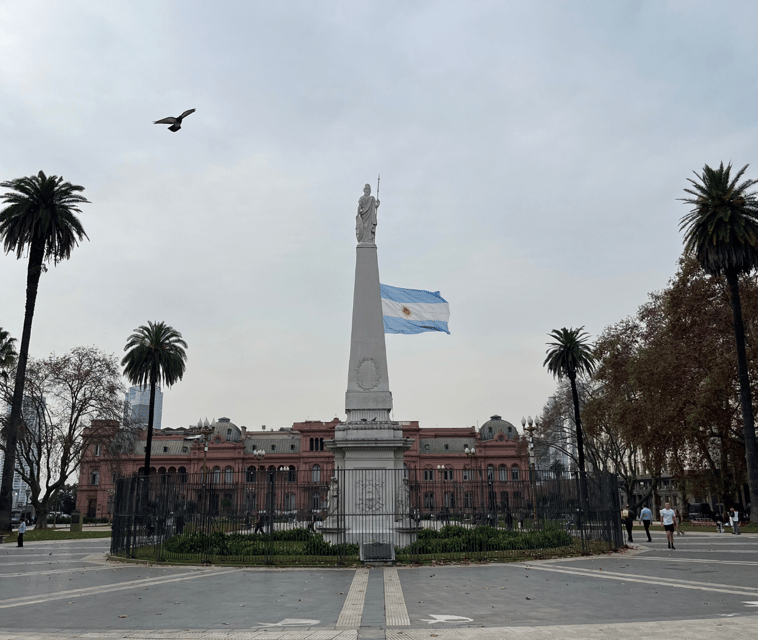
- Plaza de Mayo first: You start where Argentina’s independence declaration happened, then move straight into the political heart of town.
- Casa Rosada focus: Expect a guided stop with time to connect the building to iconic cultural moments.
- Avenida de Mayo on foot: You get a full hour along a grand street lined with imposing, old-world architecture.
- Café Tortoni and Café culture: A short guided stop at a famous historical café gives you a breather and a sense of local flavor.
- Palacio Barolo stop: You’ll add one more standout building before finishing near the Congress.
- Low rating caution: With an overall rating of 1.5 and at least one guide-no-show comment, stay alert the day of your tour.
Starting at Pirámide de Mayo: the perfect launch point
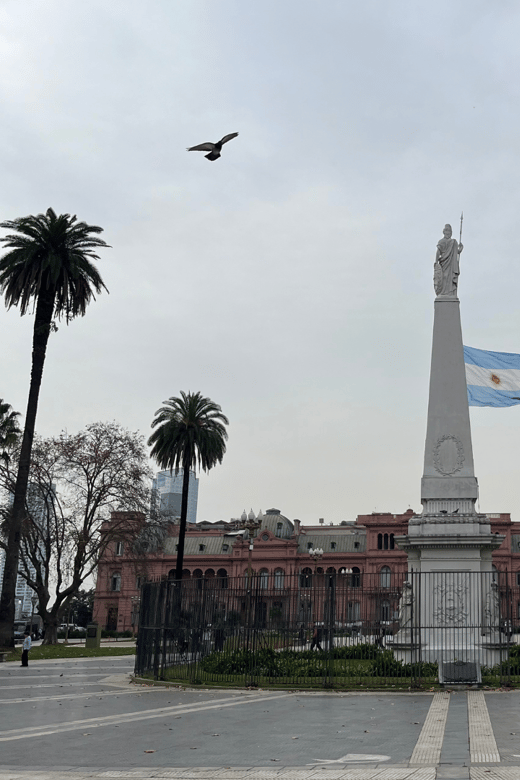
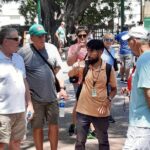
The tour kicks off at Pirámide de Mayo, with the guide waiting for you holding a black umbrella and identifying as SWELL. That meeting style is practical in a city center where crowds can swallow details fast. It also puts you right into the action from the first minute, instead of wasting time getting oriented somewhere else.
This starting point matters because it sets the tone: you’re not just sightseeing random monuments. Plaza and its surrounding buildings are where Buenos Aires shows you the push and pull between government power, public life, and national identity. From here, the route is built to get you from broad ideas to specific landmarks quickly.
One more small advantage: the tour is listed as wheelchair accessible. The walking route is still a walking route, so you’ll want to think about your personal comfort for city sidewalks, but the provider does flag accessibility.
If you’re a first-timer, this kind of start helps you build a mental map. You’ll know where you are relative to major anchors like the Casa Rosada area and the Congress zone, which makes the rest of your day in Buenos Aires much easier.
You can also read our reviews of more walking tours in Buenos Aires
Casa Rosada and Evita Perón: politics with street-level drama
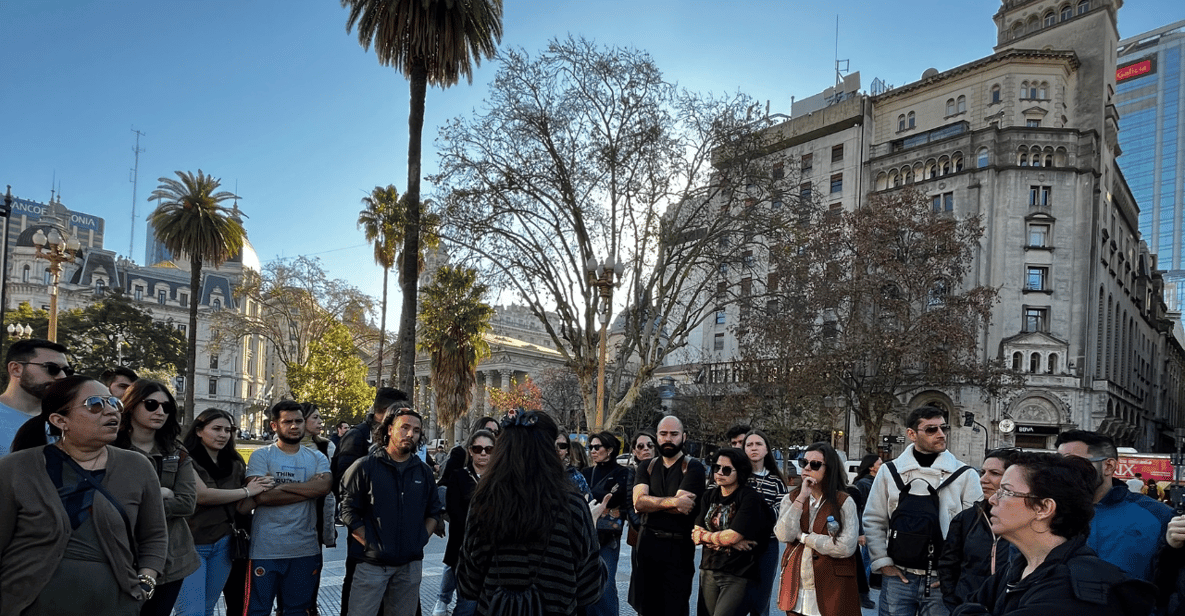
Next up is Casa Rosada, Argentina’s government headquarters, with a guided stop of about 20 minutes. Even if you’re not a politics buff, you’ll get why this building is treated like a living symbol rather than just an office.
The tour ties the experience to a specific cultural reference: a balcony moment connected to Evita Perón singing Don’t Cry for Me Argentina. That’s the kind of detail that helps you remember what you’re looking at, because it links the architecture to a story people actually repeat.
What I like about this stop is the balance of “big landmark” and “human story.” Casa Rosada can feel abstract if you just look at it from street level. A guide’s framing turns it into something you can picture—where crowds gathered, how public messaging became part of the building’s identity.
The one thing to keep in mind: the stop is scheduled and time-limited. You’re not getting a long, slow visit. If you love lingering, take photos quickly, then use any free moments after the guided part to re-check details like façade features, nearby plazas, and street layout.
Buenos Aires Metropolitan Cathedral: a 35-minute reality check on scale
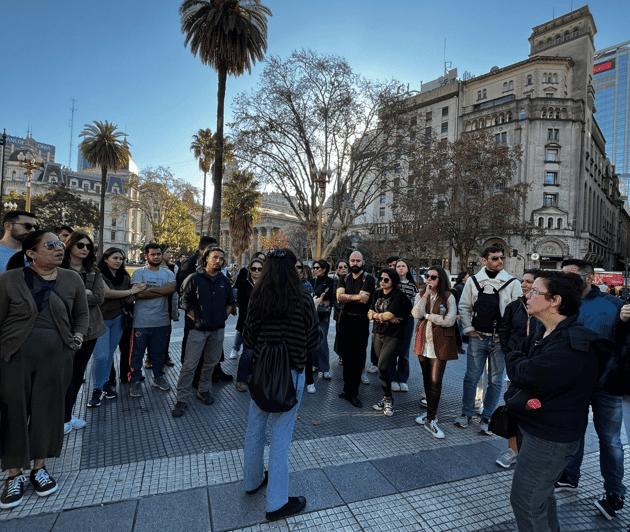
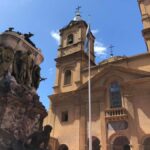
The route moves to the Buenos Aires Metropolitan Cathedral, with about 35 minutes guided. This longer window compared to other stops tells you the tour expects you to actually register the cathedral’s size and presence.
In many cities, cathedrals blend into the background once you’ve seen one or two. Here, the location and the surrounding governmental energy make it feel different. You’re still in the center of power and national identity, and the cathedral sits in that same web.
The Cathedral stop is a good counterbalance to Casa Rosada. The government building is about state decisions. The cathedral connects to long-term tradition and public meaning. Together, they help you understand Buenos Aires’ center not as a single theme, but as overlapping layers of authority and ceremony.
Practical note: expect a guided walk and look-around rather than a deep interior exploration, since the time window is set. If you want extra interior time later, it’s the kind of place you can often return to after your tour breaks.
Avenida de Mayo for one full hour: European charm at walking speed
Then you get the segment that usually turns a “sights list” into an actual experience: a full one hour on Avenida de Mayo. This avenue is described as having European charm, and the itinerary specifically points you to centenary building architecture and history hidden behind their walls.
This is where the tour earns its value, because it slows down just enough for you to notice the street’s rhythm—façades, corners, and how the architecture changes as you walk. Even if you’re not reading plaques, your eyes start catching patterns: symmetry, ornamentation, and the kind of “old city” feeling that’s easy to miss if you’re only passing by.
The guided approach also helps you avoid the common tourist mistake here: treating Avenida de Mayo as simply a photo backdrop. With a guide, you get a reason to look at the details, like how the buildings relate to the city’s growth and public life.
If your legs are tired, save some energy here. This section is long enough to feel like the center of the tour, so it’s worth wearing comfortable shoes and carrying water. You’ll cover distance, but it’s the most rewarding stretch visually.
Obelisco, La Prensa, and the quick hits between anchors
Along the walk, the route also includes big-name highlights such as the Obelisco and the La Prensa building. Even though not every stop has a listed minute-by-minute breakdown, these are the moments that make Buenos Aires feel like Buenos Aires.
These are quick-hit landmarks, the kind you recognize instantly. And that matters because the tour is designed for first-time orientation. When you see the Obelisco as part of a guided storyline, it stops being just a landmark and becomes a marker of how Buenos Aires organizes public space.
The tour also mentions walking past or by places connected to Argentina’s political and cultural memory, including the Mural of Evita Perón and the Barolo Palace area. These “in-between” details are easy to miss if you’re just moving from one major sight to another. A guide’s route planning helps tie them together into a sequence that makes more sense.
One consideration: with multiple major sights in a short time window, you may not have long to stop for deep photos. That doesn’t mean the tour is rushed, but it does mean your best strategy is to be ready to take photos quickly, especially when the group is moving.

Café Tortoni: a short stop that breaks up the walking
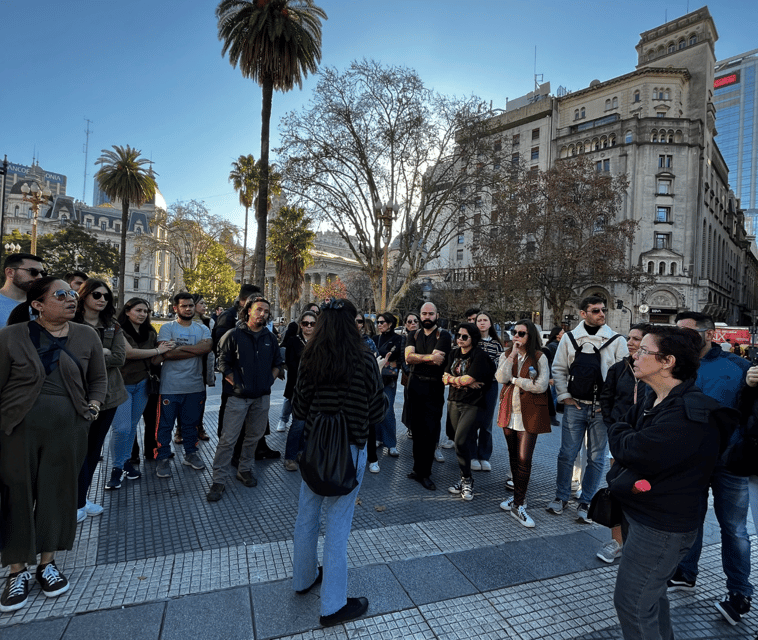
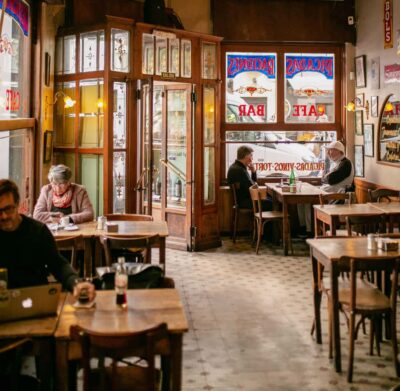
The tour includes a guided stop at Café Tortoni, Buenos Aires, with about 10 minutes allotted. This is a smart pacing choice. After walking through plazas and monumental architecture, a café stop gives you a moment to reset without turning the tour into a long break.
Café Tortoni is known enough that you’ll likely recognize the name, and even a brief stop can give you a sense of how Buenos Aires social life and public culture show up in real places. Ten minutes is short, so think of it as a look-and-context stop rather than a full café hang.
If you want coffee, this is the time window to decide quickly. If you’re traveling with limited time, consider buying something later in the day once you’ve planned your next blocks. If you love the idea of doing it right, use the guided moment to learn what makes the café notable, then decide on a return visit.
The main value here is not the caffeine. It’s the shift from “monuments” to “everyday culture,” which helps the city feel less like a museum and more like a living place.
Palacio Barolo and the Barolo Palace look: more than just a photo spot
Next is Palacio Barolo with about 15 minutes guided. This building is the kind of stop that adds personality to the tour. One hour on an avenue gives you style and scale; a shorter architectural detour like this adds curiosity.
Because the itinerary keeps this stop focused—just 15 minutes—you’re not expected to become an expert on the building. Instead, you’ll likely get the key ideas about why the structure is unusual or memorable. That’s perfect for many travelers who want context without getting trapped in a slow lecture.
I also like that the route includes both a major political institution (the Congress) and an architectural character building (Palacio Barolo). Buenos Aires can feel heavy in the center if you only focus on government and churches. This stop adds variety.
Just keep your expectations aligned with the time. You’ll get an organized guided view, not an extended inside visit based on the information provided.
Finishing at the National Congress: your last landmark is a strong one
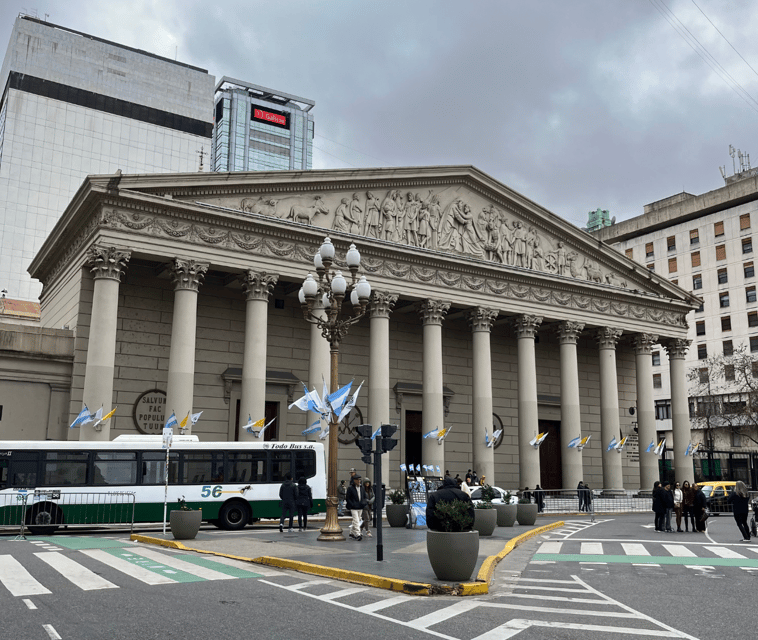
The tour ends outside Congreso de la Nación Argentina. The itinerary frames this as a symbol of Argentine democracy and as the site of transcendental moments in the country’s history. You also get placed on one of the prettiest squares in the capital, which is a nice final setting for group photos and a breather.
This finish point makes sense for route logic. Starting near Plaza de Mayo (another concentration of historic political drama) and ending near the Congress gives you a loop of national identity that feels intentional rather than random. Even if you only remember a few stops, those two bookends help the whole walk click.
One thing to be aware of: the activity notes say the tour activity ends at Congreso, but it also mentions the activity ends back at the meeting point. Since those instructions conflict, you should treat the day-of instruction from the guide as the deciding factor. In practice, you’ll likely wrap at/near the Congress area for a proper ending rather than trekking back.
Price and value: what $10 buys you in the center
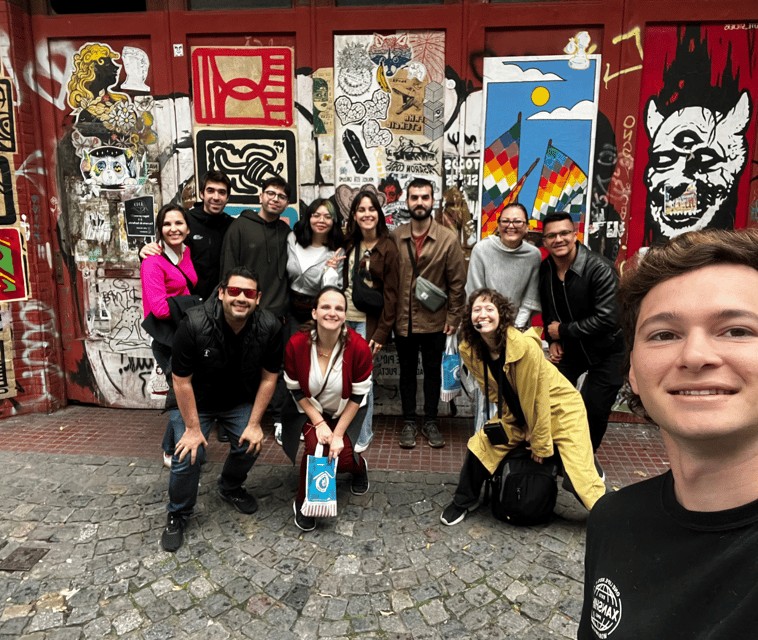
The experience is listed at $10 per person for a 2-hour guided walk. That’s not expensive for a structured itinerary that hits major city anchors: Casa Rosada, the Cathedral, Avenida de Mayo, Obelisco, Café Tortoni, Palacio Barolo, and ending near the Congress.
The value here is time efficiency and story framing. Buenos Aires’ center can be a little intimidating if you don’t know what you’re looking at. A guide helps you connect the buildings to events and cultural references, which is what turns a walk into something you can actually use later when you explore on your own.
That said, the low rating is part of the value equation. When a tour has an overall rating of 1.5 and includes a report that the guide did not show up, you should treat this as a “good idea with a risk check,” not a guarantee.
If you go, I’d do one smart thing: build in a bit of flexibility afterward. That way, if the tour runs late or has issues, you still protect your day.
Who should book this walking tour (and who should skip)
This tour fits best if you:
- Want a first-time orientation to Buenos Aires’ historic center
- Prefer walking routes with scheduled time at each landmark (instead of open-ended wandering)
- Like architecture and public-story landmarks like Casa Rosada and Avenida de Mayo
- Are okay with a two-hour window and short guided stops at each sight
You might skip or choose something else if:
- You hate the idea of a quick visit at many stops, since several are under 20 minutes
- You need strong reliability above all else, given the low rating and the guide-no-show comment you have here
- You want deep museum-style detail, since this is structured as a city walking tour rather than a long, inside-focused experience
Also, if you’re traveling with mobility constraints, check how the walking will feel for you. The tour is flagged as wheelchair accessible, but the itinerary is still centered on a walking route.
My booking verdict: should you book?
My take: this tour can be a solid way to see Buenos Aires’ classic center fast, especially if you want landmarks like Casa Rosada, Avenida de Mayo, Café Tortoni, and a finish at the National Congress.
But I can’t ignore the warning sign. The rating is low, and there’s at least one clear complaint about the guide not showing up. If you’re on a tight schedule, I’d rather not treat this as your only plan for the day.
If you do book, go with a calm backup strategy: keep your next activity flexible, double-check your timing close to departure, and be ready to re-plan if the meeting doesn’t go smoothly. That way you still get the upside—great center landmarks with guided context—without letting one bad start ruin your day.
FAQ
FAQ
How long is the Free Walking Tour of Buenos Aires?
It’s listed as a 2-hour guided walking tour.
Where is the tour starting point?
The starting point is Pirámide de Mayo. The guide waits for you there holding a black umbrella and identifies as SWELL.
Where does the tour finish?
The itinerary says it finishes outside Congreso de la Nación Argentina.
Which major sights are included?
The tour includes Casa Rosada, the Buenos Aires Metropolitan Cathedral, Avenida de Mayo, Café Tortoni, Palacio Barolo, and it passes by highlights like the Obelisco and the National Congress area.
What languages is the tour offered in?
The tour is listed with 11:00 Español and 14:30 English, and the information also states the live guide is Spanish. Check your time slot to confirm what language you’ll get.
How much does it cost?
The price is listed as $10 per person.
Is it wheelchair accessible?
Yes, the activity is listed as wheelchair accessible.
Can I cancel for a refund?
The tour lists free cancellation up to 24 hours in advance for a full refund.