REVIEW · BUENOS AIRES
Nazis in Buenos Aires: a historical walking tour
Book on GetYourGuide →Operated by Klio Tours · Bookable on GetYourGuide
Buenos Aires hides wartime secrets in plain sight. This controversial historical walk, led by Max (a University of Buenos Aires history teacher), connects Nazi escape routes and Holocaust debates to everyday streets in Recoleta, Retiro, and Microcentro, using street-level landmarks as your class notes. I especially liked how the guide ties big names and big claims to specific locations, and how he stays focused on evidence and context rather than easy slogans.
The main drawback is that this is heavy history, and the tour works best if you come with at least a basic sense of World War II and the Holocaust. I’d also keep in mind it’s not set up for kids under 10, and it’s not for wheelchair users.
In This Review
- Key highlights you’ll feel quickly
- A Streetside Lesson on Nazi Flight and Jewish Life in Buenos Aires
- Who’s behind the tour: Max, a UBA history teacher on the ground
- Route reality check: 2.5 hours of walking, one restroom pause
- Stop by stop: from Juana Azurduy to the former Israeli embassy memorial
- Stop 1: Monumento a Juana Azurduy, starting the political frame
- Stop 2: Luna Park Stadium, where ideology met a huge room
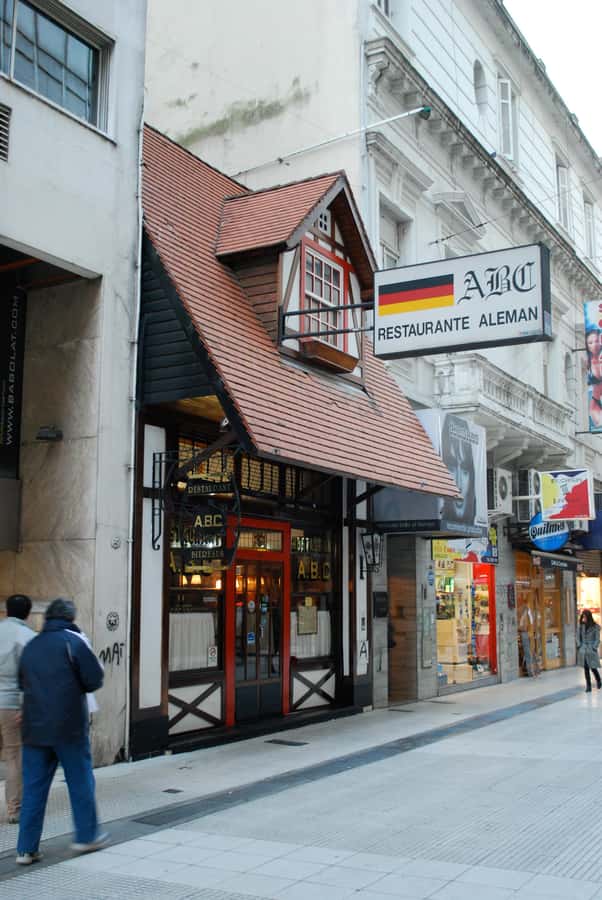
- Stop 3: ABC Restaurant, Eichmann and that coffee story
- Stop 4: Museo de Armas de La Nación Tte. Gral. Pablo Riccheri, weapons and power
- Stop 5: Palacio San Martín, Argentina’s bigger political stage
- Stop 6: Italian Circle of Buenos Aires, a 1960s neo-Nazi attack site
- Finish: Plaza Embajada de Israel, the former Israeli embassy memorial
- What you’ll learn that’s harder to get on your own
- Practical advice before you go (so the tour lands better)
- Who should book this tour—and who might want to skip it
- Should you book Nazis in Buenos Aires with Klio Tours?
- FAQ
- How long is the Nazis in Buenos Aires walking tour?
- What does the tour cost?
- Is the tour offered in English?
- Where does the tour start?
- Where does the tour end?
- Are entrance tickets included for Luna Park Stadium or other buildings?
- Is there a break during the tour?
- Is it suitable for children and wheelchair users?
- End of review
Key highlights you’ll feel quickly
- Eichmann and a cup of coffee: you’ll hear the story linked to the ABC restaurant stop
- A still-running venue tied to Nazi meetings: the huge Luna Park arena is part of the narrative
- The Latin America terrorism connection: the walk ends at the former Israeli embassy memorial site
- A neo-Nazi attack from the 1960s: you’ll visit the relevant Buenos Aires location tied to that era
- Jewish community history in Buenos Aires: you learn why this city matters in the wider Holocaust story
- Perón-era politics in the mix: you’ll get the debates, not just a one-sided answer
A Streetside Lesson on Nazi Flight and Jewish Life in Buenos Aires
If you’ve ever wanted Buenos Aires to feel more than postcard-ready, this tour is for you. The big idea is simple: Argentina did attract Nazi war criminals after 1945, and the country’s role in that postwar period is still disputed. The walk gives you the street layout of that argument—so you’re not just reading about it in a book, you’re standing where it happened or was discussed.
Max runs it like a university seminar you can walk to. He asks you to think about how far evidence goes, what governments knew or didn’t know, and how antisemitism played out in Buenos Aires over decades. And because the tour is in English and timed tightly (about 2.5 hours), you’ll get a strong through-line instead of a random hit-list of stops.
This is also a tour where you’ll likely learn new ways to connect Argentina’s 20th-century politics to World War II and the Holocaust. One reason it lands so well is that it doesn’t treat Nazis in Argentina as a standalone plot twist. It treats it as part of a longer story: wartime ideology, postwar migration, local politics, and the lived consequences for Buenos Aires’ Jewish community—the second largest in all of Latin America.
You can also read our reviews of more walking tours in Buenos Aires
Who’s behind the tour: Max, a UBA history teacher on the ground
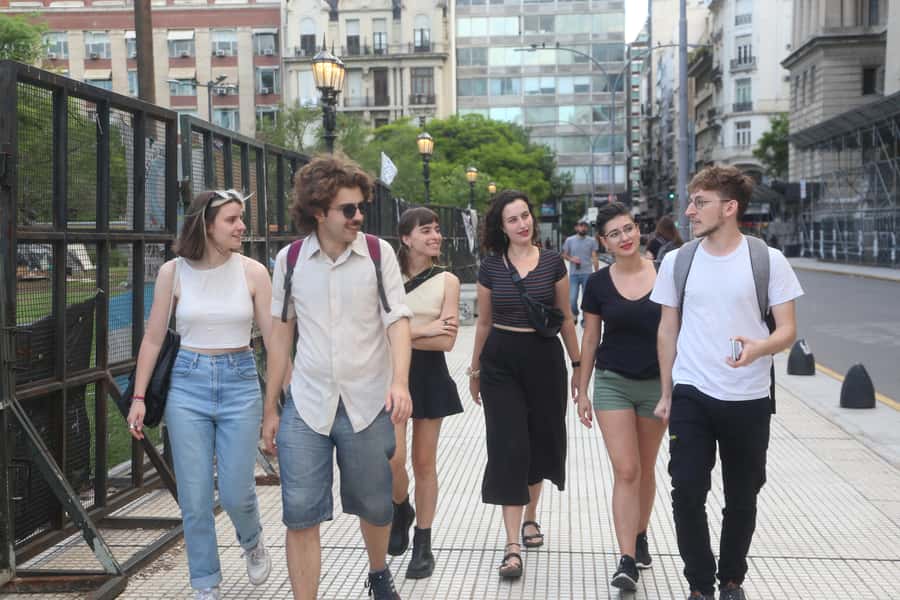
Max is the reason many people rank this so high. He doesn’t just recite facts; he explains how claims are built. In the group, you can expect him to handle questions thoughtfully and to admit when something isn’t certain. That matters here, because the topic is disputed and often politicized elsewhere.
He’s also clearly prepared. People mention that he uses visuals (graphics and/or relevant pictures) to support the story at each stop. That helps you keep the names straight—especially when you’re moving through neighborhoods like Retiro and Microcentro, where it’s easy to get lost in the scenery.
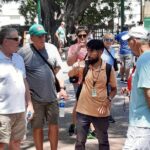
Practical tip: Max wears a black cap by the benches facing Palacio Libertad (the building formerly known as the CCK). If you’re a little early, take a minute to orient yourself so you don’t start the tour half-distracted.
Route reality check: 2.5 hours of walking, one restroom pause
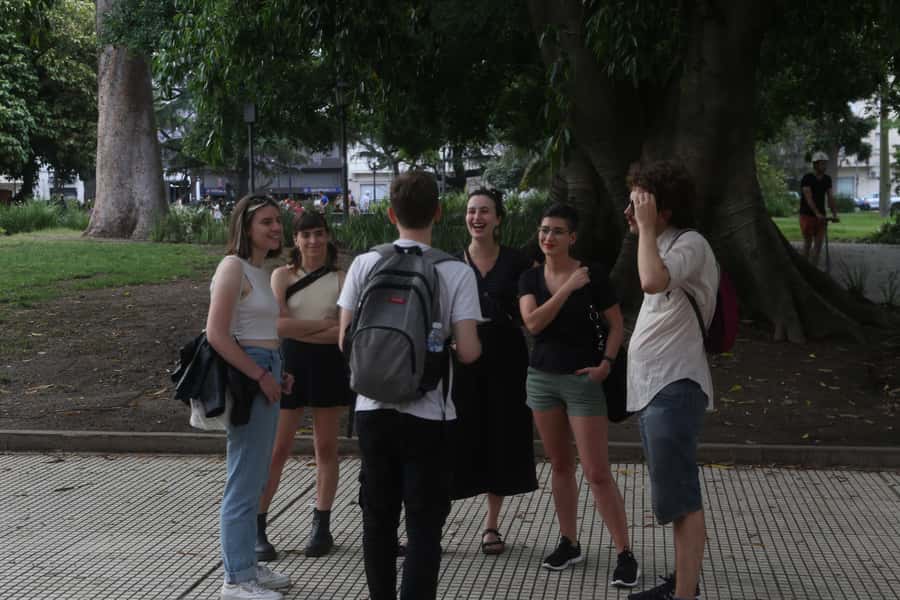
This is a walking tour in a central part of Buenos Aires, so wear shoes you’d trust for several blocks at a steady pace. You’ll cover Recoleta/Retiro/Microcentro connections over roughly 2.5 hours, with a short scheduled break (about 10 minutes) for restroom use.
Entry into some major sites is not included. For example, Luna Park Stadium is listed as not included for entry, so expect the historical story around it more than an inside visit. That’s not a dealbreaker. The walk’s goal is interpretation—turning the city’s surfaces into a coherent explanation of Nazi-related history, Jewish community history, and Argentina’s political debates.
Price-wise, it’s $25 per person for a guided tour of about 2.5 hours. For Buenos Aires, that’s a strong value when you consider the scope: multiple major stops, a debate-heavy subject, and a guide who’s teaching in a structured way rather than doing a quick “point and explain” stroll.
Stop by stop: from Juana Azurduy to the former Israeli embassy memorial
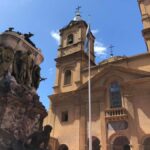
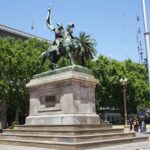
You start at the Monumento a Juana Azurduy, a few meters from the meeting spot by Palacio Libertad (formerly known as the CCK). It’s a good start point because it immediately places you in a political and cultural corridor—then the guide gradually links the present-day city to the postwar past.
Stop 1: Monumento a Juana Azurduy, starting the political frame
This start matters more than it looks. Max uses the opening to set the stage: what post-1945 “escape” meant, why it happened, and how Argentina’s mid-century politics gets pulled into the discussion. He also nudges you to keep a question in your head: What did leaders and institutions know, and how did they respond?
If you already know the basics of WWII and the Holocaust, you’ll feel more comfortable right away. If not, you can still keep up, but the tour moves at a thinking pace—not a slow museum pace.
You can also read our reviews of more historical tours in Buenos Aires
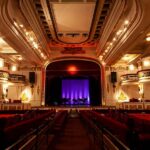
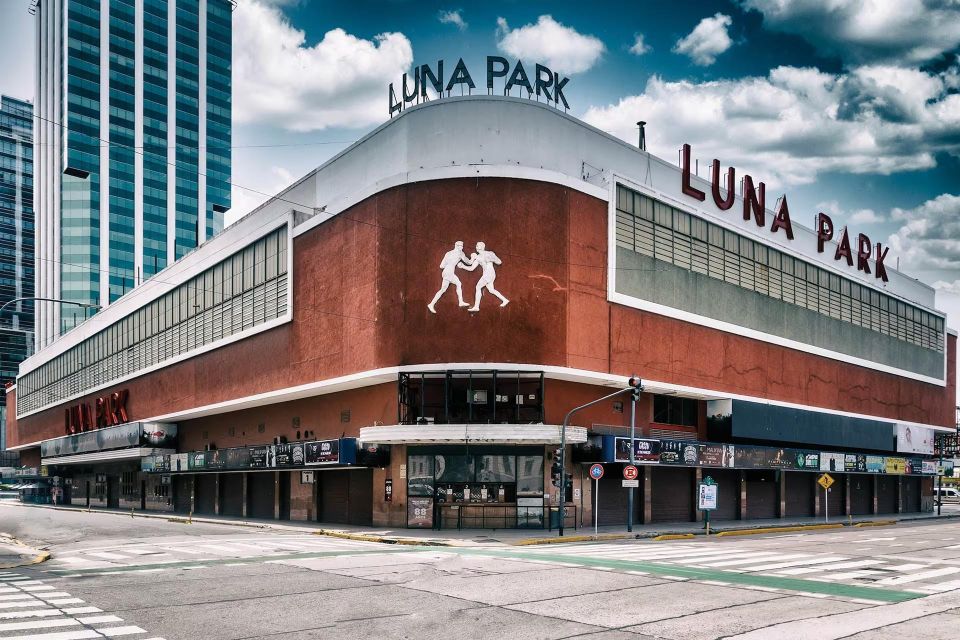
Stop 2: Luna Park Stadium, where ideology met a huge room
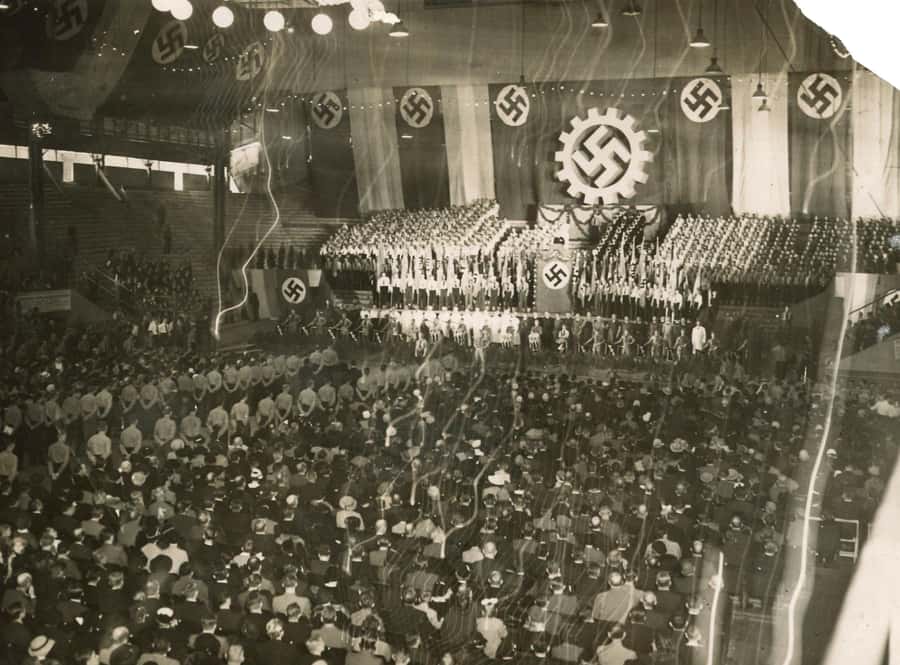
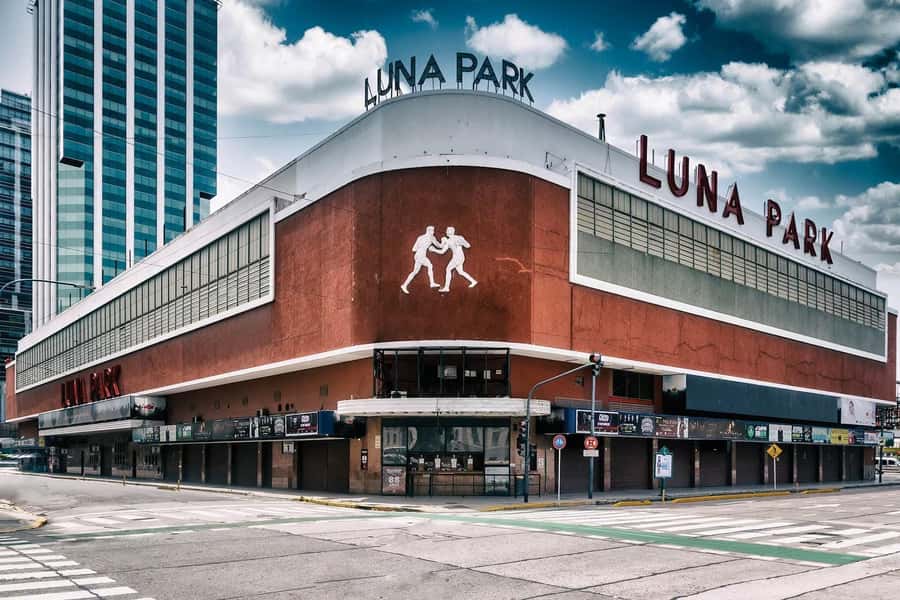
At Luna Park Stadium, you’ll hear about a Nazi-related meeting connected to the venue. The key detail here is scale: this is a massive theater/arena setting, and the story includes the claim that around 15,000 people were involved in a Nazi meeting held there. Even if you don’t care about architecture, this stop works because it makes the ideology feel real—not like a page in a report.
And because Luna Park is still in operation, you get a jarring contrast. The building continues life as a performance space, while the historical narrative tied to it is morally brutal. That contrast is the point.
What to watch for: this isn’t presented as ghost story. It’s presented as a political reality—how public spaces can be used for propaganda and how communities can be affected long after the meeting is over.
Stop 3: ABC Restaurant, Eichmann and that coffee story
Next comes the stop that many people remember most: the place connected to Adolf Eichmann sitting for a cup of coffee. Whether you already knew the name Eichmann or you’re learning it fresh, this moment turns a distant figure into a street-level story.
From there, Max builds toward the larger arc: the spy-like story of Eichmann’s identification and capture. The tour treats this as more than a thriller plot. It connects the postwar movement of people to how investigations eventually caught up with them, and how that process affected the broader understanding of the Holocaust.
A useful mindset for this stop: don’t treat the coffee detail as trivia. Treat it as a reminder that the mechanics of history are often mundane on the surface. Then the consequences hit later, hard.
Stop 4: Museo de Armas de La Nación Tte. Gral. Pablo Riccheri, weapons and power
This stop shifts you from personal stories to institutional ones. In a museum setting focused on arms, you can start thinking about the tools of power—who holds them, what they’re used for, and how postwar politics overlaps with practical realities.
Even if you’re not going to spend time inside every exhibit, the museum stop is meant to help you grasp the context: Buenos Aires wasn’t isolated from international currents. It sat within a postwar world where weapons, security concerns, and political alliances shaped decisions.
Stop 5: Palacio San Martín, Argentina’s bigger political stage
Palacio San Martín is a reminder that governments don’t act in a vacuum. This stop is where the tour’s political debates start to tighten into focus: the stories about Nazi war criminals in Argentina after 1945 inevitably run into the question of national leadership—especially the era around Juan Domingo Perón.
Max presents debates around Perón as part of the discussion, not as a single catch-all answer. That’s valuable because it prevents the story from turning into a simple “one villain, one government, end of debate” narrative. History rarely behaves that neatly.
Stop 6: Italian Circle of Buenos Aires, a 1960s neo-Nazi attack site
This is where the tour shows you that extremist violence didn’t stay in the 1940s. The stop at the Italian Circle of Buenos Aires is connected to a neo-nazi attack in the 1960s. That connection matters because it helps you track continuity—how ideology and networks can persist even after the end of WWII as people try to restart their agendas in new forms.
For me, this is one of the most important stops because it keeps the tour from becoming only about the past. The past echoes through time, and the guide’s framing pushes you to notice that link.
Finish: Plaza Embajada de Israel, the former Israeli embassy memorial
The tour ends at Plaza Embajada de Israel, at the memorial site of the former embassy of Israel. This is where you connect the story of Nazi-era antisemitism with later acts of terror against Jewish and Israeli targets in Buenos Aires.
The tour description highlights this as the site tied to the worst terrorist attack in the history of Latin America, and the ending here reinforces why the subject isn’t just about Holocaust history books. It’s about real trauma and how violence against Jewish communities has surfaced in different decades.
Max leaves you with the bigger meaning: remember what happened, and also understand the conditions that let these tragedies recur. That’s not a moral lecture. It’s an argument for historical attention as prevention.
What you’ll learn that’s harder to get on your own
You can read plenty online about Nazi escape routes or Eichmann. But this walk helps you learn in a way that sticks: names and events are tied to physical places, and the guide makes you think about the uncertainty in disputed claims.
Here are a few learning outcomes I’d expect you to leave with:
- You’ll understand how debates about Argentina after 1945 connect to wider WWII and Holocaust narratives, including what might have been known or supported by institutions (and what remains contested).
- You’ll get a clearer picture of Buenos Aires’ Jewish community and why this city plays a big role in the continent’s history tied to the Holocaust.
- You’ll see how a single figure like Eichmann can be part of multiple layers of history: escape, recognition, identification, and capture.
- You’ll get Perón-era political context framed as discussion, not a one-line explanation.
Max’s approach—structured stops, visuals, and room for questions—also helps you avoid the “single story” trap. You’ll likely walk away with more questions than when you started, but better ones.
Practical advice before you go (so the tour lands better)
This tour works best when you do two small things before you start:
1) Bring a basic mental map of WWII and the Holocaust
You don’t need a textbook. You just need enough context to follow when the guide references ideology, persecution, and postwar movement.
2) Wear comfortable shoes and bring water
You’re walking through central neighborhoods. The subject is intense; don’t let a blisters-only problem derail your attention.
Also, be ready for a guided discussion tone. This isn’t designed to feel like you’re just being lectured at for 2.5 hours. Expect questions and answers.
Finally, if you’re picky about inside entries: note that some entries are not included, including Luna Park Stadium. The walk still hits the landmarks that matter, but don’t plan on a full museum day.
Who should book this tour—and who might want to skip it
Book it if:
- You like history that connects politics, people, and places
- You want a serious, evidence-focused guide who can handle disputed topics without turning them into a shouting match
- You care about Jewish history in Buenos Aires, not just the broad WWII headlines
- You’re curious about Eichmann and the way his capture story is explained in context
Skip it if:
- You don’t want to tackle heavy, upsetting material
- You’re traveling with kids under 10 (the tour isn’t suitable for them)
- You need wheelchair accessibility (it’s not suitable for wheelchair users)
- You’re expecting a light, purely scenic walk
Should you book Nazis in Buenos Aires with Klio Tours?
If you want Buenos Aires history that feels real and confronts uncomfortable truths, I think this is a strong pick. The value is good for the price, but the bigger reason is the teaching style: Max doesn’t just point at buildings; he explains how the story works, where evidence supports claims, and where debates remain open.
If your goal is to understand how WWII-era ideology and postwar politics played out in Argentina’s streets—and how antisemitism continued into later violence—this tour gives you that street-level “why” in about 2.5 hours.
FAQ
How long is the Nazis in Buenos Aires walking tour?
It runs for about 2.5 hours. The included walking tour is listed as two hours, with the total experience timed around that 2.5-hour window.
What does the tour cost?
The price is $25 per person.
Is the tour offered in English?
Yes, the live tour guide speaks English.
Where does the tour start?
You meet a few meters away from the Monumento a Juana Azurduy, near Palacio Libertad (formerly known as the CCK).
Where does the tour end?
The tour finishes at Plaza Embajada de Israel, at the memorial site connected to the former Israeli embassy.
Are entrance tickets included for Luna Park Stadium or other buildings?
No. Entry to Luna Park Stadium is not included, and entry to Casa Rosada and the Libertad Synagogue is also listed as not included.
Is there a break during the tour?
Yes. There’s a 10-minute pause to use the restroom.
Is it suitable for children and wheelchair users?
It’s not suitable for children under 10. It’s also not suitable for wheelchair users.