REVIEW · BUENOS AIRES
Buenos Aires Walking Tour with Local Guide and Optional Rooftop
Book on Viator →Operated by Tangol · Bookable on Viator
Buenos Aires in one day, by foot and bus. This small-group route strings together San Telmo, La Boca, Puerto Madero, and Recoleta, with your guide handling the navigation and the in-between moments so you can just look and enjoy.
I like the way the guide keeps things moving on foot with frequent photo stops (no hunting for parking or figuring out which corner comes next). I also like the built-in value: lunch is included (3 empanadas plus a drink), and if you book the optional rooftop, you get access to Palacio Barolo’s rooftop with a cocktail on the right day. The main consideration is simple: you’re walking and riding for about 5 to 7 hours, so it can feel long if you’re not up for steady movement.
In This Review
- Key highlights you’ll actually feel on the street
- Why this Buenos Aires walking-and-transit style works
- San Telmo on Calle Defensa: old streets, tango energy, and photo stops
- Mercado San Telmo and empanadas: history you can taste
- La Boca and Caminito: tango, color, and bus time that pays off
- Puerto Madero and Puente de la Mujer: the modern side of the city
- Plaza de Mayo and the Metropolitan Cathedral: politics, buildings, and walking steadiness
- Obelisco and 9 de Julio Avenue: the city’s big scale in real size
- Recoleta Cemetery and the end of the route: architecture and memory
- Optional Palacio Barolo rooftop: if you want one last view
- Price and value: what your $111 gets you
- Guides, language, and group flow: what to expect in real life
- Who this tour suits best
- Should you book this Buenos Aires tour?
- FAQ
- What time does the tour start?
- How long is the Buenos Aires walking tour?
- Where do I meet and where does the tour end?
- Is lunch included, and what’s in it?
- Is coffee or tea included?
- Is the Palacio Barolo rooftop included?
- What transport does the tour use?
- Will the tour run in the rain?
Key highlights you’ll actually feel on the street
- Guide-led wandering, not self-navigation: you’ll walk with direction and context instead of staring at a map.
- Big city coverage with public buses and subway: you get far-flung neighborhoods without trying to cross town solo.
- Photo-friendly pacing: the route includes stops where you can snap photos without turning it into a parking search.
- Lunch included (3 empanadas + soft drink) and a coffee/tea: a practical break built into the day.
- Optional Palacio Barolo rooftop on Wednesday: a fun add-on when you want one more Buenos Aires view.
- Small group limit (up to 15): easier conversation with your guide than in large bus tours.
Why this Buenos Aires walking-and-transit style works
Buenos Aires is a wide, sprawled-out city. Trying to “see it all” by taxi is expensive, and trying to do it all by yourself can turn into constant logistics. This tour is built around the middle road: you walk where it makes sense, then you hop on public bus and subway to move between neighborhoods without wasting hours.
What I like about this approach is that it matches how locals actually get around. You’re not only sightseeing landmarks; you’re also riding the same transit system that helps city life function. One guide even used old photos and printed material during stops, which makes the stories feel less like a lecture and more like a conversation about how Buenos Aires got its look.
Group size matters too. With a maximum of 15, it’s easier to hear your guide, and it’s less chaotic when the route turns from “wide avenue viewing” to “tight corner walking.”
You can also read our reviews of more walking tours in Buenos Aires
San Telmo on Calle Defensa: old streets, tango energy, and photo stops
The day starts at Defensa 831 in San Telmo, one of Buenos Aires’ older neighborhoods. You begin with Calle Defensa itself, where the mood is very “you’re walking through the city’s past” rather than standing behind a fence. The details here are the kind you only notice when you’re close: cobblestones, old buildings, and the famous street lamps called faroles.
Expect your guide to point out what to look for beyond the obvious: the way the architecture frames the sidewalks, how the neighborhood identity grew around arts and tango culture, and why San Telmo feels distinct from the more polished areas later in the day. This first stretch is a good warm-up. You’ll get moving early enough to build momentum, but you’re not rushed into the heaviest walking yet.
Tip: wear comfortable shoes right away. San Telmo’s streets are charming, but cobblestones ask for a little foot comfort.
Mercado San Telmo and empanadas: history you can taste
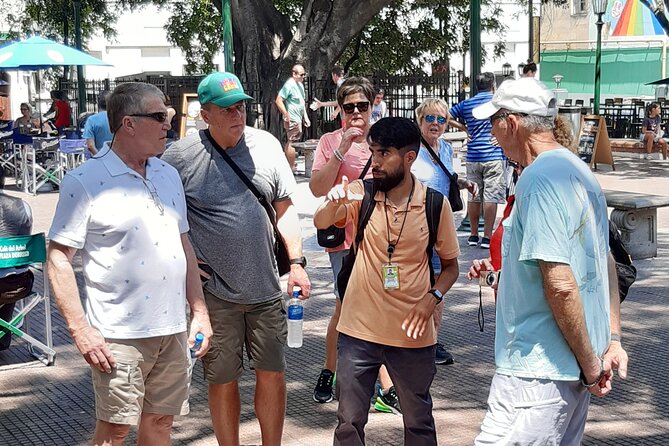
Next comes Mercado San Telmo, a market building inaugurated in 1897. This stop is more than “snack time.” It’s a snapshot of how immigration waves shaped Buenos Aires—this market was originally meant to supply the growing population.
Today, many stalls sell food and international-flavored dishes alongside traditional items, but the core idea still holds: people come here for daily eating and local culture. You’ll also taste empanadas as part of the included lunch. You can choose among options like beef, chicken, ham and cheese, or vegetables.
One practical detail: lunch is included as 3 empanadas of your choice, plus a soft drink. In other words, you’re not standing in a line trying to decide what looks good at the worst possible moment. You’ll still want to be realistic about dietary needs, though. On the downside, the lunch place didn’t cater to vegans for at least one guest, and substitutions weren’t great. If you need special accommodations, it’s worth messaging or asking during booking.
La Boca and Caminito: tango, color, and bus time that pays off
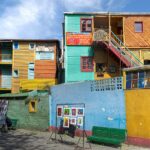
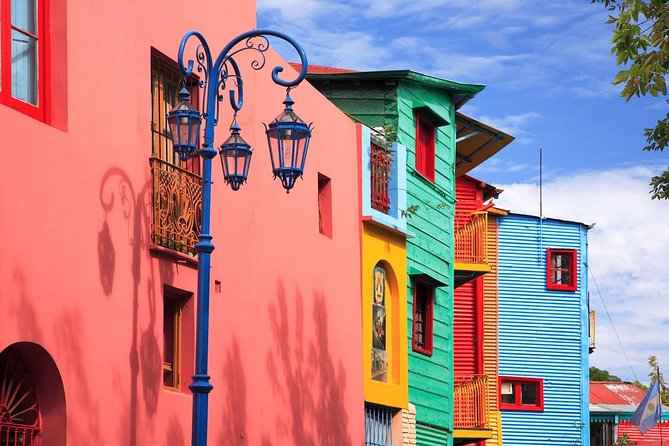
From San Telmo, you take a bus to La Boca, known for Boca Juniors and the color-soaked street of Caminito. This is the neighborhood where tango shows up in public life, not just in theaters.
You’ll spend about an hour at Caminito, where street tango dancing and singing performances create the energy. The point here isn’t just the scenery—it’s understanding how tango, soccer fandom, and immigration influences shaped Buenos Aires into a city with identity you can feel in the streets.
You do trade some walking for bus transit here, and that matters. Some people find bus time less fun, especially when traffic builds and you’re stuck waiting. But in this case, it’s part of what makes the day doable: you cover distance without sacrificing all your energy for walking.
Puerto Madero and Puente de la Mujer: the modern side of the city
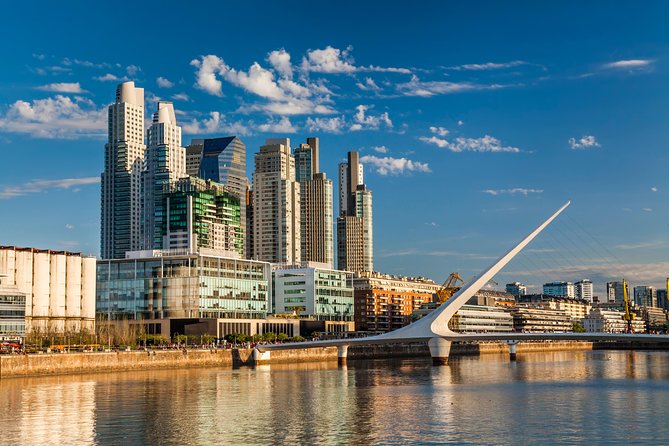
Next you ride to Puerto Madero, where the skyline shifts to modern skyscrapers. You’ll get short, clear viewing time at Puente de la Mujer, the iconic bridge designed by Santiago Calatrava.
That design is the whole story: the bridge’s asymmetrical shape resembles a tango couple mid-dance. It’s a nice contrast after La Boca because it shows the same city can be both old-world expressive and modern architectural.
The stop is brief (about 5 minutes), so treat it like a quick photo-and-think moment. Your guide should connect the design to Buenos Aires’ habit of mixing art, symbolism, and everyday city planning.
You can also read our reviews of more guided tours in Buenos Aires




Plaza de Mayo and the Metropolitan Cathedral: politics, buildings, and walking steadiness
Then you move into the heart of the city at Plaza de Mayo. First you explore Plaza de Mayo on foot, passing major landmarks such as the historic Cabildo. Along the way, you’ll also get views of major avenues and a chance to see the Metropolitan Cathedral.
This part is one of the stronger “walk-and-absorb” sections, because the plaza gives you an easy way to slow down without getting lost. You’re not just passing monuments; you’re learning how Buenos Aires organizes its most important civic spaces.
The tour includes about 30 minutes around Plaza de Mayo, with admission included. It’s long enough to take photos and actually orient yourself to how the city’s center is laid out.
Quick practical note: plazas can get loud and crowded. Your guide should manage the flow, but you’ll want to keep your pace steady and keep an eye out for your group when crossing busy areas.
Obelisco and 9 de Julio Avenue: the city’s big scale in real size
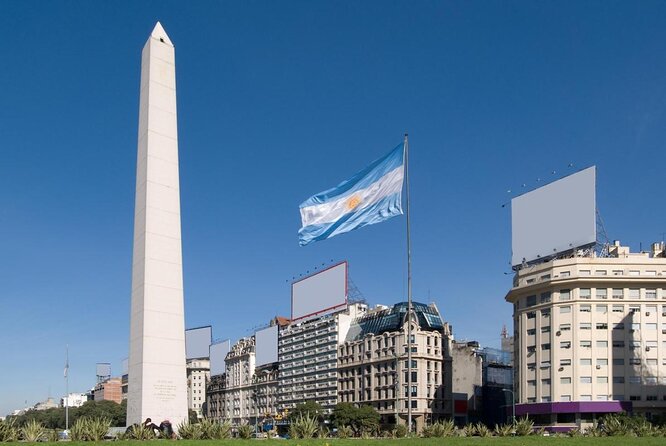
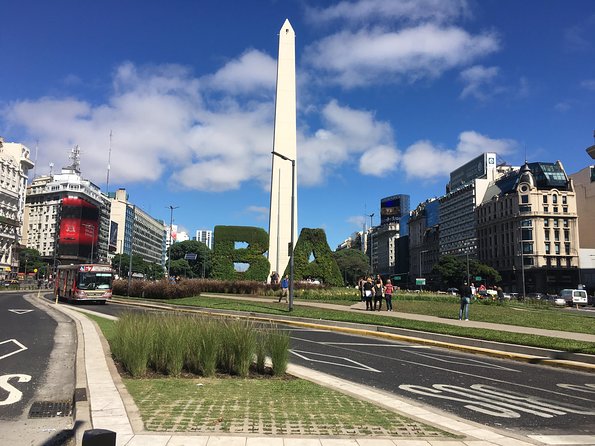
After Plaza de Mayo, you head to the Obelisk, another Buenos Aires symbol. This isn’t just a postcard stop. It’s a chance to see how the city’s scale feels when you walk its main routes.
Then you head along 9 de Julio Avenue, often cited as the widest avenue in the world. You’ll get around 15 minutes here, which is enough for a couple of good photo angles and a quick look at how buildings, monuments, and streets show Buenos Aires’ changes since its foundation.
This section is also where the tour shines for “first-time orientation.” If you want to understand where key neighborhoods sit relative to the city center, the Obelisk and 9 de Julio help lock that map into your head fast.
Recoleta Cemetery and the end of the route: architecture and memory
The last neighborhood is Recoleta, reached by subway from the earlier part of the tour. Recoleta is where elegant avenues, museums, cafés, and upscale shopping show up. It’s a different mood than San Telmo and La Boca, and seeing the shift in one day helps the city feel coherent instead of chopped into separate tourist bubbles.
You end at Recoleta Cemetery, with about 30 minutes and admission included. This is where many aristocratic families are buried, including famous historical figures such as Eva Duarte Perón.
The cemetery experience is short on purpose, so don’t expect a full-history museum tour. Instead, think of it as a guided walk through a dramatic place where Buenos Aires’ past is literally built into the stone.
Tip: bring a light layer if you run cold in cemeteries or churches. The climate can shift by time of day, and you’ll be standing and walking.
Optional Palacio Barolo rooftop: if you want one last view
If you choose the rooftop option (Wednesday), you’ll head to Palacio Barolo, an emblematic building inaugurated in 1923 and declared a National Historic Monument. The rooftop access includes admission and lasts about an hour, with a cocktail included.
What makes this stop interesting is the building’s symbolism—its architecture uses references connected to Dante Alighieri and the Divine Comedy. In plain terms, you’re looking at a building where the design isn’t accidental. It’s meant to say something.
This optional add-on is a smart way to finish the day if you want your last hour to feel more like a “Buenos Aires moment” than just another monument photo.
Price and value: what your $111 gets you
At $111 per person, you’re paying for more than narration. You’re getting:
- a professional tour guide
- public bus and subway transport
- lunch: 3 empanadas of your choice plus a soft drink
- coffee or tea
- optional: Palacio Barolo rooftop with a cocktail (Wednesday)
So the value isn’t just the route. It’s the fact that the tour handles the logistical stuff that often costs you time and stress on your own. You’re also not stuck paying extra entry fees for every stop: the itinerary includes admission where it matters (not every stop charges).
Where the value can wobble is food fit. The standard lunch is empanadas, and if you have dietary restrictions beyond what’s listed, you may find substitutions less satisfying. Also, the day’s pacing depends on transit and traffic. If you dislike waiting around, you might feel the bus legs.
Guides, language, and group flow: what to expect in real life
The tone of this tour depends heavily on your guide, and the names given by past guests suggest good English skills and strong local storytelling. Guides mentioned include Victor, Chan, Denise, Carlos, and Sylvia, plus Gabi/Gabriel in some cases. One guest praised a guide who used older photos and articles to explain the history behind sights, which is a great teaching trick because it makes “then and now” feel tangible.
Still, there can be mixed-language setups. At least one guest felt the group included another language track, which may reduce how tailored the history feels.
And pacing can vary. A couple of comments point to standing around during segments, and one person wished for fewer bus stops and more active walking with stronger commentary in the streetscape.
Who this tour suits best
This is a good fit if you:
- want a one-day overview of several Buenos Aires neighborhoods
- like learning while walking, rather than sitting on a long lecture
- want to use public transit with guidance
- appreciate practical inclusion: lunch, coffee/tea, and optional rooftop
It’s less ideal if you:
- hate long days on your feet (it’s roughly 5 to 7 hours)
- need strong vegan-specific meal planning
- prefer minimal waiting time during city traffic
Should you book this Buenos Aires tour?
If it’s your first or second day in Buenos Aires and you want to quickly understand how neighborhoods connect, I think this tour is worth booking. The route is built for orientation, and the included lunch plus transit saves you real mental energy. The small group size also makes the day feel more personal than typical big-bus sightseeing.
I’d say book with eyes open: wear comfortable shoes, plan for a long day, and ask about meal needs if you have restrictions beyond the listed empanada options. If you’re booking on a Wednesday and you want a final “wow” view, the Palacio Barolo rooftop option is a smart way to end the day.
If your travel style is mostly solo wandering with lots of spontaneous detours, you might be happier on a smaller walking tour instead. But if you want structure, stories, and a city map you’ll actually remember, this one does the job.
FAQ
What time does the tour start?
The tour starts at 12:00 pm.
How long is the Buenos Aires walking tour?
It runs about 5 to 7 hours.
Where do I meet and where does the tour end?
You meet at Defensa 831 in San Telmo. The tour ends at Recoleta Cemetery, Junín 1760.
Is lunch included, and what’s in it?
Yes. Lunch includes 3 empanadas of your choice (examples include beef, chicken, ham and cheese, or vegetables), plus 1 soft drink.
Is coffee or tea included?
Yes. One coffee and/or tea is included.
Is the Palacio Barolo rooftop included?
It’s included only if you select the rooftop option. The rooftop visit with a cocktail is included for those who choose that option.
What transport does the tour use?
The tour uses public bus and subway between neighborhood areas, with walking in between.
Will the tour run in the rain?
The tour is not subject to weather conditions and does not get canceled by rain.