REVIEW · BUENOS AIRES
From Colonialism to Eclecticism, Buenos Aires arquitectonica
Book on GetYourGuide →Operated by Viajes de Juani tours · Bookable on GetYourGuide
Buenos Aires changes fast when you read buildings. This 3-hour walk takes you from Plaza de Mayo’s iconic facades to the Brutalist Banco Hipotecario, then threads north through the city’s showbiz core toward Teatro Colón. I love how the guide connects architecture to everyday Argentine culture, and I love the mate tasting that makes the experience feel personal, not just scenic.
One thing to consider: this is mostly on foot for about three hours, so you’ll want comfortable shoes and to be ready for sun and street walking.
The bonus is the format. The group stays small (up to 4), and you can nudge the route toward what you care about most, whether that’s architectural style, city stories, or the culture stops.
In This Review
- Key points to know before you go
- From Plaza de Mayo classics to Argentina’s big-picture architecture
- Reconquista Street to the Banco Hipotecario: where style gets surprising
- Centro Cultural Kirchner and the old Post and Telegraph Palace
- Corrientes Avenue: Gran Rex and the Opera as living city icons
- The Obelisk, Plaza de la República, and Diagonal Norte views
- Plaza Lavalle: Courts Palace, the Julio Argentino Roca School, and the school-building story
- Mate tasting near the end: turning a walk into a cultural stop
- Finishing at Teatro Colón: what you get and what you can add
- Price and value: why $25 can feel like more than a walk
- Who will love this tour (and who might not)
- Should you book this Buenos Aires architecture walk?
- FAQ
- How long is the tour?
- What does the tour cost?
- Where do we meet and where does it end?
- How big is the group?
- What’s included in the price?
- What languages are offered?
- Is Teatro Colón entry included?
Key points to know before you go
- Small group (up to 4) means you can ask questions and get real back-and-forth.
- Brutalist Banco Hipotecario is a highlight you’d likely miss on a standard route.
- Mate tasting isn’t an afterthought; it’s part of the pacing and cultural context.
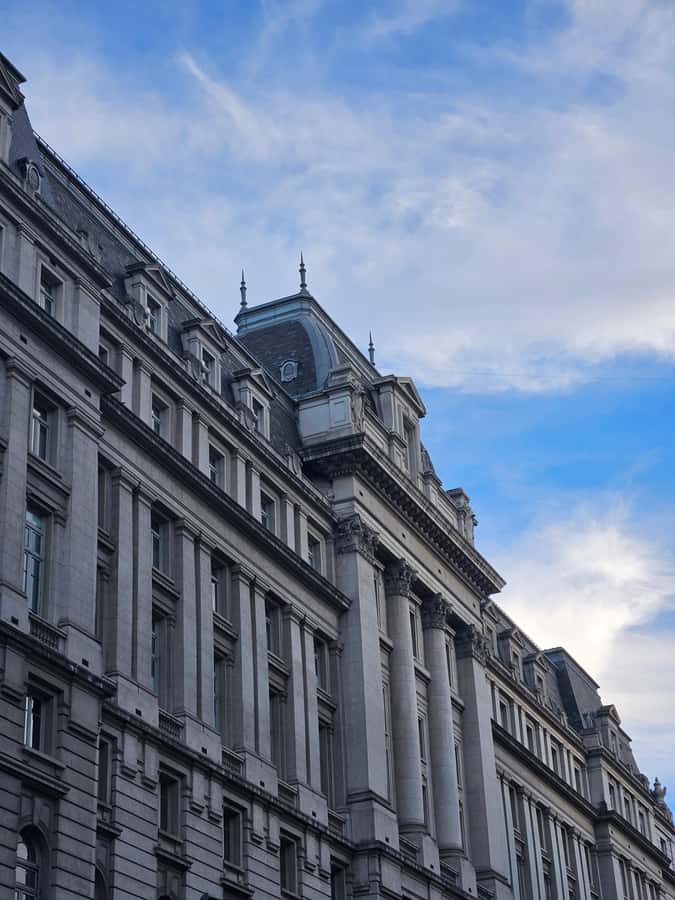
- You pass major icons and quieter corners across several architectural styles.
- You can focus your interests as you go, instead of being locked into one rigid script.
- Finish at Teatro Colón with an option to continue inside (entry not included).
From Plaza de Mayo classics to Argentina’s big-picture architecture
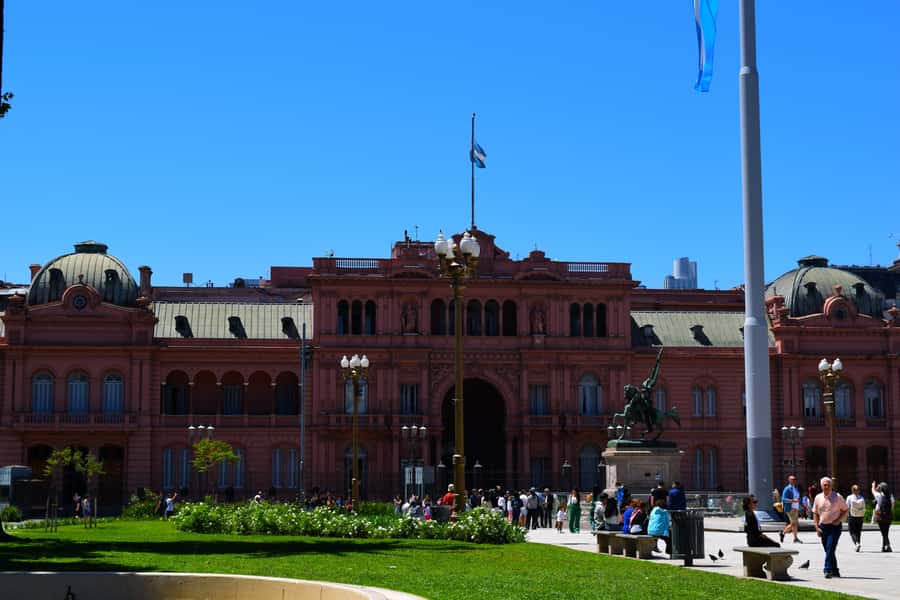
Your morning starts at Plaza de Mayo, right at the intersection of Bolívar and Avenida de Mayo. From the first steps, the city’s layout makes sense: Buenos Aires isn’t just pretty buildings. It’s a living timeline, and the walk is built to help you notice that fast.
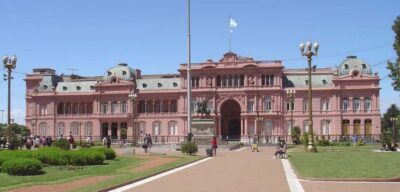
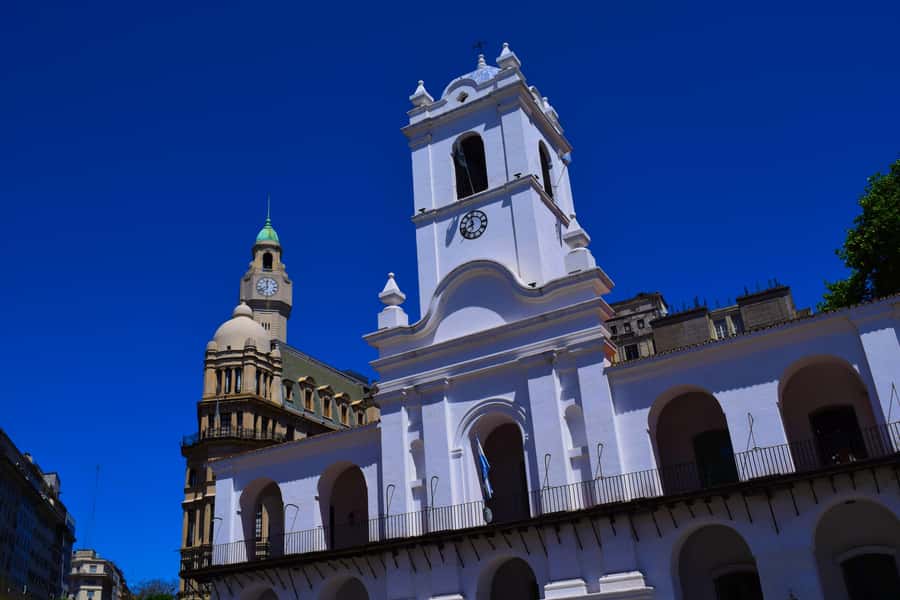
You begin around some of the most recognized structures in the center, including the Cabildo facade, the Metropolitan Cathedral, Casa Rosada, and Banco Nación. What I like here is the framing. Instead of treating these as postcard stops, the guide helps you read what’s on the street: who shaped the city, what power looks like in stone, and why the styles feel so different just a few blocks apart.
You’ll also get a practical rhythm. The pace is meant for walking, then stopping, then walking again. That makes it easier to actually absorb details (like facade materials, entrance placement, and how buildings relate to the street) instead of racing between landmarks.
You can also read our reviews of more tours and experiences in Buenos Aires.

Reconquista Street to the Banco Hipotecario: where style gets surprising
After you leave Plaza de Mayo, the tour heads north through Reconquista Street toward Microcentro. This is where the city starts acting like a collage. You’ll feel it in real time: different eras, different tastes, and different architects all sharing the same grid.
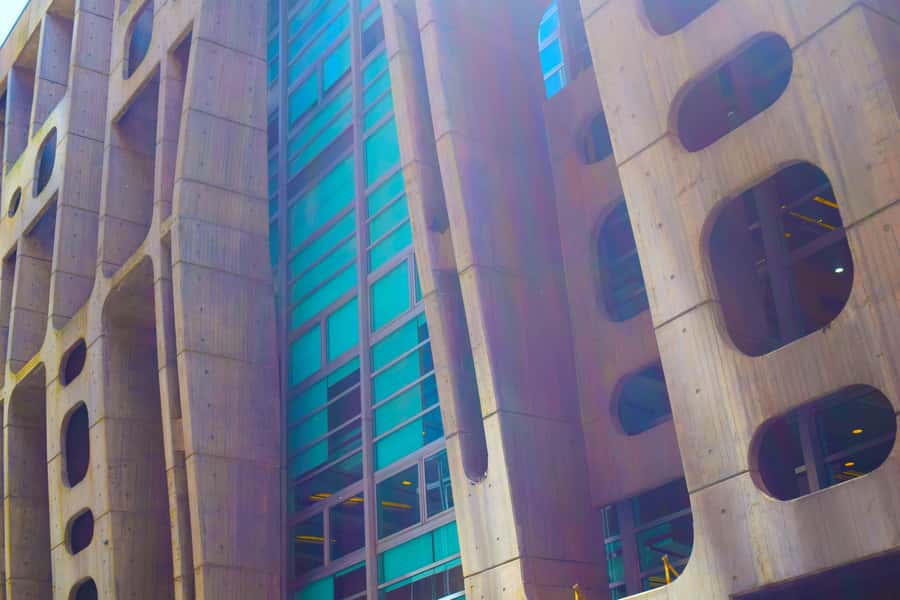
One stop is the headquarters of Banco Hipotecario and its Brutalist facade. This is a big deal because Brutalism is not the first style most visitors think about in Buenos Aires. But once you see it, it changes how you view the rest of the city. The guide helps you understand what Brutalist design tries to communicate—less ornament, more mass and structure—and why that contrast matters in a place filled with more classic-looking landmarks.
You also learn curious facts about buildings that don’t dominate the usual highlights. That’s where the tour earns its name. You’re not just ticking off famous addresses. You’re picking up a new lens: you start noticing which parts are designed to impress from street level, which parts are meant to signal institutional authority, and which parts reflect changing tastes.
Centro Cultural Kirchner and the old Post and Telegraph Palace
Next comes the Centro Cultural Kirchner. The way it’s presented is smart: you connect it to its older identity as the Palacio de Correos y Telégrafos (Post and Telegraph Palace). That shift—from communications to cultural space—matters because it shows how buildings can be reused without erasing their original character.
This segment is a good stretch for slowing down. You’ll have time to look at the facade and hear the story tied to it, instead of just passing by quickly. If you’re the type who enjoys noticing how public buildings were designed to funnel people in and out, you’ll probably like this stop a lot.
Also, this is one of those parts where the guide’s pacing helps. Even when the route is in motion, the tour keeps pulling you back to specific details: facade elements, the building’s role in the city, and how the architecture reflects the era.
Corrientes Avenue: Gran Rex and the Opera as living city icons
Then you head up Corrientes Avenue, the street tied to nightlife and culture. This is one of the most useful segments for first-timers because it helps you understand why these buildings matter socially, not just visually.
You’ll pass by two icons of the street: the Gran Rex and the Opera. The point isn’t only their fame. It’s what they represent: congregation, shows, and an ongoing public life built into the architecture of entertainment. You’ll learn how they had their heyday and why they still bring people together today.
If you’re into culture as much as architecture, this is where the tour feels most alive. The buildings are tied to motion and crowds, even if you experience them on a walk at a calmer pace. It gives you a more complete picture of Buenos Aires, because the city’s identity isn’t only official buildings and grand plazas. It’s also where people go for stories, music, and theater.
The Obelisk, Plaza de la República, and Diagonal Norte views
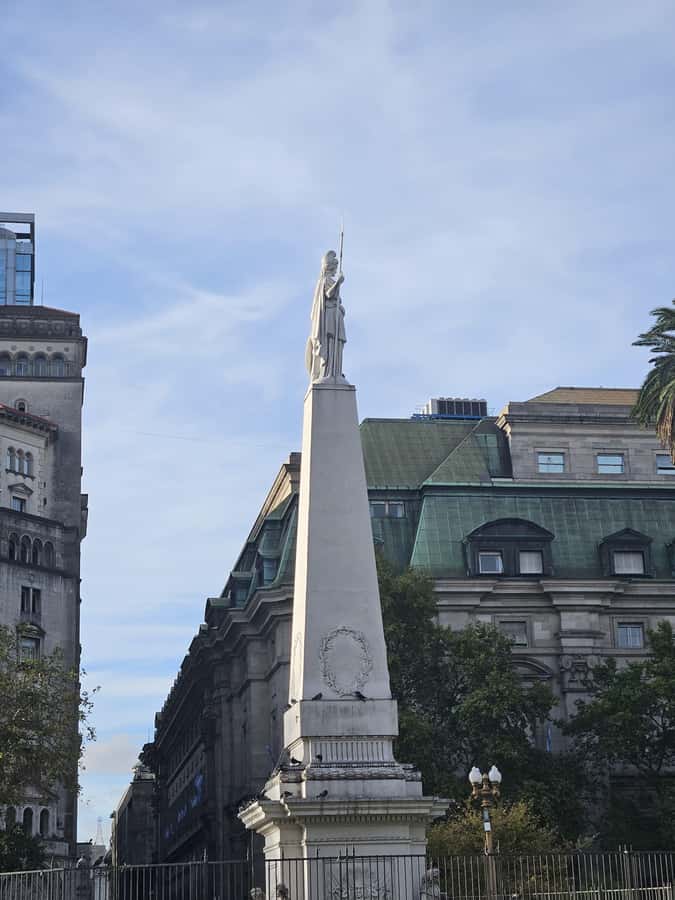
The first major arc of the tour ends around the Obelisk of the city and Plaza de la República. You’ll learn about the importance of the Obelisk for the country’s political and social life. This isn’t the kind of landmark you should treat as a background element. It’s a focal point—people use it as a reference, a meeting place, and a symbol.
From there, you continue along Diagonal Norte and make a brief pause at the Obelisk staircase. This is a practical moment: you get a panoramic view of one of the busiest intersections, like Av. 9 de Julio and Corrientes. You’ll get a sense of how the city’s streets funnel movement and attention toward key centers.
This part is also a good break in walking density. You’re still moving, but you’re not constantly in “photo stop” mode. It lets you reset your eyes and take in how different styles coexist without needing separate time periods.


Plaza Lavalle: Courts Palace, the Julio Argentino Roca School, and the school-building story
The final leg brings you to Plaza Lavalle. This is a smart closing choice because it keeps the architecture theme going while shifting the focus slightly toward public institutions.
You’ll see two famous buildings here: the Courts Palace and, in front of it, the Julio Argentino Roca School. The tour’s value in this segment is the way it connects these structures to city life. Schools and courts aren’t just background. They’re where society trains its future and organizes its rules.
It’s also a nice change of pace from the heavier downtown concentration of entertainment and political symbolism. Courts and schools feel more daily-life oriented. They ground the tour so it doesn’t become only about icons.
If you like architecture for the way it reflects systems—education, justice, public order—this is your moment.
Mate tasting near the end: turning a walk into a cultural stop
Before the finale, you’ll have mate tasting. This is one of the best ways to understand Argentine culture without turning it into a separate activity. You’re already walking through the city’s “public spaces” theme, and mate fits naturally as a social ritual linked to hospitality and daily conversation.
What you’ll likely appreciate is that it’s not presented as a random snack. The tour includes a little history and explains tradition, so you understand what you’re doing and why it matters. You also get water and a traditional Argentine snack earlier in the tour, which helps keep the energy steady for the full route.
Small tip: if you’re sensitive to hot drinks, take your time. The mate ritual is meant to be shared and paced, not chugged while rushing to the next photo.
Finishing at Teatro Colón: what you get and what you can add
The walk ends at Teatro Colón, with the option to stay and take the guided visit inside. The key detail: entrance to the theater isn’t included, so treat the inside visit as a bonus if you want it.
Even if you choose not to go in, finishing here lands the tour with a clear emotional payoff. You spend the day moving from institutional power (government and banks) to social life (Corrientes) and then close with one of the country’s most famous cultural spaces.
If you do go inside, you’ll likely enjoy it most if you’re already paying attention to design and function. This tour trains your eyes to notice how buildings are made to shape movement: where people gather, how they enter, and how the architecture supports the purpose—whether that’s communication, entertainment, or public ceremony.
Price and value: why $25 can feel like more than a walk
At $25 per person for a 3-hour English-speaking guided tour, you’re paying for three things that add up quickly if you tried to do them alone: a route that connects multiple areas, a guide who can explain what you’re seeing, and built-in cultural breaks.
Here’s what’s included: water, a traditional Argentine snack, and mate tasting. The snack and drink might sound minor, but they help you stay comfortable and keep your attention on the walking rather than budgeting for every stop.
The small group size (limited to 4 participants) is also part of the value. With fewer people, the guide can answer your questions and adjust pacing when you get curious about a facade detail or a specific building story.
If you like architecture but sometimes feel tours skim the surface, this format is a practical fix. You’re not wandering randomly. You’re following a plan designed to teach you how to look.
Who will love this tour (and who might not)
This is a great match if you:
- Enjoy architecture and want to understand the city as a timeline, not just a checklist.
- Want a walk that mixes major landmarks with less-obvious stops like Brutalist Banco Hipotecario.
- Like cultural context, especially the mate ritual, presented as part of the city’s daily social fabric.
- Prefer small-group touring where you can ask questions and shape the pace.
You might hesitate if you:
- Want a lot of museum time or lots of indoor stops with minimal walking.
- Have mobility limits that make three hours of street walking hard.
If you fall in the middle, you can still decide based on comfort. Bring sunscreen, a hat, and sunglasses. The tour is outdoor-heavy enough that these items aren’t optional flair.
Should you book this Buenos Aires architecture walk?
If you’re in Buenos Aires for a short time and want a route that teaches you how the city thinks, I’d book it. The combination of Plaza de Mayo power landmarks, Microcentro’s stylistic contrasts, the Brutalist Banco Hipotecario stop, and the final approach to Teatro Colón gives you variety without feeling random.
It also helps that the tour feels interactive. You can steer it toward what you care about, and the guide can answer questions tied to the buildings and how they fit into Argentine culture.
One last practical note: you can cancel up to 24 hours in advance for a full refund, and you pay later if you want flexibility. If your schedule is fluid, that makes it easier to commit with less stress.
If you want Buenos Aires through its buildings—colonial classics up to modern-world surprises—this walk is one of the smarter ways to learn the city fast.
FAQ
How long is the tour?
The tour lasts about 3 hours.
What does the tour cost?
The price is $25 per person.
Where do we meet and where does it end?
You start in Plaza de Mayo at the intersection of Bolívar and Avenida de Mayo, and the tour finishes at Teatro Colón.
How big is the group?
The group is limited to 4 participants.
What’s included in the price?
It includes an English-speaking tour guide, water, a traditional Argentine snack, and mate tasting.
What languages are offered?
The tour is offered in Spanish and English.
Is Teatro Colón entry included?
No. Entrance to Teatro Colón is not included, but there is an option to take a guided visit inside.