REVIEW · BUENOS AIRES
Private Tour: Buenos Aires City Sightseeing
Book on Viator →Operated by Your Friend in Buenos Aires · Bookable on Viator
Buenos Aires hits different when you know where to look. This private 8-hour loop gives you a fast, high-meaning orientation with a local guide and art historian. Two things I really like: private, full-day flexibility and a guide who explains what you’re seeing instead of just naming it. One consideration: it’s a packed day of walking-and-looking, so you’ll want comfy shoes and a pace that works for your group.
You’ll start at Plaza de Mayo and end up with a clear mental map of neighborhoods like Recoleta, La Boca, San Telmo, Puerto Madero, and Palermo. The stops are picked for variety: government heart, funerary art, opera-house grandness, tango-and-soccer energy, and modern-photo angles. The one possible drawback is value depends on your group size and your willingness to keep moving for about 8 hours.
If you’re visiting for the first time, this kind of day can save you time later. You’ll leave knowing what you liked and what you’ll want to revisit on your own.
In This Review
- Key points before you go
- Why this private Buenos Aires loop works so well for first-timers
- The day structure: what 8 hours really feels like
- Getting inside the landmarks: skip-the-line plus local timing
- Plaza de Mayo: power center, revolution corners, and Evita’s balcony
- Recoleta Cemetery: sculpture, symbols, and the famous tomb
- Teatro Colón: why this opera house feels world-class
- La Boca and Caminito energy: tango and soccer all in one neighborhood
- Calle Defensa in San Telmo: colonial charm, markets, and markets-as-a-mood
- Recoleta neighborhood stroll: French-style elegance and surprise corners
- Puerto Madero and the Woman Bridge: modern waterfront with iconic angles
- Cafe Tortoni: a taste stop for atmosphere, not just caffeine
- Avenida de Mayo: French façade energy to the edge of downtown
- Obelisco and 9 de Julio corner: classic photo stop with smart orientation
- Palermo parks and upscale neighborhoods: choose your pace
- Floralis Generica: the sky-hugging photo moment
- Is the price worth it? A practical value check
- Who this tour suits best
- Small drawbacks to plan for
- Should you book this private Buenos Aires city tour?
- FAQ
- What time does the tour start?
- How long is the private Buenos Aires City Sightseeing tour?
- Is pickup and drop-off included?
- Does it include tickets for museums or Recoleta Cemetery?
- Are food and drinks included?
- Is this tour private?
- Can I customize the itinerary?
- Is skip-the-line included?
- What if I cancel last minute?
Key points before you go
- Private guide + art historian: stories with context, not just facts
- Skip-the-line advantage: fewer delays at popular stops
- Customizable route: the guide can shape the day to your interests
- Icon-to-icon coverage: from Plaza de Mayo to Palermo and Puerto Madero
- Photo-ready targets: BA initials, the Woman Bridge, and Floralis Generica
- Hotel/port pickup and drop-off: fewer logistics worries
Why this private Buenos Aires loop works so well for first-timers
A full-day private city tour sounds like a lot, but in Buenos Aires it’s smart. The city is big, neighborhoods feel distinct, and landmarks can mean different things depending on context. This tour is designed as an orientation day, so the goal is not to check boxes. It’s to give you a mental map, plus enough cultural and art context that your next days make sense.
The big win is the guide team. You’re not just getting a driver and a list of sights. You’ll have a local guide led by an art historian, which changes the vibe. At places like Recoleta Cemetery and Teatro Colón, you’ll get art-and-history interpretation, not only architectural description. That’s how a walk becomes memorable.
The second win is how the tour is built for flexibility. You can customize to your preferences, which matters in a city where one person wants street photography and another wants deep history. Even with a set route, the guide’s approach can steer how much time you spend and what you pay attention to.
One practical note: you are moving through many parts of the city in one day. It’s not a slow “sit and admire” day. Plan on a steady pace and bring water, especially if your weather is warm.
You can also read our reviews of more city tours in Buenos Aires

The day structure: what 8 hours really feels like
The tour starts at 9:30 am and runs about 8 hours. You get hotel or port pickup and drop-off, plus private transportation, so you’re not wrestling with public transit or pooling with strangers.
Because it’s private, your day can be adjusted. If your group is photo-focused, the guide can help you find good angles. If you care more about architecture or culture, you’ll get stories that connect buildings and neighborhoods. This is where the “private” part matters. It’s not just exclusivity, it’s decision power.
Most stops are short, but they’re designed to be the kind of short you actually want. A quick orientation at Plaza de Mayo is better than spending half the day there. A fast hit at La Boca helps you decide if you want to go back for more. The guide’s job is to help you choose what to deepen later.
Getting inside the landmarks: skip-the-line plus local timing
One listed advantage is skip the line. The idea is simple: you spend less time waiting and more time looking. You also benefit from local timing—where you should stand, when to move, and how to pace the day so it doesn’t feel like a sprint.
Skip-the-line can vary by how busy a spot is, so don’t plan on miracles. But as a concept, it’s useful. When a day is already packed, saving time at even one popular stop improves the whole flow.
Your guide will also share local tips, which is often what you actually want from a city tour. For Buenos Aires, that might mean how to read the neighborhoods on foot, where you’ll get the best views, and what’s worth revisiting after you’ve seen the big icons.
Plaza de Mayo: power center, revolution corners, and Evita’s balcony
Your first stop is Plaza de Mayo, the political and historical heart of the city. This is the place where it all starts, including Casa Rosada (with Evita’s balcony), the surrounding landmarks like the Cabildo, the Metropolitan Cathedral, and the Piramide de Mayo.
Even if you’ve heard the names before, the key is how the guide connects them to events and meaning. This is where you’ll get a brief introduction to the country’s history, anchored to physical locations. That turns a wide square into something you can understand.
Expect about 15 minutes here. That’s short, but it’s enough for orientation. You’ll know where the major buildings sit, and you’ll see which ones you want to revisit later.
Recoleta Cemetery: sculpture, symbols, and the famous tomb
Next comes La Recoleta Cemetery, and this stop has a different emotional tone than the government square. It’s one of Buenos Aires’ major attractions, with thousands of mausoleums that function like an open-air museum of art and sculpture.
The guide will help you read the cemetery as more than a graveyard. You’ll discover the way graves can carry messages and clues, and you’ll hear legends tied to the stories behind the architecture. Of course, the famous tomb of Evita Perón is part of the big-picture context here.
You’ll have about 30 minutes, which is enough to see the major feel of the place and pick up on symbols without rushing every corner.
One important planning detail: the cemetery entry/tickets are listed as not included (so budget for that if needed). The stop itself is free to visit from a tour-walk standpoint, but actual admission may cost extra depending on requirements.
You can also read our reviews of more private tours in Buenos Aires



Teatro Colón: why this opera house feels world-class
Teatro Colón is the most imposing kind of landmark: massive, historic, and still alive with cultural energy. This stop is brief—about 3 minutes—but it can still land because the guide explains what makes it significant.
You’ll hear how it was built for the best possible acoustic and why that matters for a world-class opera house. Even a short exterior look becomes meaningful when someone connects design choices to the sound experience people chase inside.
This is also a useful stop for first-time visitors. If you end up wanting to hear or see a performance later, you’ll have a mental hook.
La Boca and Caminito energy: tango and soccer all in one neighborhood
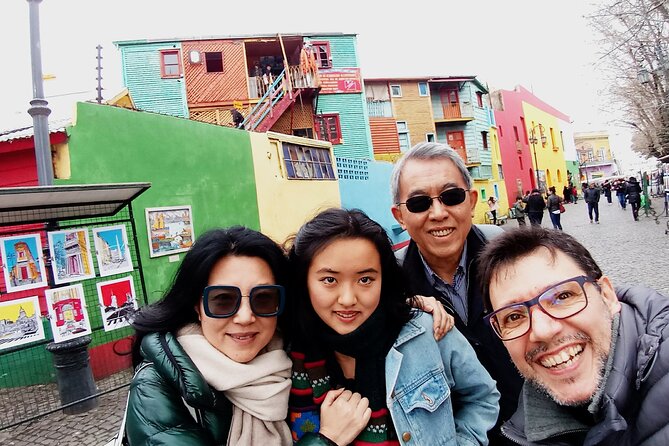
Then you head to La Boca, and it’s exactly the kind of Buenos Aires neighborhood that makes your photos look like a travel postcard. The focus is Caminito, plus the tango dancer streets and the soccer side of the neighborhood.
You’ll also see references to Boca Stadium, nicknamed Bombonera. The tour doesn’t pretend it’s only one story. It frames La Boca as a mix of culture, music, and sport identity—very Buenos Aires.
Expect around 45 minutes. That’s a good amount of time for snapping photos, wandering a bit, and feeling the neighborhood’s personality. If you want a deeper dive later, this stop helps you decide how much more you want.
Calle Defensa in San Telmo: colonial charm, markets, and markets-as-a-mood
Your tour includes Calle Defensa in the San Telmo area. This is the kind of street where the details matter: narrow sidewalks, the feel of tango culture, antiques, and clothing shops. The street can be pedestrian depending on the day.
The guide’s approach is also practical. On Sunday, there’s a flea market. Any other day has a plan B so you still get a good experience. That’s smart planning, because San Telmo can change its rhythm fast.
You’ll have about 30 minutes, which is enough to walk, browse from the outside, and absorb the neighborhood vibe without turning your day into a shopping mission.
Recoleta neighborhood stroll: French-style elegance and surprise corners
After the cemetery, you also get time for Recoleta itself. This area has the look of French architecture, traditional cafés, and green parks. The tour adds “secret sections” where you might feel like you’re seeing a European flavor inside Buenos Aires.
This is short—around 20 minutes—but it’s a strong use of time because Recoleta is one of those places people compare to elsewhere. You’ll get the baseline, then you can decide later if you want to slow down and linger on your own.
Puerto Madero and the Woman Bridge: modern waterfront with iconic angles
Next is Puerto Madero, Buenos Aires’ newer waterfront zone. The look is a blend of old-port architecture with modern skyscrapers, plus parks and waterfront drives. It’s a good contrast to older neighborhoods you’ve already seen.
A key photo target here is the Woman Bridge, an icon of Puerto Madero. The tour frames the neighborhood as themed around women, so your viewing has a theme, not just a monument.
You’ll also get time that feels designed for photos—about 20 minutes—plus angles to enjoy multiple perspectives of the bridge. Another moment is described as a tango-pose-style portrait bridge view. In practice, you’ll be hunting for those classic, recognizable angles of the waterfront.
Cafe Tortoni: a taste stop for atmosphere, not just caffeine
Then you stop at Café Tortoni, described as the oldest café in Buenos Aires. Even if you don’t go inside for a long sit, the exterior and setting help you understand the city’s old-world social life.
This is one of the most “atmosphere” stops on the route. The café is tied to visitors and important moments in the city’s past. You’ll have about 30 minutes, with the option to try coffee or chocolate with churros, and the guide may share a fun secret drink idea if availability allows.
Food and drinks aren’t included, so treat this as a chance to refresh. If you’re prone to snack-hunger during long city days, this stop can keep you from feeling drained later.
Avenida de Mayo: French façade energy to the edge of downtown
Avenida de Mayo is another signature Buenos Aires street: French architecture on display, sycamore trees, and lots of street-level energy. The tour spans it from Plaza de Mayo up to the National Congress, so you get a coherent walk rather than random peeks.
The guide also sets expectations with a fun phrase about the avenue carrying a lot of stories and surprises. That’s exactly what you want from a guided street walk: someone showing you what to notice.
You’ll have about 30 minutes here. It’s enough to notice the façade style, street details, and the overall “downtown” feeling.
Obelisco and 9 de Julio corner: classic photo stop with smart orientation
Then comes Obelisco, the city icon inspired by the Washington Obelisk. This is one of those monuments you’ve probably seen in photos, but seeing it in person helps it click.
You’ll stroll along the 9 de Julio Av, described as the widest avenue, and you’ll also visit the “neversleeping” area at the corner of 9 de Julio with Corrientes. The guide gives you a chance for the classic photo moment with the BA initials—plus an Evita portrait background—so you’re not left guessing where to stand.
This is a 15-minute stop, which fits because the point is to give you that orientation and the postcard shot, then move on.
Palermo parks and upscale neighborhoods: choose your pace
Finally, the tour shifts toward Palermo, one of Buenos Aires’ largest areas. Here you’ll stroll through multiple sections, including park time and a stop at the Rosedal (Rose Garden). The Rose Garden is closed on Mondays, so if your tour day includes Monday, you’ll still get the park-adjacent experience but not that specific garden access.
The guide also explores “secret corners” and luxury residential neighborhoods. That’s useful because Palermo isn’t just a single vibe. It can feel like elegant streets, green space, and stylish pockets all within a short ride or walk.
You’ll also have a chance for smaller “bubbles” within Palermo like Soho and Hollywood, depending on timing and your preferences. This is tailored, which means you’ll spend more time in the zones that match your interests.
This portion is about 35 minutes, which is long enough to feel a neighborhood identity but short enough to keep your day from slipping into endless walking.
Floralis Generica: the sky-hugging photo moment
Your tour ends (or continues depending on timing) with Floralis Generica. This aluminum giant in a park between Palermo and Recoleta is described as an aluminum structure that looks like it’s opening toward the sky—perfect for quick photos.
A detail you’ll hear from the guide: you might be able to capture airplanes of the domestic airport reflected or caught in the area’s shots, depending on the time and what’s happening in the sky.
You’ll have about 15 minutes, which is exactly right. It’s a stop built for pictures and a sense of modern Buenos Aires.
Is the price worth it? A practical value check
At $679 per person for about 8 hours, this isn’t the kind of tour you book just to pass time. You book it because you want a guided orientation plus private logistics.
Here’s the value logic that matters:
- Private transportation + pickup/drop-off means you’re not spending your vacation energy on getting around.
- Skip-the-line helps when popular sights would otherwise slow you down.
- The guide is local and led by an art historian, so multiple stops become more than exterior sightseeing.
- It’s customizable, which can make the day fit your interests instead of forcing you through a rigid group schedule.
If you’re traveling solo or as a small group, the price can feel steep, but it can still be worth it when you consider the cost of hiring a guide plus paying for transport separately. For couples or friends who share the cost, it often reads as good value for a full, structured day.
Who this tour suits best
This tour fits best if you:
- are visiting Buenos Aires for the first time and want a fast map of neighborhoods
- want context at major cultural sites, not only photo ops
- like private guidance you can shape to your interests
- need an efficient plan that includes both old and modern parts of the city
It’s also family friendly, which helps if you’re traveling with teens or kids who still appreciate stories and landmarks.
Small drawbacks to plan for
Because the schedule is packed, you might feel a bit of pressure to move through stops quickly, especially if you prefer slow wandering. Also, parts of Buenos Aires can be tough to cover without good footwear, so bring comfortable shoes and a water plan.
Finally, remember that museum or Recoleta Cemetery tickets aren’t included, so if admission fees apply, you’ll want to budget those separately.
Should you book this private Buenos Aires city tour?
If you want a first-day boost—clear neighborhood understanding, iconic sights covered in sensible order, and explanations that turn buildings into stories—this is a strong pick. The private guide setup, plus an art historian’s perspective at the culturally heavier stops, is the main reason to choose it over a basic sightseeing loop.
I’d skip it only if you already know Buenos Aires very well, or if your ideal day is mostly relaxed café time with minimal movement. Otherwise, this is the kind of tour that helps your later self travel smarter.
FAQ
What time does the tour start?
The start time is 9:30 am.
How long is the private Buenos Aires City Sightseeing tour?
It’s about 8 hours.
Is pickup and drop-off included?
Yes. The tour includes hotel/port pickup and drop-off.
Does it include tickets for museums or Recoleta Cemetery?
No. Tickets to Museums or Recoleta Cemetery are not included.
Are food and drinks included?
No. Food and drinks are not included.
Is this tour private?
Yes. It’s a private tour, so only your group participates.
Can I customize the itinerary?
Yes. The tour offers flexibility to customize your itinerary to your preferences.
Is skip-the-line included?
Yes. The tour includes skip the line.
What if I cancel last minute?
You can cancel for a full refund up to 24 hours before the experience’s start time. If you cancel less than 24 hours before, the amount paid won’t be refunded.