REVIEW · BUENOS AIRES
Recoleta Walking Tour and Live Jazz Show
Book on GetYourGuide →Operated by Discover Buenos Aires con Luz · Bookable on GetYourGuide
Recoleta at dusk plus jazz hits right. You’ll start near the Bellas Artes Museum for a guided stroll through Recoleta’s most elegant buildings, then finish in a classic Buenos Aires jazz spot with live music. It’s part architecture walk, part nightlife education, and it’s timed so you’re still fresh enough to enjoy the show.
I love two things most. First, Luz—your guide—connects the dots at each stop with clear, well-paced history and design details, and she’s comfortable switching between English, Spanish, and Portuguese. Second, the group stays small (up to 10), which makes the night feel personal instead of chaotic.
One thing to plan for: the jazz show ticket is not included. You’ll pay about $10 USD in cash on site for the concert entry.
In This Review
- Key things that make this tour work
- From Bellas Artes to Plaza Francia: starting Recoleta the right way
- Practical tip for this early section
- Iglesia del Pilar and the way Recoleta got its character
- Recoleta Cemetery: don’t rush the details
- Avenida Alvear: where elegance turns into architecture homework
- The France and Brazil embassy zone: small stops, big atmosphere
- A note on the second unnamed 10-minute visit
- Arroyo and Avenida 9 de Julio: shifting gears toward downtown energy
- The local bar and the live jazz show: intimate, classy, and actually listenable
- Where Luz fits into the music
- Price and value: what you’re really paying for at $38
- Who this tour is best for (and who should skip)
- What to bring so the night stays easy
- Should you book Recoleta walking + jazz?
- FAQ
- Where do we meet for the Recoleta walking tour?
- How long is the experience?
- Is the live jazz show ticket included?
- What languages does the guide speak?
- How big is the group?
- Is this tour suitable for wheelchair users or mobility impairments?
Key things that make this tour work
- Small group size (max 10) keeps the walk and the music comfortable and easier to follow.
- Luz’s storytelling adds context to famous Recoleta landmarks, not just photo stops.
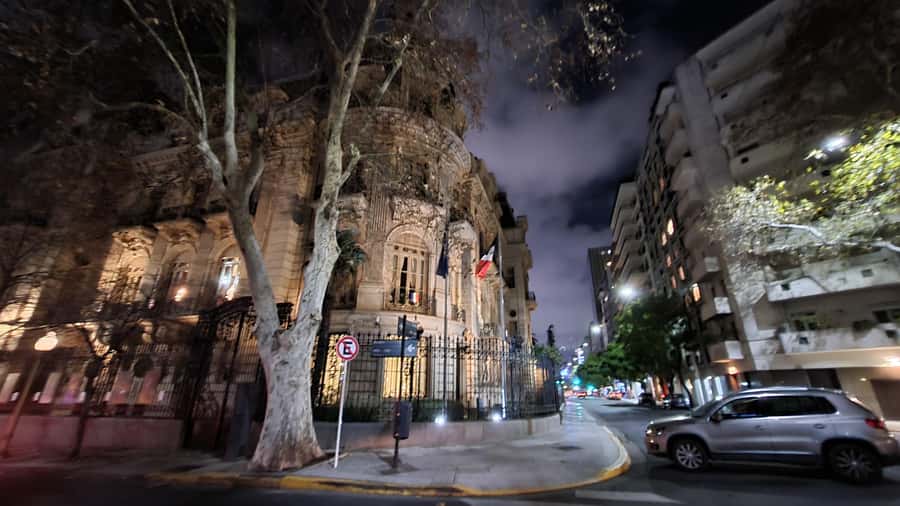
- French-flavored architecture in Recoleta gives you a very Buenos Aires twist on a Paris-style neighborhood.
- End with an intimate jazz club (about 20–30 people), where you can actually hear the musicians.
- A drink before the music turns the transition from walking to nightlife into something smooth.
From Bellas Artes to Plaza Francia: starting Recoleta the right way
The evening begins at the Museo Nacional de Bellas Artes, meeting at the front of the staircase. This is a smart start. You’re already in one of the most recognizable areas of the city, and you’re positioned for a walk that moves through Recoleta’s highlights without wasting time on transfers or complicated routes.
Recoleta is often described as elegant, but what you really feel on a guided walk is the mix of grandeur and human scale. Mansions, palaces, and tidy streets don’t just look pretty. They tell you who lived here, what the neighborhood valued, and how Buenos Aires dressed itself as it modernized. You’re not just passing buildings—you’re learning what to look for.
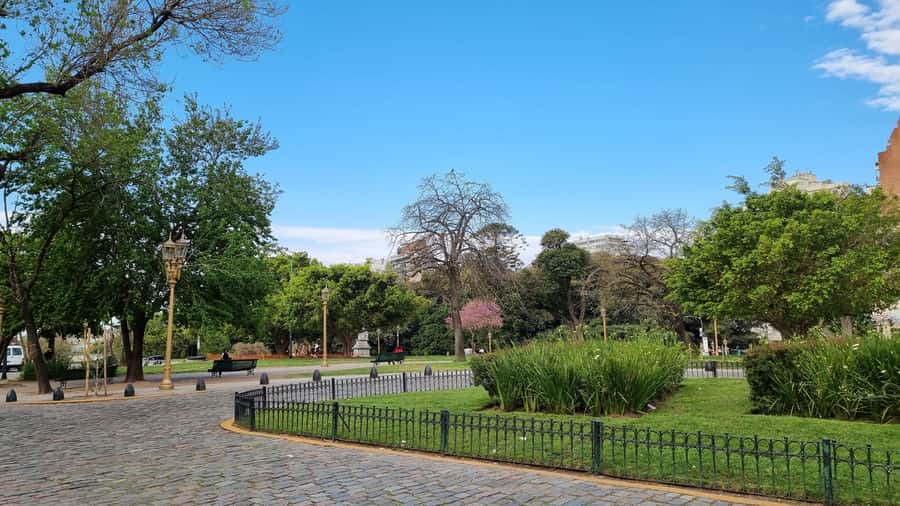
Plaza Francia is one of the first key moments. You get a short guided stop there (around 10 minutes), just long enough to orient you. Think of it as your “read the neighborhood” moment: where the important streets run, how the geometry opens up, and why Recoleta feels different from the more grid-like areas of central Buenos Aires.
You can also read our reviews of more walking tours in Buenos Aires

Practical tip for this early section
Wear comfortable shoes. Recoleta looks tidy, but you’ll still be on sidewalks and uneven stone for three hours. If your feet start complaining early, the jazz ending won’t feel as good.
Iglesia del Pilar and the way Recoleta got its character
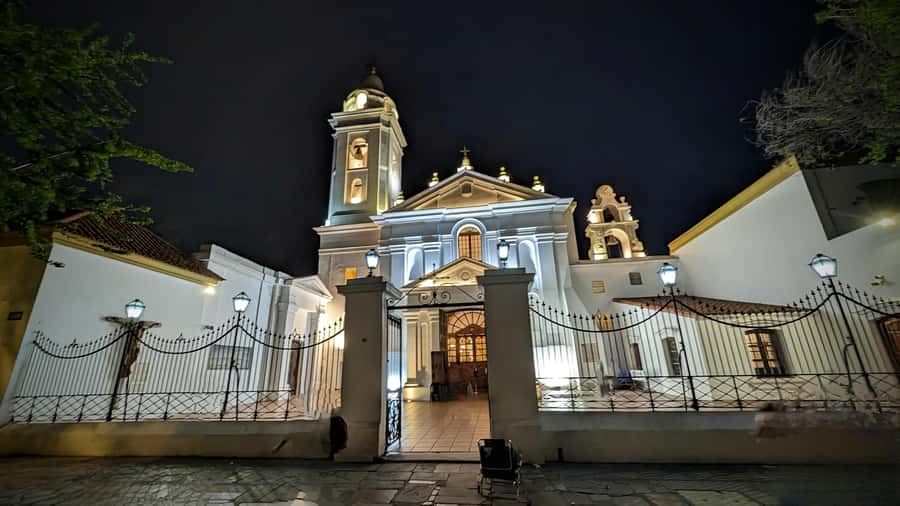
Next comes Basílica Nuestra Señora del Pilar for a quick visit (about 5 minutes). Even in a short stop, a good guide makes a difference. You’ll notice how the basilica fits into the neighborhood’s identity—religious architecture here isn’t isolated. It sits in the middle of the social story of Recoleta.
A big part of why I like this tour approach is that it balances “big landmark” and “why it matters.” The church isn’t treated like a checkbox. Instead, it becomes one clue in the broader pattern of French-influenced streets, embassies, and high-status architecture.
Recoleta Cemetery: don’t rush the details
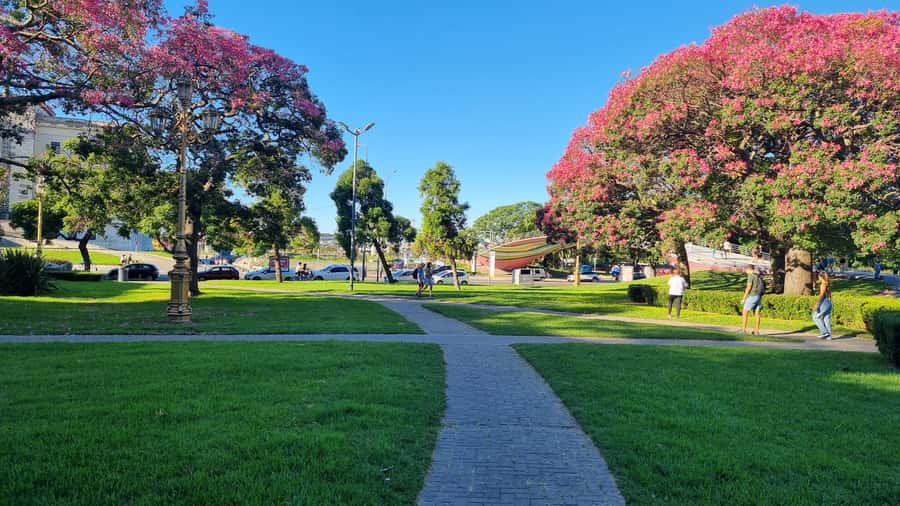
Then you’ll head past La Recoleta Cemetery. This is one of those places where you can go too fast and miss what it’s actually saying. Your time here is brief (around 5 minutes), so the goal is observation, not exhaustion.
Recoleta Cemetery has a reputation for being stunning, but the practical point is this: even a short walk by can help you understand the neighborhood’s past. Cemeteries like this reflect power, family names, art, and the style of remembrance—basically a stone record of Buenos Aires social history.
If you’re the kind of traveler who prefers longer cemetery time, you might wish you had more. On this tour, the cemetery is a highlight in passing, with the emphasis still on the overall evening pacing. That keeps the energy up for the jazz club at the end.
Avenida Alvear: where elegance turns into architecture homework
Avenida Alvear is a standout stop (about 10 minutes). If Recoleta is a “Parisian” area of Buenos Aires, this avenue is where that idea becomes concrete. The buildings have that extra attention to frontage—grand facades, polished proportions, and a sense of old money.
Your guide points out the most outstanding structures, which is the difference between just walking and actually learning. You’ll likely start spotting features on your own after a few minutes: symmetry, decorative stonework, and the way entrances are framed. This is especially useful if you’re only visiting Recoleta once in Buenos Aires.
Avenida Alvear also helps set up what comes later with the embassies and other official buildings. It’s the bridge between the “pretty streets” and the more formal institutional vibe of the neighborhood.
You can also read our reviews of more tours and experiences in Buenos Aires



The France and Brazil embassy zone: small stops, big atmosphere
After the avenue section, you’ll spend time in the embassy area, including the Embassy of France (guided sightseeing, about 5 minutes). This is the kind of stop that can feel quick on paper, but it’s the right length in a walking tour. You’re not waiting around; you’re getting guided context while the streets are still fresh in your mind.
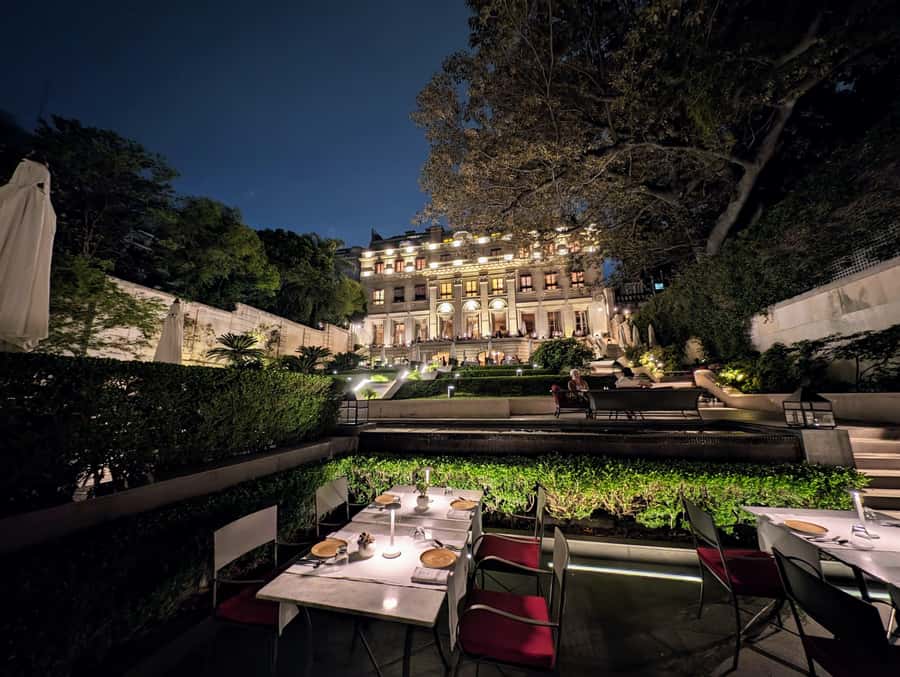
Then you’ll move to the Brazilian Embassy (chancery building) for another guided sightseeing stop (about 5 minutes). Together, these embassy moments help explain why Recoleta feels internationally flavored. You’re seeing diplomatic architecture in a neighborhood that also carries French inspiration. The result is a distinct sense of Buenos Aires as a global city, even in a mostly residential-feeling area.
A note on the second unnamed 10-minute visit
There’s also an additional stop in the sequence that runs about 10 minutes. You’ll be using that time for another architecture-focused look and guided commentary. Since it’s not framed as a long museum-style segment, expect it to be more “observe and learn” than “go inside.”
Arroyo and Avenida 9 de Julio: shifting gears toward downtown energy
The walk includes Arroyo (about 10 minutes) and then Avenida 9 de Julio (walk/passing by for around 10 minutes). This part matters because it changes the mood. Recoleta’s elegance is visual and slow. The transition toward a major avenue makes Buenos Aires feel louder, wider, and more downtown.
Avenida 9 de Julio is famous for scale, so even a short pass gives you context. It’s the reminder that Buenos Aires doesn’t stay in one aesthetic. You’re walking from a refined pocket into a city that grows bigger and faster with every step.
This matters for the final act. Ending in a jazz club works best when you’ve already felt the shift from “daytime architecture” to “nighttime Buenos Aires.”
The local bar and the live jazz show: intimate, classy, and actually listenable
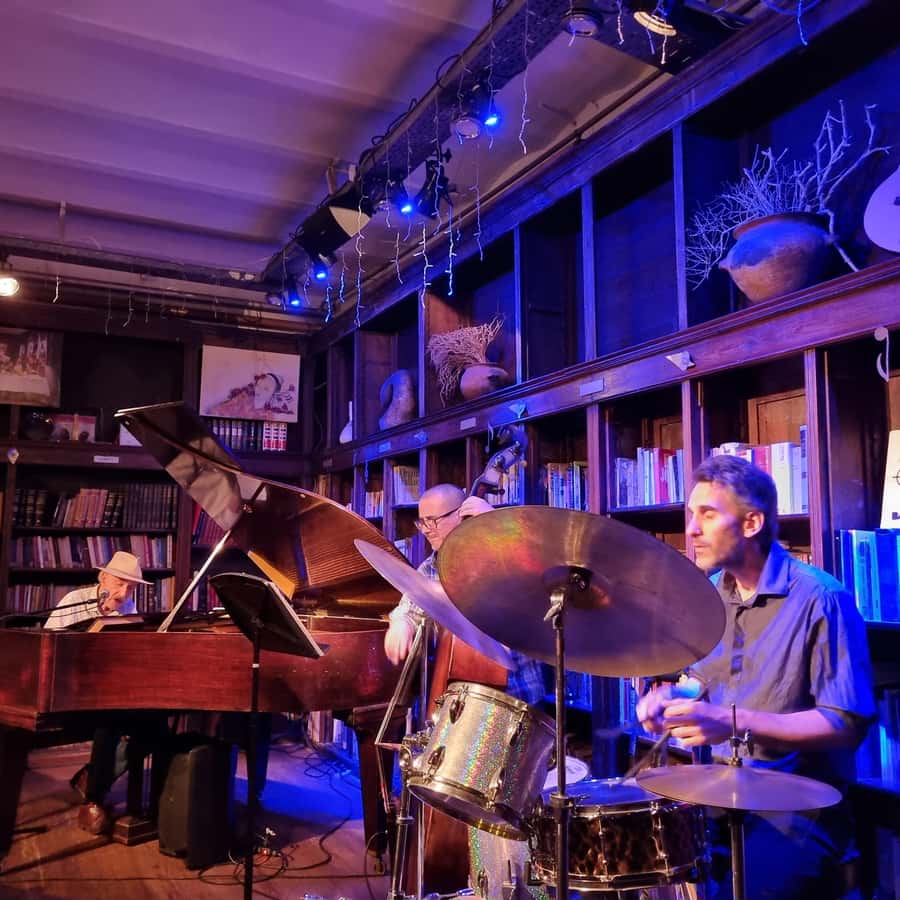
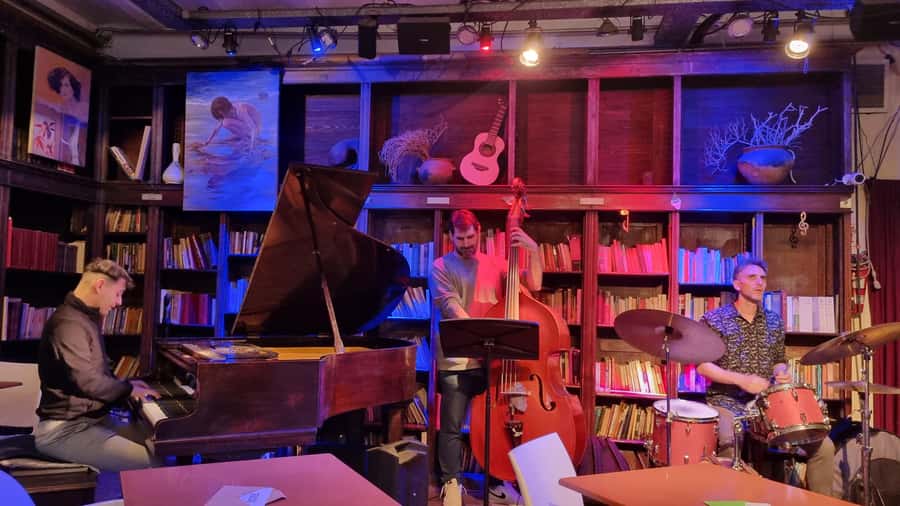
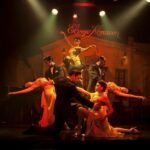
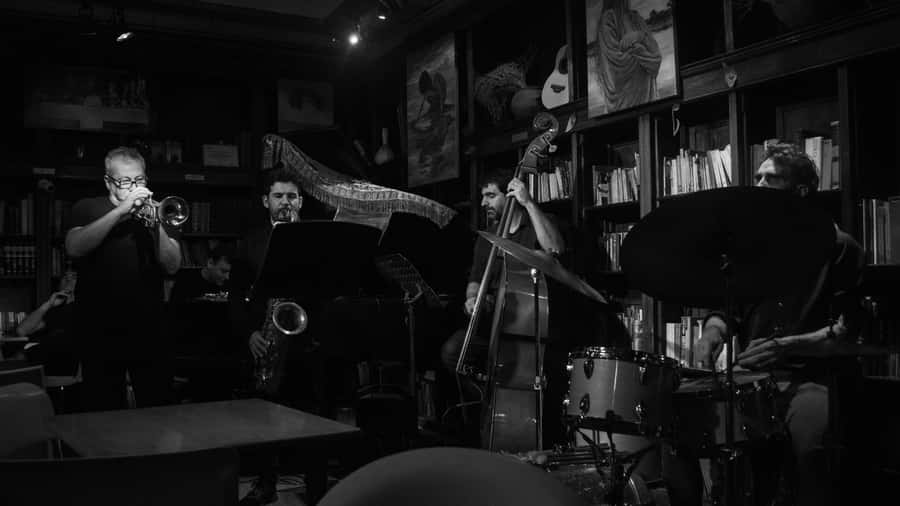
The night culminates at a local bar with live music for about 2 hours. Before the music starts, there’s time to have a drink. That small buffer is valuable. After a three-part walking sequence, you want a moment where you can settle in without rushing.
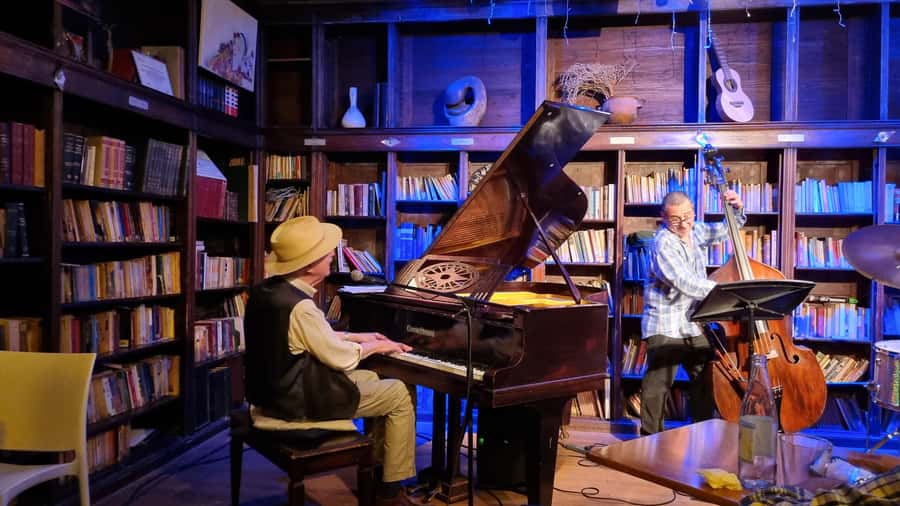
What I like here most is the venue size. The show is in an intimate room, typically around 20–30 people. That’s a huge quality factor. In bigger clubs, the band can be impressive but harder to connect with. Here, the closeness makes the performance feel conversational.
The atmosphere also comes across as quirky and classy at the same time. It’s the kind of place where the music feels like it belongs to the room, not like it’s just filling time between louder activities.
And yes, if you’re a jazz fan, you’ll likely appreciate the style. Past nights have leaned into the American songbook tradition, with musicians who keep the set flowing smoothly.
Where Luz fits into the music
Luz is not just a guide. She’s been invited to sing a couple of tunes during the performance. On nights that happen, it adds a personal layer to the whole experience. Even if that invitation doesn’t happen every time, her background clearly informs how she talks about the music and scene.
Price and value: what you’re really paying for at $38
At $38 per person for roughly 3 hours, this tour is priced like a focused experience rather than a long, multi-stop production. The cost makes sense because you get:
- guided walking time through Recoleta
- a guide who stays with you during the jazz show portion
- the structured transition from sightseeing to nightlife
The jazz ticket is extra (about $10 USD in cash). Still, you’re not paying separately for a walking guide and then coordinating a show on your own. This format is the value: the guide handles the flow, and you get access to an intimate music room that matches the neighborhood vibe.
If you’re the kind of traveler who likes planning less and experiencing more, this is a good spend. You trade some freedom for a smoother path from museum-area streets to live music.
Who this tour is best for (and who should skip)
This tour is a strong match if you want:
- Recoleta’s elegant architecture, explained in plain language
- a small group experience (up to 10)
- a live jazz finish without needing to figure out the scene yourself
- an English/Spanish/Portuguese guide experience with strong communication
It may not be your best choice if you:
- rely on wheelchair access or need mobility accommodations, since the walking route isn’t suitable for people with mobility impairments
- expect a full meal included. Food and drinks are optional, and the listed price does not cover them
- hate paying extra on site. The jazz show ticket is separate and paid in cash
What to bring so the night stays easy
Bring cash for the jazz ticket (about $10 USD). Also bring a credit card, since you may want it for drinks. Most of all, bring comfortable shoes. You’ll be walking enough that footwear becomes part of the experience, not a footnote.
Should you book Recoleta walking + jazz?
I’d book it if you’re doing Buenos Aires as a first-timer or a repeat visitor who wants a more personal slice of nightlife. The combination is the point: Recoleta by day, live jazz by night, and a guide (Luz) who can connect the two without making it feel stiff or overly scripted.
Skip it if you prefer independent exploring and don’t want to pay for the show ticket separately. If you want a long, detailed cemetery visit or a museum-style pace, this tour is too short on purpose. But if your goal is a tight, elegant introduction to Recoleta plus a memorable jazz room, this is a smart use of an evening.
FAQ
Where do we meet for the Recoleta walking tour?
You meet at the front of the staircase of the Museo Nacional de Bellas Artes (Bellas Artes Museum).
How long is the experience?
It lasts about 3 hours.
Is the live jazz show ticket included?
No. The jazz show ticket is paid in cash on site, with an approximate cost of 10 US dollars.
What languages does the guide speak?
The live tour guide speaks English, Spanish, and Portuguese.
How big is the group?
The group is limited to 10 participants.
Is this tour suitable for wheelchair users or mobility impairments?
No. It is not suitable for people with mobility impairments or wheelchair users.