REVIEW · BUENOS AIRES
Spanish Group Course in Buenos Aires, Argentina: 20 Lessons
Book on Viator →Operated by Expanish · Bookable on Viator
Your Spanish starts sounding like you belong. This 20-lesson group course in Buenos Aires at Expanish is designed for quick, practical speaking practice, with small classes and a relaxed teacher-student vibe built in. You’ll start at 9:30am, with a plan that runs over about five days and ends right back at the meeting point.
I also like the added structure beyond the classroom. The course includes a welcome pack, free Wi-Fi, an orientation on your first day, plus a course certificate and student benefits card—so you’re not just doing lessons, you’re getting organized support while learning to talk.
One thing to plan around: you may not know the exact class schedule far in advance, and updates can come close to the day (especially around holidays). If you like a tightly planned itinerary, keep some wiggle room.
In This Review
- Key points at a glance
- Twenty Lessons in About Five Days: What the Course Is Really Like
- Federico Lacroze 2315 and a 9:30am Start: The Logistics That Matter
- Group Classes in a Small Room: How You Learn Faster Here
- Orientation, Welcome Pack, and Your Certificate: The Support Layer
- Social Activities: The Part That Gets Your Mouth Moving
- Luggage Storage, Free Wi-Fi, and Small Comforts That Help
- What’s Included vs. What You Must Plan for
- Scheduling Reality Check: Flexibility Is Your Friend
- Teacher Consistency and the Risk of Overlap
- Price and Value: Is $275 Worth It for 20 Lessons?
- Who This Course Fits Best (and Who Might Want Something Else)
- Should You Book This Spanish Group Course in Buenos Aires?
- FAQ
- What’s the duration and lesson count?
- What time do classes start?
- Where is the meeting point?
- What’s included in the price?
- Are food, drinks, or a book included?
- Is there free cancellation?
Key points at a glance

- Small group size (max 12): more chances to speak and get feedback
- 20 lessons in about 5 days: a focused boost without a long commitment
- Included social activities: practical Spanish practice off the classroom floor
- Luggage storage: you can travel light during class hours
- Student benefits card + certificate: proof you finished, plus extra student perks
- Near public transportation: easy to get to Federico Lacroze 2315
Twenty Lessons in About Five Days: What the Course Is Really Like
This course is built for one main goal: helping you use Spanish instead of just study it. You’ll be in interactive group lessons with a professor, in a small setting that stays calm and comfortable—not a lecture hall. The idea is simple. You do the language, you hear the language, and you start shaping your own sentences faster.
Because it’s 20 lessons spread across roughly five days, you get a short but concentrated run. That’s ideal if you’re already traveling around Argentina and want a real jump in confidence without giving up weeks. It also works well if you’re returning to Spanish after a break. The group format gives you repetition, but you also get the momentum of moving forward day by day.
The biggest “hidden” value here is the feedback loop. In a small group, the teacher can notice what’s holding you back—pronunciation patterns, common grammar slips, or when your sentences are getting stuck. Then they can adjust what you do next, right there in class.
You can also read our reviews of more tours and experiences in Buenos Aires



Federico Lacroze 2315 and a 9:30am Start: The Logistics That Matter
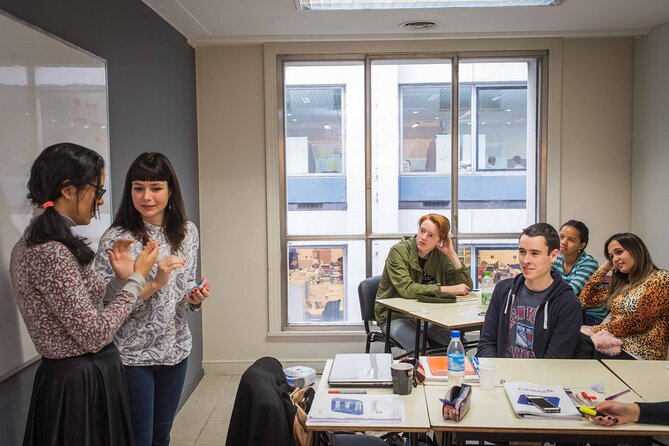
Your meeting point is at Federico Lacroze 2315 in Buenos Aires, and class starts at 9:30am. That time is useful. It gives you a steady rhythm for the day, and it also leaves plenty of time afterward to explore the city, practice Spanish, or just rest.
The location is near public transportation, which matters in Buenos Aires because you don’t want to waste your learning time wrestling with transit. You’ll also benefit from luggage storage during class hours. That one detail can be a lifesaver if you’re arriving from a flight, bouncing between neighborhoods, or using Buenos Aires as a base.
The course also ends back at the meeting point. So you’re not trying to figure out weird drop-offs or long end-of-day transfers. For many people, that makes the whole course feel smoother and easier to fit into a real trip.
Group Classes in a Small Room: How You Learn Faster Here
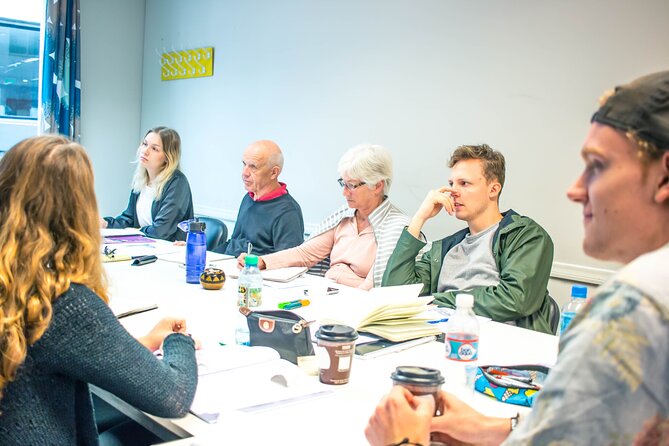
What you’ll get is not just “sit and listen Spanish.” The format is interactive, and the group is small enough (up to 12) that you don’t disappear. You should expect regular speaking opportunities and exercises designed to build usable language in the moment.
This matters because speaking confidence doesn’t come from studying alone. It comes from repeated chances to try. Small classes help because you’re not waiting your turn for too long, and the teacher can keep the room moving at a pace that doesn’t leave you behind.
I also like that the environment is described as relaxed and comfortable. That’s important for adults who feel shy about making mistakes. If you’ve ever hesitated to speak because you worry you’ll sound silly, this type of class structure can help. You’re learning in a space where practicing is the point.
One more practical detail: you’ll be “in Spanish” during lessons. That reduces the mental switching that slows many learners down. If you’re hoping to start functioning in Spanish when you’re out in Buenos Aires, this approach is a good match.
Orientation, Welcome Pack, and Your Certificate: The Support Layer
The first day starts with an orientation, and you’ll also receive a welcome pack. That might sound like small stuff, but it changes how the course feels. When you know how things work—when classes run, what to do between sessions—you settle in faster and worry less.
You’ll also get a course certificate on completion, plus a student benefits card. For some people, those items are purely symbolic. For others, they’re practical: they give you something official to show you finished, and they can make you eligible for student-related perks while you’re in Buenos Aires.
In short, this isn’t only a set of lessons you attend and leave behind. It’s structured like a real learning program with documentation at the end.
Social Activities: The Part That Gets Your Mouth Moving
Here’s where this course often earns its extra value. Social activities are included, and they’re designed to help you practice speaking Spanish more quickly.
This is the bridge between classroom Spanish and real-world Spanish. In Buenos Aires, you’ll hear plenty of Spanish just by being out in the city. The challenge is responding—starting conversations, asking simple questions, and not freezing when you don’t catch every word.
Social activities give you a low-pressure setting to do that. You’re not forced into high-stakes interviews. You’re practicing with people in the same learning moment as you, and the teacher or school support helps keep it from turning awkward.
I also like that these activities are included as part of the program, not sold as a separate add-on. When your budget is fixed, this kind of “free practice time” can matter a lot.


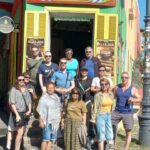



Luggage Storage, Free Wi-Fi, and Small Comforts That Help
Some language programs forget the everyday stuff. This one doesn’t.
You get free Wi-Fi, which is handy in a busy city like Buenos Aires when you need to message a friend, look up transit, or plan tomorrow’s practice. You also get luggage storage during class time, so you’re not dragging your bags across the neighborhood while you’re trying to learn.
And because the course is near public transport, you’re less likely to arrive sweaty and stressed—two enemies of language learning. You want your brain fresh for speaking, not irritated by logistics.
What’s Included vs. What You Must Plan for

Here’s the simple breakdown:
Included
- Welcome pack
- Free Wi-Fi
- First-day orientation
- Social activities
- Course certificate
Not included
- Food and drinks
- Book
That “book not included” detail matters. If you like to follow along exactly, budget time to pick up the course book (or confirm what your group needs) before your lessons start. If you arrive without it, you can lose momentum while you track it down.
Also, since food and drinks aren’t included, you’ll want to plan a lunch routine. The easiest strategy is to pick a nearby place to eat a predictable meal so your day stays calm. Calm days help you speak more in class.
Scheduling Reality Check: Flexibility Is Your Friend
Even with a clear start time, language courses can shift. One potential consideration is that the class schedule may not be fully communicated until your first day. If a public holiday hits during your stay, you might get schedule changes with only short notice.
I don’t love that kind of planning uncertainty when I’m traveling, because it makes day-by-day decisions harder. The practical advice is easy, though: keep your evenings lighter and don’t schedule non-refundable plans right after the first day.
If you do that, the course stays stress-free and you can focus on the real goal: speaking Spanish more confidently.
Teacher Consistency and the Risk of Overlap
Another point worth keeping in mind: if you end up switching teachers or adjusting level placement, you might repeat some material. That can feel like wasted time, especially if you came in ready to move fast.
The upside is that repetition can also help you lock in weak spots. But if you’re very advanced or very goal-driven, it’s smart to pay attention in early lessons and ask where you’re at. The sooner you align your level, the better your week will feel.
The school’s small group structure helps here, too. In a bigger class, repeating would matter less. In a smaller class, the teacher can adapt—but only if you’re actively checking your fit.
Price and Value: Is $275 Worth It for 20 Lessons?
At $275 per person for 20 lessons, you’re paying about $13.75 per lesson. But the real value isn’t the math—it’s what’s bundled around the lessons.
You get:
- orientation on arrival day
- a certificate and student benefits card
- free Wi-Fi
- social activities designed for speaking practice
- luggage storage while you’re in class
- a group setting capped at 12, which supports more speaking time
That mix can make the course feel like more than “just classroom hours.” You’re buying structure and support, not only exercises. For a short trip to Buenos Aires, that can be a great deal, especially if your goal is practical Spanish for travel.
If you were doing private lessons, you’d likely pay more for the same teacher attention. This group format keeps the cost down while still aiming for real interaction. And if your Spanish is rusty or you want confidence to talk on the street, that combination is what makes it worth considering.
Who This Course Fits Best (and Who Might Want Something Else)
This course is suitable for all ages and skill levels, and that flexibility is a big plus. If you’re starting out, group practice can reduce fear because you’re learning alongside others. If you’re intermediate, the speaking focus can help you break old patterns and start using Spanish more automatically.
I’d especially recommend it if:
- you want structured practice quickly while in Buenos Aires
- you like meeting new people but don’t want a high-pressure scene
- your goal is to feel confident speaking in Spanish during your travels
- you want included activities, not an all-lessons-only program
You might want a different option if:
- you need a rigid daily schedule with zero changes
- you hate group learning and prefer one-on-one instruction
- you’re the type who expects perfectly aligned continuity if you change teachers or levels
Should You Book This Spanish Group Course in Buenos Aires?
If you’re looking for a short, organized way to build speaking confidence in Buenos Aires, I think this is a strong pick. The small group size, the teacher-led interactive lessons, and the fact that social activities are included are the big reasons. They turn learning into practice instead of just homework.
Book it if you want to travel light (thanks to luggage storage), keep costs controlled (food and book are clearly listed as not included), and get real speaking chances during a compact schedule. If you’re the careful planner type, give yourself a little buffer for schedule updates around holidays.
In plain terms: this course is for people who want their Spanish to work in the real world, not only on paper. And in Buenos Aires, that goal is exactly where this setup shines.
FAQ
What’s the duration and lesson count?
The course runs for about 5 days and includes 20 lessons.
What time do classes start?
Classes start at 9:30am.
Where is the meeting point?
The meeting point is Federico Lacroze 2315, C1426CPI, Cdad. Autónoma de Buenos Aires, Argentina.
What’s included in the price?
Included items are a welcome pack, free Wi-Fi, social activities, first-day orientation, and a course certificate.
Are food, drinks, or a book included?
No. Food and drinks are not included, and you’ll need to plan for the book separately.
Is there free cancellation?
Yes. You can cancel for a full refund up to 24 hours in advance of the experience start time.