REVIEW · BUENOS AIRES
Soccer Match in Buenos Aires with Transfers and Local Guide
Book on Viator →Operated by Tangol · Bookable on Viator
Buenos Aires soccer feels personal. This 4-hour matchday-style outing pairs a bilingual guide with stadium transfers and club context, so the noise makes sense. You’re not just watching; you’re learning how the fans think and sing.
What I like most is the hotel-to-stadium convenience and the way you see multiple legendary grounds close up before kickoff. I also love that tickets, entry, and basic matchday comfort are handled for you.
One thing to plan for: stadium entry is strict. You’ll need the right ID documents, and for the River Plate option a passport (plus extra steps) is required.
In This Review
- Key things to know before you go
- Matchday With Transfers: What You’re Really Buying for $172
- Starting at Defensa 831 and Getting Ticketed
- Stadium Circuit Before Kickoff: Monumental, Independiente, San Lorenzo, and More
- El Monumental for River Plate: 1978 and the big-stage feel
- Libertadores de América for Independiente: why they call themselves Rey de Copas
- Pedro Bidegain for San Lorenzo: creativity in the chants
- Racing in Presidente Perón: cheering no matter the score
- Huracán in the tango-and-bohemia neighborhood
- Vélez and 1978: a venue tied to bigger moments
- Argentinos Juniors and Maradona: where he started (per the tour)
- Inside the Match: How the Guide Helps You Understand the Noise
- Security Rules, ID, and the One Detail That Can Trip Up River Plate
- Food and Budget: Snack and Water Are Included, but Concessions Cost Extra
- Transfers and Timing: Why Four Hours Can Feel Like a Full Night
- Price vs Value: What Makes It Worth Paying For
- Should You Book This Soccer Match Tour in Buenos Aires?
- FAQ
- What does the tour price include?
- How long is the tour?
- Where do we meet?
- What ID do I need to enter the stadium?
- Is there anything special if I choose the River Plate match?
- Can I bring food, drinks, or a professional camera?
- What if the match time or date changes?
- Is free cancellation available?
Key things to know before you go
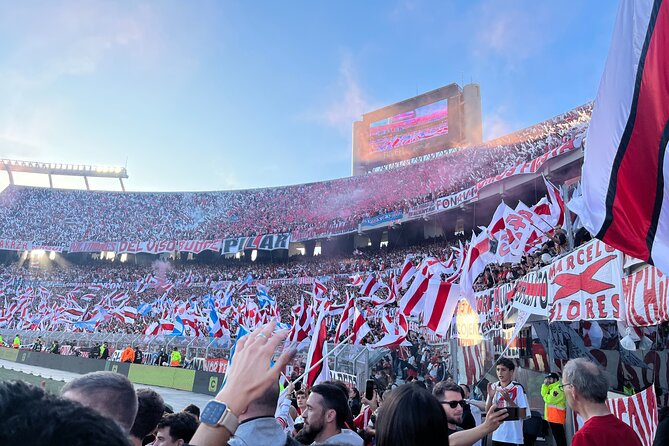
- Hotel-area pickup and drop-off keeps you from wrestling public transport on matchday
- Bilingual fútbol guide translates the club rivalries and fan culture in plain language
- A guided stadium circuit stops at major Buenos Aires clubs before you settle into the match
- Entrance ticket + transfers included reduces the usual matchday stress
- Snack and bottled water included helps you last through the game (concessions are still extra)
- Small group size (max 15) means your guide can keep everyone together during security checks
Matchday With Transfers: What You’re Really Buying for $172
This experience is sold as a soccer match in Buenos Aires, but what you’re really purchasing is matchday logistics done right. You get a bilingual guide, transfers, ticket handling, and a smooth flow from meeting point to stadium and back again. That matters in a city where matchday can feel loud, crowded, and fast-moving.
At $172 per person for about four hours, the value comes from what’s bundled. You’re not just paying for entry. You’re paying for someone to help you walk in confidently, understand what’s happening, and not lose time figuring out where to go once the crowd forms.
The group stays small, too. That’s a big deal for first-timers who want the energy of a real Argentine stadium without wandering off and trying to decode security rules on your own.
You can also read our reviews of more guided tours in Buenos Aires
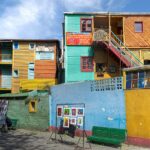

Starting at Defensa 831 and Getting Ticketed
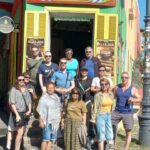
Your day begins at Tangol Tours at Defensa 831. This is where you’ll meet your guide team and get the matchday pieces lined up with your group. Once everyone’s ready, you head out to the stadium together.
If you’re expecting a free-for-all pickup, you won’t get that. The format is meant to keep you on a schedule. Multiple reviews mention pickup and drop-off running smoothly, and the guide staying with the group throughout the process.
Practical tip: pack light. The rules say you should bring only essentials like your phone and wallet. Also, you must bring ID or passport to enter the stadium, so don’t leave it stuffed deep in a hotel bag.
Stadium Circuit Before Kickoff: Monumental, Independiente, San Lorenzo, and More
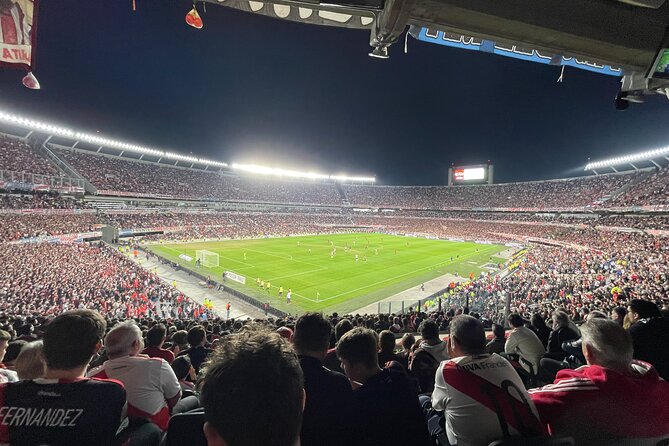
One of the most interesting parts of this outing is that it’s not only “walk in, watch match, walk out.” The route includes short stops at some of the biggest club venues in Buenos Aires. These are typically about seeing the stadiums and absorbing the atmosphere around them, not museum-style tours.
Here’s what each stop adds to your matchday understanding.
El Monumental for River Plate: 1978 and the big-stage feel
You’ll get time at Estadio Monumental tied to River Plate. It’s described as a home of the Argentine national team and linked to Argentina’s 1978 World Cup success. Even without stepping into every corner, it gives you a sense of why River’s fan base behaves like it has a point to prove.
If you like stadium scale—how it makes voices travel and chants spread—this stop helps set that expectation for the match itself.
Libertadores de América for Independiente: why they call themselves Rey de Copas
Next comes Estadio Libertadores de América and Independiente. The nickname Rey de Copas matters. It’s tied to their record of seven South American club titles (what the tour calls champion of America).
That label isn’t just branding. It’s a quick way to understand why Independiente supporters sing with confidence. When you later watch the match, you’ll notice how identity shows up in how fans react to momentum swings.

Pedro Bidegain for San Lorenzo: creativity in the chants
Estadio Pedro Bidegain is the San Lorenzo stop. The tour highlights them as the most creative in terms of fan songs. It also notes the club’s connection to Pope Francis.
That’s a useful contrast for your brain. In Buenos Aires, fan culture isn’t only about winning. It’s also about expression, ritual, and how people use music to keep pressure on the home side.
Racing in Presidente Perón: cheering no matter the score
Then you reach Estadio Presidente Perón for Racing. This is where you get the idea that some stands cheer through the full 90 minutes regardless of result. That changes how you interpret the match pacing.
When you see fans still banging drums and singing late in the game, you’ll understand it’s not random. It’s part of club character.
Huracán in the tango-and-bohemia neighborhood
At Estadio Tomas Adolfo Duco, the tour points to Huracán, and it places the club in a neighborhood described as tango and bohemian. This matters because the city’s football map overlaps with its cultural map.
Even if you don’t have time to roam afterward, you’ll get a sense that these clubs grow from streets, not just spreadsheets.
Vélez and 1978: a venue tied to bigger moments
You’ll also stop at Estadio Jose Amalfitani for Vélez. The tour calls Vélez a world champion and an export club, and it notes that the stadium hosted the 1978 World Cup.
Again, this isn’t only trivia. It helps you grasp why some fans see their stadium as a stage for history—not just a local patch of grass.
Argentinos Juniors and Maradona: where he started (per the tour)
Finally, you’ll visit Estadio Diego Armando Maradona for Argentinos Juniors, described as the club where Maradona played. That link gives you an immediate legend to attach to the crowd energy.
When the match begins, you’ll likely notice how quickly people can switch from casual conversation to full-throated chanting. Stories like this are part of why.
Inside the Match: How the Guide Helps You Understand the Noise
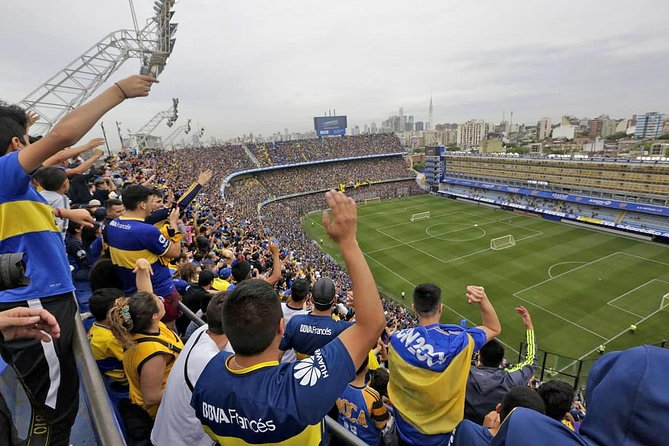
The core of your outing is the match itself. On arrival, you head through the crowd to your seat and get into the rhythm of a top-level Argentine first-division game. Your guide explains club history and fan culture as the match unfolds.
This is where the bilingual part earns its keep. You don’t have to speak Spanish fluently to catch what’s going on. You just need context and timing. Your guide provides that, and it changes how you experience every chant, card, and momentum swing.
What you should expect during the match:
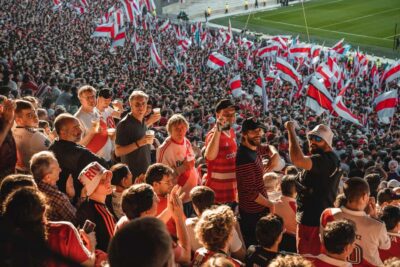
- big crowd energy and lots of singing
- high-level play with moments that feel almost unfair in their difficulty
- stadium concessions available on-site, but not included as a full meal
Also, your guide is a football fan first. Some guides are named in the real-world feedback—people specifically praised guides like Manuela, Gabi, Leandro, Andres, and Matteo for staying attentive, organized, and focused on safety. If your guide carries that same fan intensity, it makes the match feel like it has a story.
Security Rules, ID, and the One Detail That Can Trip Up River Plate
The tour is designed to keep you moving, but it also comes with real stadium rules. You must present ID or passport or your driver’s license in order to enter the stadium.
Then comes the big one: River Plate requires a passport. Foreign ID cards are not accepted for River Plate entry. The tour also notes Face ID registration if you choose the River Plate option, so make sure you complete any steps you’re asked for so your tickets arrive without drama.
These rules aren’t there to be annoying. They’re the kind of system that works only if everyone complies the same way. If you forget the right document, you can lose the whole day.
Camera rules are strict too. You can’t enter with professional cameras. You also can’t bring food or drinks into the stadium. The tour recommends bringing only essentials, which is smart in a security line.
Food and Budget: Snack and Water Are Included, but Concessions Cost Extra
You do get bottled water included, and a snack is part of the “complete matchday” idea. That’s a solid baseline, especially if kickoff is later in the day and you don’t want to gamble on finding something you can stomach quickly.
Still, plan money for the stadium itself. Concessions are available, but they’re listed as own expense. One piece of feedback pointed out that included options can be limited compared to what people expect at the ticket price. So go in knowing you may still buy drinks or additional food.
My practical advice: treat the included snack as support, not a full dinner plan. If you’re traveling with kids or you know you get hungry during long games, eat before you meet up and use the included snack to top off.
Transfers and Timing: Why Four Hours Can Feel Like a Full Night
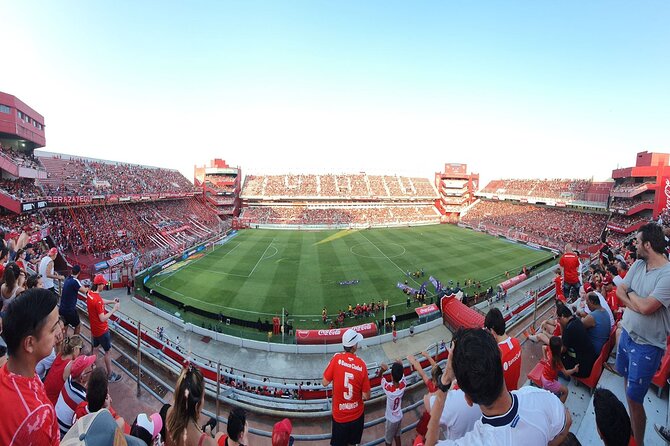
The tour runs about 4 hours (approx.) and keeps to a tight schedule. The route includes time at multiple stadiums, with each stop designed for short viewing and context rather than long stays.
Because the pacing is part of the concept, transfers matter a lot. You’re not left to find the stadium on your own, and you’re not forced to time buses or taxis around crowds. That’s also how you get back to your central Buenos Aires hotel at the end without turning the evening into a new adventure.
One more detail that affects timing: match date and kickoff times can change. The tour states fixtures can shift and kickoffs are confirmed in the week before the game. If the match is rescheduled, you’ll be notified in advance.
So it helps to stay reachable and flexible with your schedule.
Price vs Value: What Makes It Worth Paying For
Let’s talk money honestly. $172 for a match outing isn’t the cheapest way to see Argentine football. But it’s not meant to be.
This price covers:
- bilingual guide support
- transfers to the stadium
- entrance ticket inclusion
- bottled water
- a snack
- a small-group format (max 15)
If you tried to DIY this, you’d still face costs: getting tickets, arranging transport, dealing with ID rules, and figuring out where to stand during security lines. You’d also lose the context that a dedicated fútbol fan brings.
Where people might feel a mismatch is when they expect a big “all-in” food deal. Since only a snack (and water) is included, some budgets will need extra spending inside the stadium. That’s the trade-off: you’re paying for access and guidance, not for a full meal package.
Should You Book This Soccer Match Tour in Buenos Aires?
Book it if you:
- want a real stadium match with transfers and a bilingual guide
- like the idea of learning why clubs and fans act the way they do
- don’t want to wrestle with matchday logistics, especially if it’s your first time in Argentina
- value feeling looked after during entry and seating
Skip it (or think twice) if you:
- plan to buy a lot of food inside and expect it to be covered beyond the included snack
- hate schedule changes and might struggle if kickoff is moved
- are not prepared for strict ID requirements, especially for River Plate
If you do book, do the prep. Bring the right passport/ID, follow the camera and food rules, and keep in mind the match time can shift until the week before kickoff. Then you’ll be ready for the part that really matters: the chants, the noise, and the match itself.
FAQ
What does the tour price include?
The price includes a bilingual guide, an entrance ticket, transfers to the stadium, and bottled water. A snack is also included as part of the matchday experience.
How long is the tour?
It’s listed as approximately 4 hours.
Where do we meet?
The start point is Tangol Tours office at Defensa 831 in Buenos Aires.
What ID do I need to enter the stadium?
You need to present an ID or passport or driver’s license to enter the stadium. For River Plate, a passport is required and foreign ID cards are not accepted.
Is there anything special if I choose the River Plate match?
Yes. The tour notes Face ID registration will be required to confirm attendance for the River Plate option.
Can I bring food, drinks, or a professional camera?
No. It is not allowed to enter with food, drinks, or professional cameras.
What if the match time or date changes?
Match fixtures and kickoff times can change and are confirmed the week previous to the game. If the match date is rescheduled, you’ll be notified in advance.
Is free cancellation available?
Yes. You can cancel up to 24 hours in advance for a full refund.