REVIEW · BUENOS AIRES
Tango Lesson in Buenos Aires with professional dancers
Book on GetYourGuide →Operated by Milonga City · Bookable on GetYourGuide
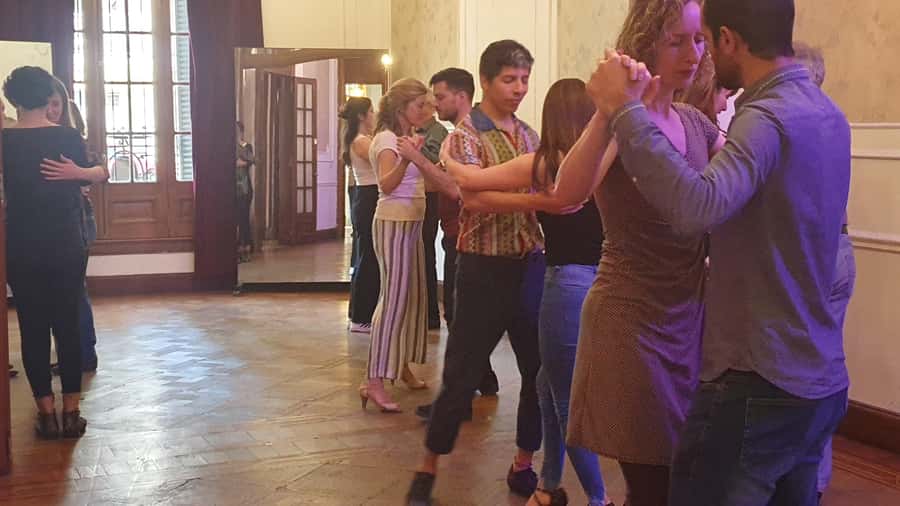
A tango lesson in Buenos Aires, in an old house. That is the hook: you step into an antique-styled tango school, then get one hour of private time with a professional couple. I especially liked the patient teaching style from Joana, plus the way you learn the basics without feeling rushed. The only drawback to plan for is that 60 minutes moves fast, so if you want deep choreography or lots of practice time, you’ll want to repeat a class or book extra instruction.
This is also more than just footwork. Tango is a UNESCO Intangible Cultural Heritage of Humanity, and the lesson is built around the dance’s feel: the embrace, the walk with your partner, and the “secrets” that make tango more than steps. One more thing I appreciated: there’s history folded into the lesson, with stories tied to the different tango halls inside the school.
Logistics are simple. When you arrive, look for the old-house tango school and ring the doorbell to meet your instructors. Wear comfortable clothes and shoes you can move in, because you’ll be standing and walking a lot during the hour.
In This Review
- Key takeaways before you go
- Entering the old-house tango school and its special halls
- What you actually learn: basic steps, embrace, and the tango walk
- The professional teaching style that makes it click fast
- Where the history fits: learning the tango story inside the halls
- The live tango exhibition: why it helps you learn
- Price and value: $120 per group (up to 2) for one hour
- What to bring (and what to skip)
- Timing tips so you don’t feel rushed
- Who this tango lesson is best for
- Should you book this private tango lesson in Buenos Aires?
- FAQ
- How long is the tango lesson?
- Is this a private experience or a group class?
- What is the price?
- Where do I meet the instructors?
- Do I need any prior dance knowledge?
- What language will the instructor use?
- What should I wear and bring?
- Is alcohol allowed during the class?
- Is a transfer available?
- What kinds of guests is it not suitable for?
Key takeaways before you go
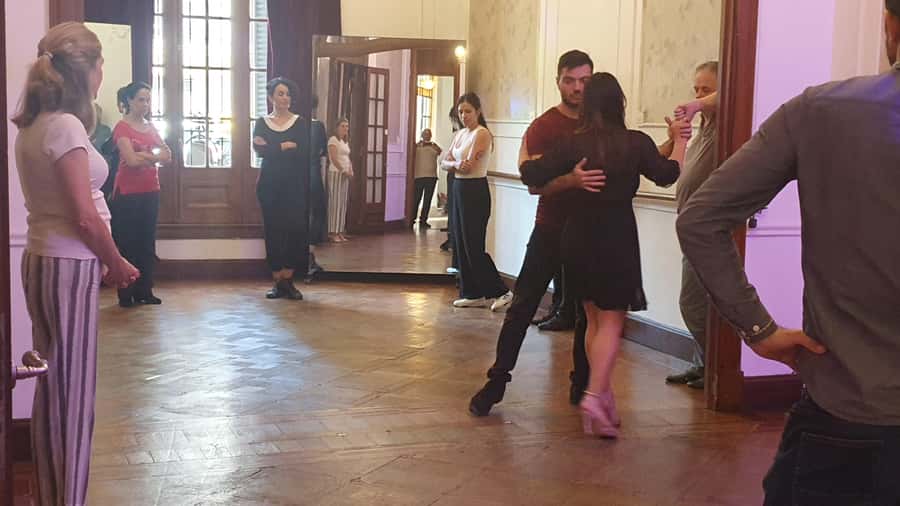
- Private class for up to 2 people means you get teaching geared to your pace.
- Professional dancers (a real tango couple) teach the basics in a simple, fun way.
- Learn the embrace and the walk so you can actually dance with a partner, not just mimic steps.
- Antique-styled house + special class halls give you the classic Buenos Aires tango-school setting.
- A live tango exhibition adds context so you understand what you’re aiming for.
Entering the old-house tango school and its special halls
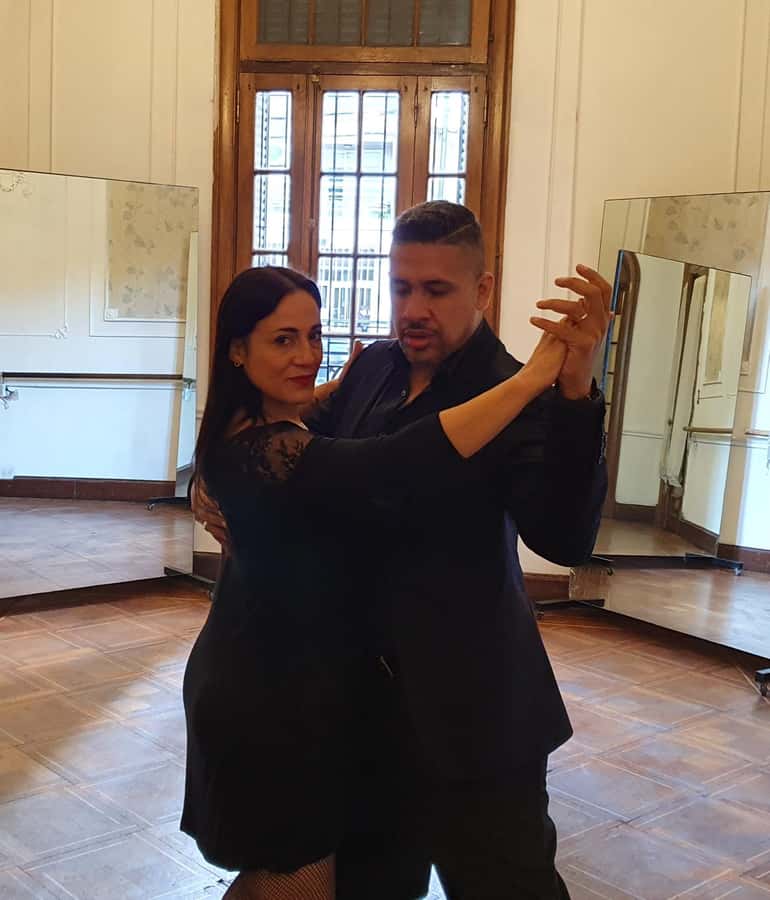
Buenos Aires tango schools have a look. This one is set in an antique-styled house that’s been adapted for lessons, which already tells you you’re in the right place. Instead of a generic studio, you get that old-building feeling—rooms that feel like they’ve hosted generations of learning.
The school has special halls for dance classes, so it doesn’t feel like you’re training in one flat, identical space. That matters because tango is personal and physical: different rooms can help you switch from explanation to practice without your brain getting bored.
Meeting is straightforward but a little old-school. You’ll arrive at the tango school, see the old house, and ring the doorbell to meet your instructors. If you’re the kind of traveler who hates standing around, arriving a few minutes early helps. You don’t want to rush the first moment.
You can also read our reviews of more tours and experiences in Buenos Aires



What you actually learn: basic steps, embrace, and the tango walk
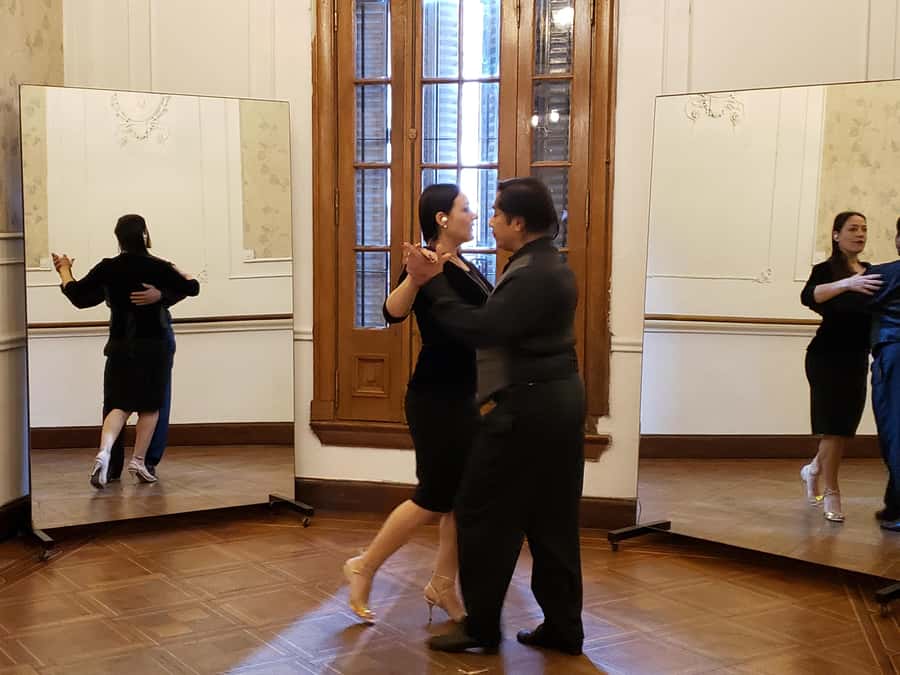
The lesson is built around turning you into a tango dancer—at least in the first, practical sense: you learn how to move with your partner. The core items are clear and beginner-friendly:
- basic tango steps
- the embrace
- the walk with your partner
- the guiding “secrets” that shape the dance
You don’t need dance knowledge to start. That is a big deal in Buenos Aires, where some people go in expecting they must already know what tango is supposed to feel like. Here, the instruction is designed to get you dancing basics without making you feel behind.
Also pay attention to the emphasis on the embrace and the walk. Those two pieces are the difference between doing steps and actually dancing tango. The embrace sets the connection and spacing. The walk teaches timing and direction, so you move like you belong on the dance floor instead of just counting.
The professional teaching style that makes it click fast
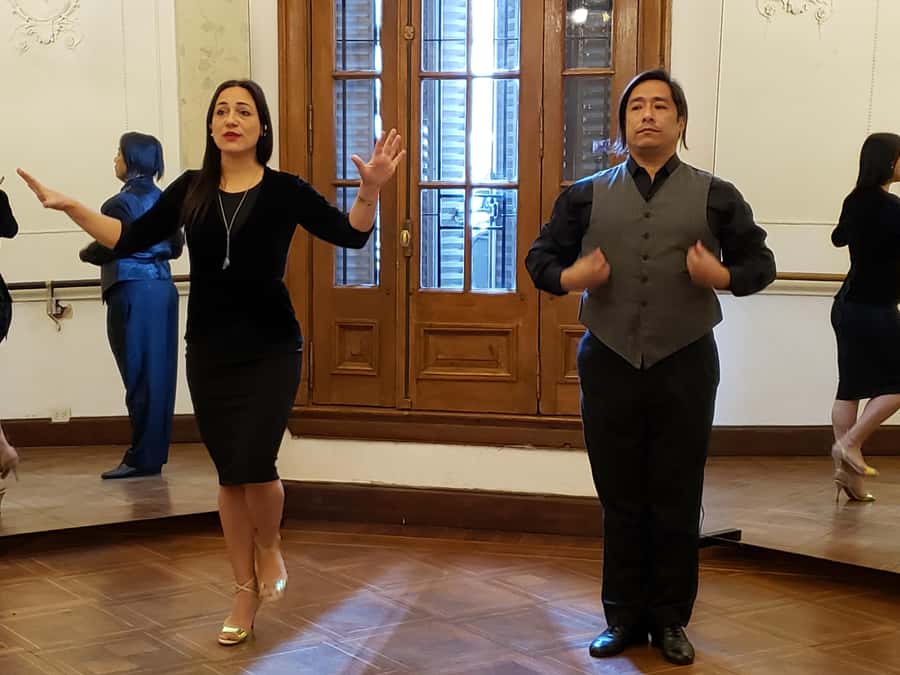
You’re taught by a real-life professional tango couple, and that shows in how they explain things. The class is described as being simple and funny, which is exactly what you want for a first lesson. Tango can feel intimidating on YouTube. A good teacher makes it feel learnable in one session.
The teaching approach also leans into patience. One highlight from a high-rated experience was Joana being lovely and an excellent dancer, with the patience to guide basics step by step. That kind of patience matters because tango is not only about motion—it’s about correction. If the teacher is willing to slow down, you stop guessing and start improving.
You’ll also work with an instructor in English and Spanish, so if you prefer one of those languages, you can follow the lesson without playing catch-up.
Where the history fits: learning the tango story inside the halls
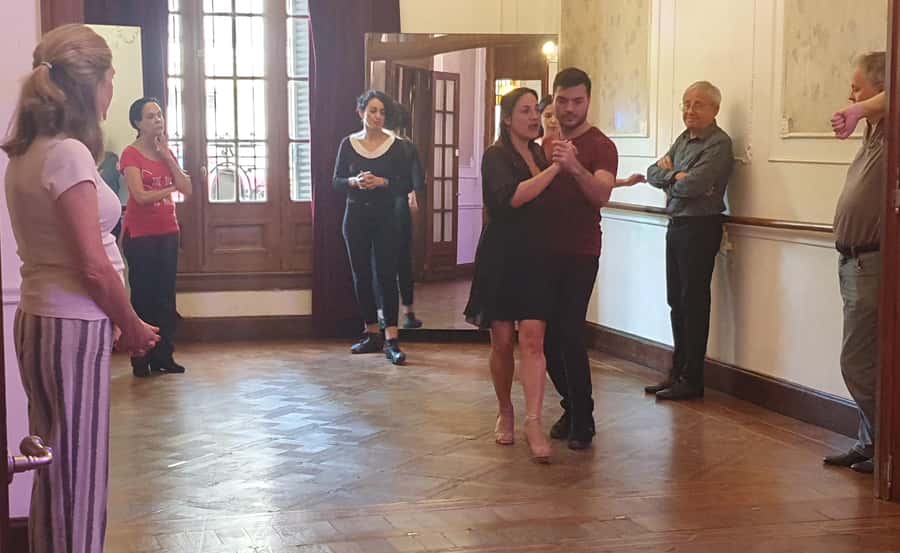
There’s a nice extra layer here: you don’t just learn moves; you learn context. The experience notes that you’ll learn the history that lives in each tango hall.
You might be thinking: history in a one-hour class sounds like a lot. In a good tango lesson, the history is not a lecture. It’s more like a way to understand why certain ways of moving matter. When you connect a step or an embrace style to the dance’s cultural roots, the movements stop feeling random.
This is especially useful if you’re doing tango while traveling. You want more than a souvenir photo. Even small context can turn a basic lesson into something you remember the next time you hear bandoneón music.
The live tango exhibition: why it helps you learn
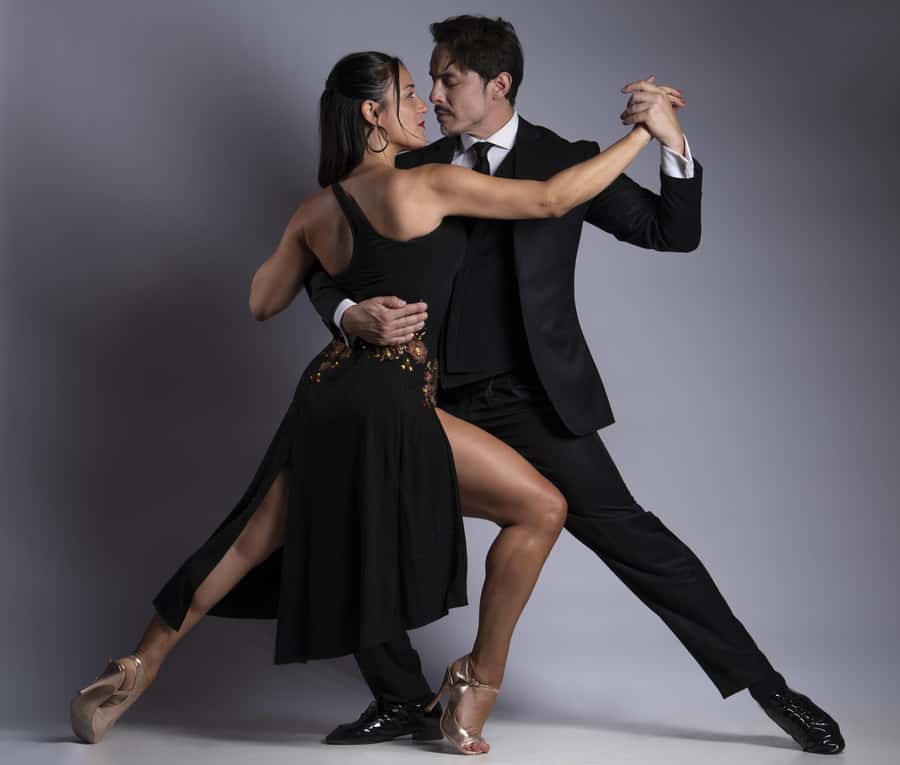
Part of the fun is seeing tango before you’re asked to do it. The experience includes an amazing live tango exhibition in an authentic traditional tango school.
That live moment works like a cheat code for learning. You can watch what the instructor is aiming for, even if you’re only learning basics. It also helps your body understand the style: tango isn’t just walking and stepping; it’s about intention, posture, and the partner connection.
Think of it as your visual map. Then the class gives you the first tools to match what you saw.





Price and value: $120 per group (up to 2) for one hour
Let’s talk value in plain terms. The price is $120 per group up to 2, and the lesson lasts 1 hour. In practice, this can be good value because it’s private instruction, not a large group scramble where one teacher can’t correct you.
Here’s the practical way to think about it:
- If you’re booking as a pair, the cost is easier to justify because you’re splitting the group price.
- If you’re booking solo, the value depends on how much you want direct feedback. For many first-timers, solo private time can be worth it because you can ask questions and get adjustments quickly.
Also consider the setting. You’re not only paying for instruction. You’re getting the classic tango-school environment: antique-styled building, special class halls, and a live exhibition. When all of that is part of the same evening, it’s not just a “dance class.” It’s a tango introduction designed to be memorable.
One optional extra is a private in-out transfer for an additional cost. I like this option if you’re arriving from another neighborhood and you don’t want the stress of finding the doorbell-equipped old house on your own. If you’re already comfortable with Buenos Aires transit, you may not need it.
What to bring (and what to skip)
Keep it comfortable. You’ll want:
- comfortable shoes (something you can pivot in)
- comfortable clothes you can move in
That’s not just advice for comfort. Tango involves posture and connection, so clothing that restricts movement can make you feel stiff. If you’re unsure, dress like you’re going to walk around and do light exercise, not like you’re going to sit through a show.
There’s also a clear rule: alcohol and drugs are not allowed. That’s a reasonable standard for a dance class, especially one centered on partner connection.
Timing tips so you don’t feel rushed
The experience runs for 1 hour, and that’s the whole window. Because the class is private and beginner-focused, you’re likely to go through instruction, practice, and the key basics. Still, don’t assume there’s a lot of extra time built in.
So do yourself a favor:
- arrive a few minutes early
- come rested enough to focus on connection and timing
If you’re hungry, eat before you go. Tango basics feel better when your brain isn’t split between dancing and deciding what to order.
Who this tango lesson is best for
This experience is designed for beginners. You don’t need dance knowledge, and the focus is on core tango fundamentals—steps, embrace, and walking with a partner.
It also tends to work well if you:
- want private attention rather than a classroom crowd
- travel as a couple or small group (up to 2 per group)
- like learning in English or Spanish
- want an authentic tango-school feel, not just a generic dance venue
It is not suitable for children under 10, and it’s also not suited to people with mobility impairments, wheelchair users, visually impaired people, hearing-impaired people, or people with pre-existing medical conditions. If any of those apply, it’s best to choose a tango experience with accessibility support designed for your needs.
Should you book this private tango lesson in Buenos Aires?
If you want a first tango experience that feels approachable and structured, I think this is a strong pick. The value is in the private, professional teaching plus the authentic setting—old-house tango school, special class halls, and a live exhibition in the same world you’re learning from.
Book it if:
- you’re a beginner and want the embrace and walk covered clearly
- you’re going with a partner and want shared learning time
- you like the idea of learning tango history tied to the actual rooms
Skip or reconsider if:
- you need long practice time beyond one hour
- accessibility needs don’t match the stated limitations
- you’re hoping for a party-style night instead of instruction-focused learning
If you’re doing Buenos Aires tango for the first time, this kind of lesson is one of the fastest ways to go from watching tango on a screen to feeling tango in your body.
FAQ
How long is the tango lesson?
The class lasts 1 hour.
Is this a private experience or a group class?
It’s a private group experience.
What is the price?
The price is $120 per group for up to 2 people.
Where do I meet the instructors?
Meet at the tango school in the old house. You’ll see the building on arrival and need to ring the doorbell to meet your instructors.
Do I need any prior dance knowledge?
No dance knowledge is required.
What language will the instructor use?
The instructor offers English and Spanish.
What should I wear and bring?
Wear comfortable clothes and comfortable shoes.
Is alcohol allowed during the class?
No. Alcohol is not allowed.
Is a transfer available?
Yes, a private in-out transfer is available for an additional cost.
What kinds of guests is it not suitable for?
It is not suitable for children under 10 years, people with mobility impairments, wheelchair users, visually impaired people, hearing-impaired people, and people with pre-existing medical conditions.