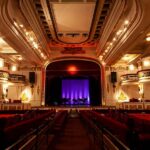
You walk in and the building talks back. I love the Golden Hall and the Gallery of Busts most—both feel like they belong in a museum and still belong to a working opera house—plus you get an official guide explaining how the place was built to sound and perform. One possible drawback to know up front: the main auditorium lighting can be dim or off at times due to rehearsals and technical prep, so the experience may feel more like architecture touring than full-stage viewing.
This is a tight visit, about 1 hour total, with a circuit that focuses on the big public spaces: foyers, halls, and the dramatic interior details that make Teatro Colón famous. You’ll join a small group, exchange your ticket on-site, and move through the building at a steady pace.
For the $46 price, I think the value depends on what you want. If you care about design, acoustics, and Argentina’s opera legacy, it’s a strong deal. If you’re hoping for long backstage access or lots of time under bright stage lights, you may feel a little rushed.
In This Review
- Key things I’d plan around before you go
- A grand opera house with a timeline you can feel
- Inside the route: Golden Hall, foyers, and the bust gallery
- Main Foyer and Hall: the “arrival drama”
- Gallery of Busts: a who’s-who of European composers
- Golden Hall and round floor: the big visual payoff
- Bonus: you might get a closer theater moment
- The realistic part: rehearsals and lighting can affect what you see
- Price and value: is $46 for an hour worth it?
- Tour size and hearing: why you should care about group dynamics
- Where it starts: meeting point in Buenos Aires
- Tickets: the important part is that Viator vouchers won’t work
- Which type of visit is this best for?
- Should you book this Teatro Colón guided tour?
- FAQ
- How long is the Teatro Colón guided tour?
- Where is the meeting point for the tour?
- Is hotel pickup or drop-off included?
- What parts of the theater will I see?
- Is admission included in the price?
- Do they accept Viator/TripAdvisor vouchers at Teatro Colón?
- Do I need to print the ticket?
- When will I receive the entrance ticket by email?
- Is the tour limited to a certain group size?
- What is the minimum age?
Key things I’d plan around before you go
- See the Colón’s signature interiors without needing to know anything about opera first
- Golden Hall plus bust gallery give you the most photo-friendly moments
- Official guide time is limited so book the time slot that fits your day
- Lighting in the auditorium may vary when rehearsals and events run
- Small-group rules matter with a maximum group size set at 30
A grand opera house with a timeline you can feel
Teatro Colón isn’t just old and beautiful. It’s layered. The original Colón venue operated from 1857 to 1888, then the building closed while a new house was constructed. The new Teatro Colón opened May 25, 1908, with a performance of Aïda—the kind of detail that makes the building feel connected to real events, not just decoration.
And it’s not only about local culture. Over the years, the theater hosted major international stars—Maria Callas, Plácido Domingo, Luciano Pavarotti, plus dancers like Vaslav Nijinski and Mijail Barishnikov. Even if you don’t recognize every name, your guide can help you connect those names to what you’re standing in.
Why this matters for you: when the guide links a design choice to how the theater performs—especially acoustics—you start noticing things you’d otherwise miss. It turns the visit into something you can take home, not just something you look at.
You can also read our reviews of more tours and experiences in Buenos Aires


Inside the route: Golden Hall, foyers, and the bust gallery
The tour is designed around a classic loop through the Colón’s most impressive public interiors. You’ll start at Teatro Colón (Cerrito 628) and, once there, you’ll exchange your ticket with your guide and join the group. From there, you’ll visit the Hall, the Main Foyer, the Gallery of Busts, and the Golden Hall, finishing up around the round floor area. The total time is about 50 minutes for the guided portion.
Here’s what each stop tends to give you:
Main Foyer and Hall: the “arrival drama”
The Main Foyer and Hall are where Teatro Colón flexes its scale. The spaces are grand and made for gathering before performances, not hiding. If you want that Buenos Aires turn-of-the-century feeling, this is where it clicks. You’ll usually get explanations that connect the look of the building to the way people moved through it—like a stage you enter from the outside.
Practical note: this is walking time. Comfortable shoes help, especially if your Buenos Aires day already includes other sights.
Gallery of Busts: a who’s-who of European composers
The Gallery of Busts is one of the most enjoyable parts because it’s story-driven. You’ll see busts connected to the musical world, and the guide can point out details that make the collection feel curated rather than random decoration.
In my opinion, this stop is also a good equalizer. If opera’s not your thing, you can still enjoy art and history without feeling left behind.
Golden Hall and round floor: the big visual payoff
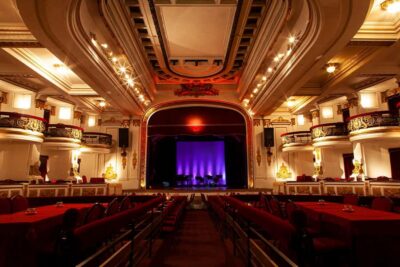
The Golden Hall is the standout for most people, and for good reason. It’s bright, ornate, and designed to impress from multiple angles. The round floor area is a nice finishing touch because it lets you take in the space without staring only at one wall.
If you’re the type who loves architecture photos, you’ll probably spend a little extra time here—because you can actually see the craftsmanship rather than rushing past it.
You can also read our reviews of more guided tours in Buenos Aires






Bonus: you might get a closer theater moment
Some tours include a look from seating areas and even box-seat views, depending on how the theater is running that day. One of the reviews mentioned being able to sit in a box seat and check the view, and another mentioned seeing a rehearsal on stage (like The Nutcracker) from those kinds of viewing points.
I can’t promise that every day works the same way, because Teatro Colón is an active venue. But it’s worth knowing that the experience can occasionally go a step beyond lobbies.
The realistic part: rehearsals and lighting can affect what you see
This is a working opera house. That’s the charm—and the risk.
The circuit can be affected by events, performances, rehearsals, refurbishments, and other theater activities without any refund. What that means for you in plain language: sometimes the auditorium won’t be lit the way you’d expect during a classic, fully staged performance.
A handful of reviews point to what can happen: the auditorium may be dark or dim for part of the visit because technical checks or rehearsals are happening. One review described the lighting being off in the main space, which can make the theater feel less like a grand show venue and more like you’re peeking at it.
My take: don’t book this expecting a long, bright, stage-lit spectacle. Book it for the building and the stories, and keep your expectations flexible for what’s happening inside the hall that day.
Price and value: is $46 for an hour worth it?
At $46 per person, you’re paying for three things: access, an admission ticket for general entry for foreigners, and an official guided tour.
For value, the big question is how much of Teatro Colón you personally want to see. The tour is about architecture and public interior spaces, not a full production tour. If you came mainly for the grand stage experience, you might feel the time is short—some reviews also complained that the group was too large to hear clearly, and that the tour felt school-like or rushed.
On the other hand, if you want a well-structured introduction to why Teatro Colón is considered one of the top opera houses and a sense of how acoustics and design work together, the guided format is what justifies the price. You’re not wandering alone trying to guess what you’re looking at.
My advice for value: book an entrance time when you’ll be alert, not when you’re mentally tired. This is one of those sights where attention matters, because the guide’s explanations make the details land.
Tour size and hearing: why you should care about group dynamics
The tour caps at a maximum group size of 30. That number sounds manageable, but it still depends on how loud your group is and whether the guide uses microphones on that particular day.
Some reviews praised guides who were entertaining and efficient, with specific names like Octavio, Kiara, and Adrian mentioned. That’s a strong sign that you can get a real story-driven tour, not just facts on repeat.
Other reviews complained that the group was too large and the guide wasn’t mic’d, making it harder to catch everything. So here’s a simple strategy: arrive a bit early, and aim to position yourself where you can clearly hear the guide. If you’re near the back, you might lose details.
Where it starts: meeting point in Buenos Aires
The meeting point is Teatro Colón, Cerrito 628, C1010 Cdad. Autónoma de Buenos Aires, Argentina. The tour ends back at the meeting point, so you’re not left navigating across the city afterward.
The area is well connected to public transport (so getting there isn’t a nightmare), and you can easily combine this with walking time around the theater. One review noted the pleasant area for strolling nearby, with green space and shops close by.
If you like an easy plan: schedule this as your “anchor culture stop” for the morning or afternoon, then build your walking route around it.
Tickets: the important part is that Viator vouchers won’t work
Here’s the part I want you to get right, because it’s where things can go wrong.
Teatro Colón will not accept your Viator/TripAdvisor voucher. Instead, they send you an email ticket as an attachment, and it’s mandatory to print that ticket in order to take the guided tour. The email entrance ticket is sent during the first week of the month you selected for the tour.
On the day of the tour, you’ll exchange your ticket with your guide and join the group.
Practical tip: treat the printed ticket like a museum pass—don’t rely on your phone battery or hope a staff member can improvise. And if your email filter is strict, check it early in that first week of the month.
If you’re comfortable planning ahead, this system is straightforward. If not, it can turn into stress—fast.
Which type of visit is this best for?
This tour works best if you:
- want a guided, structured look at Teatro Colón’s interiors like the Golden Hall and bust gallery
- enjoy learning how architecture and performance design connect, including acoustics
- like cultural history in a format that doesn’t require opera expertise
- prefer a single tight hour over a long day of museum-style roaming
It may be less ideal if you:
- want long backstage access (this isn’t presented that way)
- are hoping for a long, bright view of the main stage under full lighting
- get easily frustrated when a working venue changes the exact on-the-day conditions
If you’re traveling with kids, the minimum age is 5, and the tour involves walking and time inside a theater environment that can be busy and sometimes dim.
Should you book this Teatro Colón guided tour?
I’d book it if your goal is to see Teatro Colón’s most famous interior spaces with context, not to sit through a full production. The Golden Hall and bust gallery are worth it even if you’re not an opera person. The official guide approach helps the building make sense fast.
But I’d skip or reconsider if your #1 priority is bright auditorium time or guaranteed stage views. Because this is an active theater, rehearsals and technical work can affect lighting, which changes the feel of what you see.
If you do book, do three things: print your ticket, arrive a little early at Cerrito 628, and choose a time slot when you can focus for the whole hour.
FAQ
How long is the Teatro Colón guided tour?
It runs for about 1 hour total (the guided portion is listed as around 50 minutes).
Where is the meeting point for the tour?
Meet at Teatro Colón, Cerrito 628, C1010 Cdad. Autónoma de Buenos Aires, Argentina.
Is hotel pickup or drop-off included?
No. Hotel pickup and drop-off are not included.
What parts of the theater will I see?
You’ll visit the Hall, Main Foyer, Gallery of Busts, and Golden Hall, plus the round floor area as part of the circuit.
Is admission included in the price?
Yes. The admission fee for Teatro Colón is included, along with the guided tour.
Do they accept Viator/TripAdvisor vouchers at Teatro Colón?
No. Teatro Colón will not accept the Viator/TripAdvisor voucher. You’ll need the emailed ticket sent as an attachment.
Do I need to print the ticket?
Yes. It’s mandatory to print the ticket to take the guided tour.
When will I receive the entrance ticket by email?
You receive the entrance ticket in your email during the first week of the month you selected for the tour.
Is the tour limited to a certain group size?
Yes. The tour has a maximum group size of 30 people.
What is the minimum age?
The minimum age is 5 years old.