REVIEW · BUENOS AIRES
100% History and architecture of Buenos Aires
Book on GetYourGuide →Operated by Swell Experiences · Bookable on GetYourGuide
Buenos Aires has a pulse. I like how the architecture talk makes Plaza de Mayo’s political power click, and I like that you get Cathedral and Chapter entrance rather than only seeing façades from the sidewalk.
One possible drawback: the guide is Spanish-speaking, and there has been at least one reported case of a no-show, so I’d treat it as worth a quick day-of message and arriving a touch early at the meeting point.
In just two hours, you’ll move from Plaza de Mayo to Avenida de Mayo and end at the National Congress, while picking up context for why this city looks the way it does and how power, faith, and art show up in stone.
In This Review
- Key points that matter before you go
- Plaza de Mayo from the Pyramid of May: where the story begins
- Avenida de Mayo: the European charm street that explains the city’s face
- Plaza de Mayo again: making the architecture more than background
- National Congress at the end: democracy in stone and symbolism
- Price and value: what you’re paying for in 2 hours
- Who this is best for (and who should be careful)
- Practical tips so your walk stays fun
- Should you book 100% History and architecture of Buenos Aires?
- FAQ
- What is the meeting point for the tour?
- Where does the tour finish?
- How long is the tour?
- How much does it cost?
- What’s included in the tour?
- What language is the live guide?
- Is the tour wheelchair accessible?
- Is this a private group tour?
- Is there free cancellation?
- Is it possible to reserve without paying yet?
Key points that matter before you go
- Plaza de Mayo first, not last: you start at the center of Argentine political life, so the history has a strong anchor.
- Avenida de Mayo’s European-style streetscape: classic façades, wide avenues, and photo-worthy buildings shape your route.
- Cathedral and Chapter entrance included: you go inside, which adds weight to the architecture-focused theme.
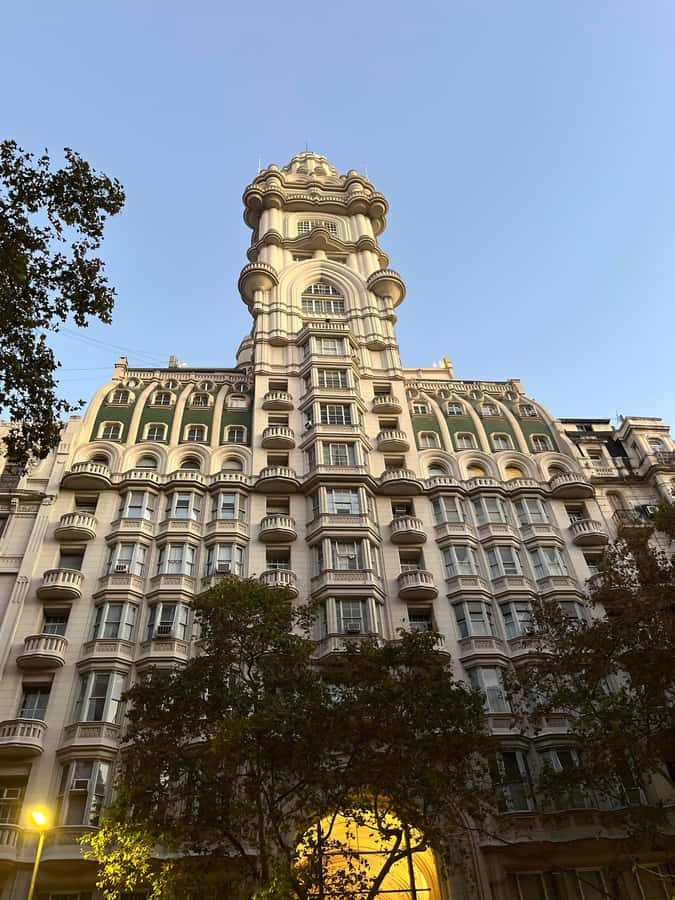
- Cafe Tortoni and Barolo Palace on the circuit: you’re pointed toward recognizable Buenos Aires landmarks as you walk main streets.
- Finish at the National Congress: the tour closes with a clear symbol of democracy, not just more street views.
- Private group and wheelchair accessible: it’s designed to work for smaller groups and mobility needs.
Plaza de Mayo from the Pyramid of May: where the story begins
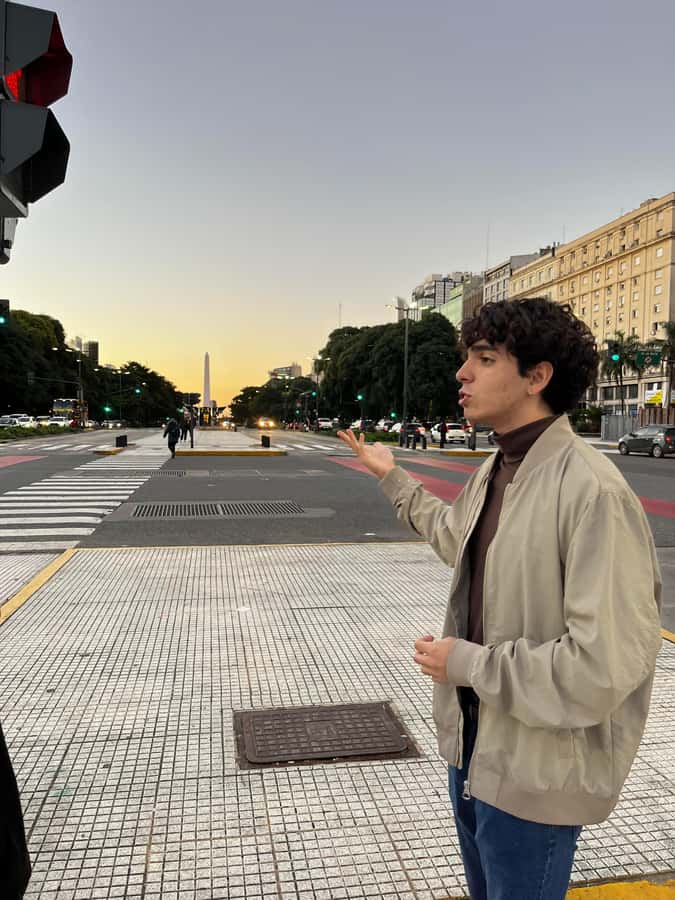
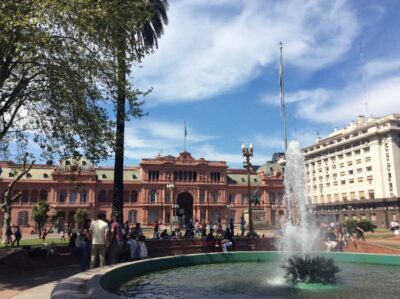
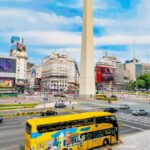
Most good city tours start with geography. This one starts with the heart of Buenos Aires: Plaza de Mayo. The meeting point is in front of the Pyramid of May, and you’re told to look for a black umbrella. That little detail matters. If you’re the kind of person who likes to get your bearings fast, aim to be there early and scan for that umbrella so you don’t spend your first minutes stressed.
From Plaza de Mayo, the tour’s theme becomes obvious. This square isn’t just scenic. It’s the stage for national-level decisions, public speeches, and moments that shaped the country. When you’re standing there, it’s easier to understand why guides in Buenos Aires keep linking architecture to politics. Buildings don’t sit there quietly. They communicate importance.
You’ll also get a sense of how the plaza works visually. It’s open, formal, and designed for crowds. That makes it a great starting point for an architecture walk because you can step back, take in the whole composition, and then move toward the narrower, more detailed streets where the city’s “style” becomes harder to miss.
You can also read our reviews of more historical tours in Buenos Aires


Avenida de Mayo: the European charm street that explains the city’s face
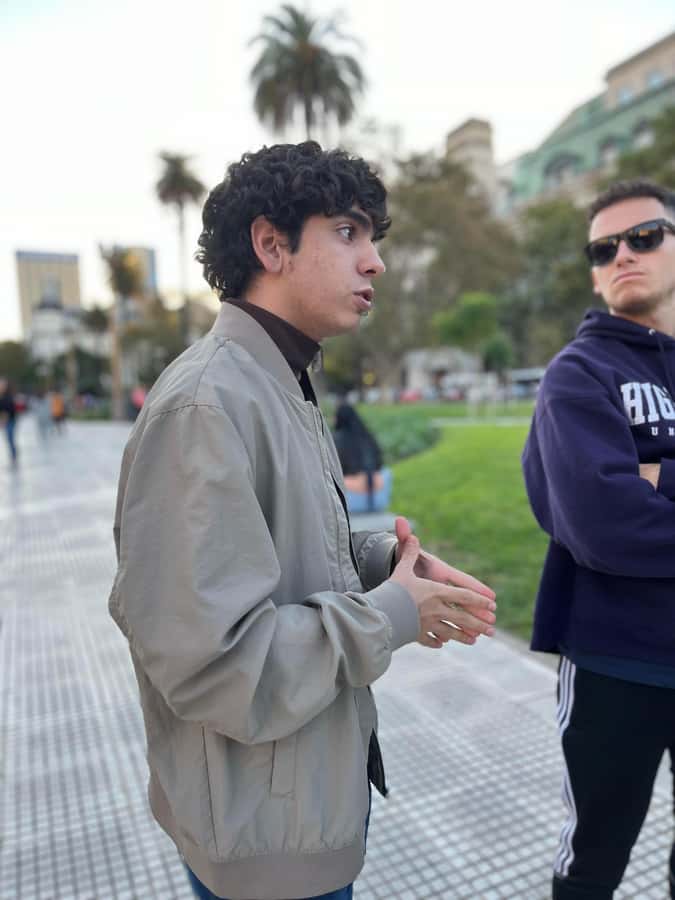
After the plaza, you head to Avenida de Mayo, one of Buenos Aires’ grand promenades. This is where the walk turns from “big picture politics” to “how the city chose to look.” The avenue is associated with a more European feel, and the guiding focus helps you read the buildings like visual clues.
This is also where recognizable names enter the story. As you go along the main streets, the route highlights places like Cafe Tortoni and Barolo Palace. Even if you’ve only seen photos before, this is the moment you connect those images to real scale, materials, and street rhythm.
Here’s why that matters: it’s one thing to admire an ornate façade. It’s another to see how it lines up with the sidewalk, the avenue width, and the flow of people. In a short tour like this, you don’t have time to wander aimlessly. You need a framework. Avenida de Mayo gives that framework because the street itself is like a long architectural sentence.
If you’re into photography, this stretch is your friend. The avenue’s perspective pulls you forward, and you’ll likely have multiple moments to frame buildings without feeling like you’re fighting crowds for a single angle.
Plaza de Mayo again: making the architecture more than background
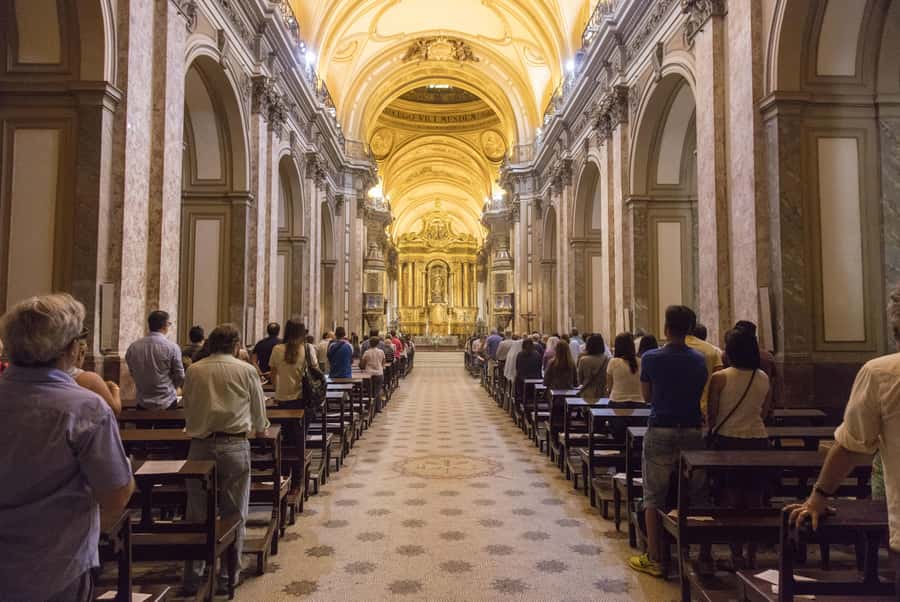
You don’t just pass through Plaza de Mayo once. The flow brings you back into it, which is smart. The first time, you get the square’s role. The second time, you’re closer to the buildings and can focus on details.
A highlight here is the included access connected to the Cathedral area: entrance to the Cathedral and Chapter. Going inside is a major upgrade for an architecture tour. Outside views tell you the style. Inside spaces tell you how people used that style—how faith, ceremony, and public life were meant to feel in three dimensions.
I like tours that include at least one “step inside” moment, because it slows you down in the right way. It also helps you understand why the surrounding streets and plazas matter. If you only walk, you get the city’s exterior language. With an interior stop, you get meaning.
One practical note: if you want photos, plan for a bit of time where movement rules apply in sacred or formal spaces. You’ll get the best experience by moving at the pace of the guide instead of trying to sprint for Instagram shots.
National Congress at the end: democracy in stone and symbolism
The tour culminates at the Congreso de la Nación Argentina, which is a strong way to close a history-and-architecture theme. Ending here works because it reframes everything you saw earlier. Plaza de Mayo sets the political stage; Avenida de Mayo shows how power liked to present itself aesthetically; and the Congress gives you a clear finishing point for Argentine democracy.
This is the kind of site where you don’t need a long lecture to feel the message. The building reads as institutional and permanent. In a two-hour format, that’s perfect. You get the sense of structure—literal structure, like columns and massing—and symbolic structure, like how the country’s systems are meant to function.
The tour route also keeps you anchored. You don’t leave with 20 separate photo stops and no thread. You leave with an ending you can explain to friends: Plaza de Mayo to Avenida de Mayo to the Congress—history that’s built into the city’s layout.
Price and value: what you’re paying for in 2 hours
The price is $12 per person for a 2-hour guided experience. For Buenos Aires, that’s a very workable value, mainly because you’re not just getting street commentary.
Here’s what you’re paying for that changes the math:
- A live guide in Spanish who leads you through the core sites.
- A structured route that connects street design and architecture to real national moments.
- Entrance included for the Cathedral and Chapter, which usually costs time and money on your own.
A short tour like this can also be smart when you’re juggling jet lag or limited days. Instead of spending your first afternoon lost, you get a guided line through the city’s most meaningful architecture corridors. That means your later self-guided walks make more sense.
The private group angle matters too. Private doesn’t automatically mean you get a custom itinerary, but it often means you can ask questions without blending into a sea of people. If you like talking back to the guide, this format helps.
Who this is best for (and who should be careful)
This tour fits best if you want:
- A focused intro to Buenos Aires architecture in a short time.
- A history thread that connects buildings to politics and public life.
- A walking plan with clear start and finish points.
It may not be ideal if:
- You don’t speak Spanish and you’re expecting the guide to switch languages. The tour is listed as Spanish, and there’s no other language support stated.
- You’re the type who needs lots of free time to roam independently. This is guided and structured, with the emphasis on the route and included site access.
On the plus side, it’s wheelchair accessible, so if mobility is part of your planning, this is one of the easier ways to cover central sights without making up your own logistics on the spot.
Practical tips so your walk stays fun
First: be easy with time. This is a compact tour, so arriving at the meeting point on schedule helps you get the full value of those included moments.
Second: look for the black umbrella in front of the Pyramid of May. It’s a tiny detail, but it saves you from a stressful start.
Third: bring comfortable walking shoes. This is a city-center walking experience. You’ll want soles that handle cobbles and long sidewalks without complaint.
Fourth: if you’re picky about photos, you’ll have to choose. The best strategy is to let the guide lead you to the “why” spots first, then take a few clean shots during the pauses.
Finally: because there has been at least one reported no-show issue in the operator experience, I’d recommend a quick check the day-of. A simple confirmation message and staying close to the meeting point window can prevent a disappointing start. Travel should be flexible, but it also deserves basic reliability.
Should you book 100% History and architecture of Buenos Aires?
I think this is a strong pick if you want a quick, guided hit of Buenos Aires’ center with real entry access and a clear history thread. The two biggest reasons: it connects architecture to national life, and it gives you an interior stop with the Cathedral/Chapter entrance, which is rare for short walks.
I’d pass or plan differently if your Spanish is limited and you’re counting on easy communication, or if you’re the type who gets frustrated by any uncertainty on meeting timing. If you’re comfortable with guided walking and you can work with a Spanish-speaking guide, this is excellent value for getting oriented and understanding what you’re looking at.
If you book, do one simple thing that makes it smooth: arrive near the Pyramid of May early, find the black umbrella, and let the route do the organizing. You’ll come away with a city you can actually read.
FAQ
What is the meeting point for the tour?
You meet in front of the Pyramid of May, and you should look for a black umbrella.
Where does the tour finish?
The tour finishes at the Congreso de la Nación Argentina, and the activity ends back at the meeting point.
How long is the tour?
The duration is 2 hours.
How much does it cost?
The price is $12 per person.
What’s included in the tour?
The tour includes a guided tour and entrance to the Cathedral and Chapter.
What language is the live guide?
The live tour guide speaks Spanish.
Is the tour wheelchair accessible?
Yes, it is wheelchair accessible.
Is this a private group tour?
Yes, it’s listed as a private group.
Is there free cancellation?
Yes, free cancellation is available up to 24 hours in advance for a full refund.
Is it possible to reserve without paying yet?
Yes, the option is Reserve now & pay later, so you can book your spot and pay nothing today.