REVIEW · BUENOS AIRES
Recoleta Cemetery – Small Group Tour of History & Secrets
Book on GetYourGuide →Operated by Esteban_Nigro · Bookable on GetYourGuide
Marble and secrets, in walking shoes. Recoleta Cemetery is already dramatic, but this small-group tour turns it into a story you can actually follow, with legends and explanations tied to the monuments. I especially liked how our guide, Esteban, kept the pace friendly and the details clear.
You do not just spot the headline name. You get Evita Perón’s mausoleum and the real reasons it became the most visited stop, plus the European-style monuments that make Recoleta feel more like an art gallery of grief than a simple cemetery. The European-imported mausoleums and sculpture details are the kind of thing that can be missed if you wander without a plan.
One heads-up: the cemetery entrance ticket (22,600 Argentine Pesos) is not included in the $49 price, so plan for that extra cost. And since it is an active cemetery, it is not a stroll you can treat casually. Wear comfortable shoes and keep the respectful tone.
In This Review
- Key Points You’ll Appreciate on This Tour
- Meeting Plazoleta Chabuca Granda and Finding Your Guide
- What This Tour Really Feels Like Inside Recoleta
- The 1880s Power Behind the Mausoleums (Not Just Names on Stone)
- Europe in Buenos Aires: Mausoleums That Look Imported for a Reason
- Evita Perón’s Tomb: Why It’s the Most-Visited Stop
- The Legends Are the Entertainment, But the Details Are the Payoff
- Pacing and Weather: How the 150 Minutes Fits Together
- Price and Value: $49 Plus the Entrance Ticket
- Who This Tour Fits Best
- Photography, Respect, and How to Act in an Active Cemetery
- The Practical Checklist Before You Go
- Should You Book This Recoleta Cemetery Tour?
- FAQ
- How long is the Recoleta Cemetery small group tour?
- Is the cemetery entrance ticket included in the $49 price?
- Where do we meet for the tour?
- How do I find the guide if I’m using Uber or a taxi?
- Is the tour guide available in English?
- Is photography allowed?
- What if my plans change?
Key Points You’ll Appreciate on This Tour
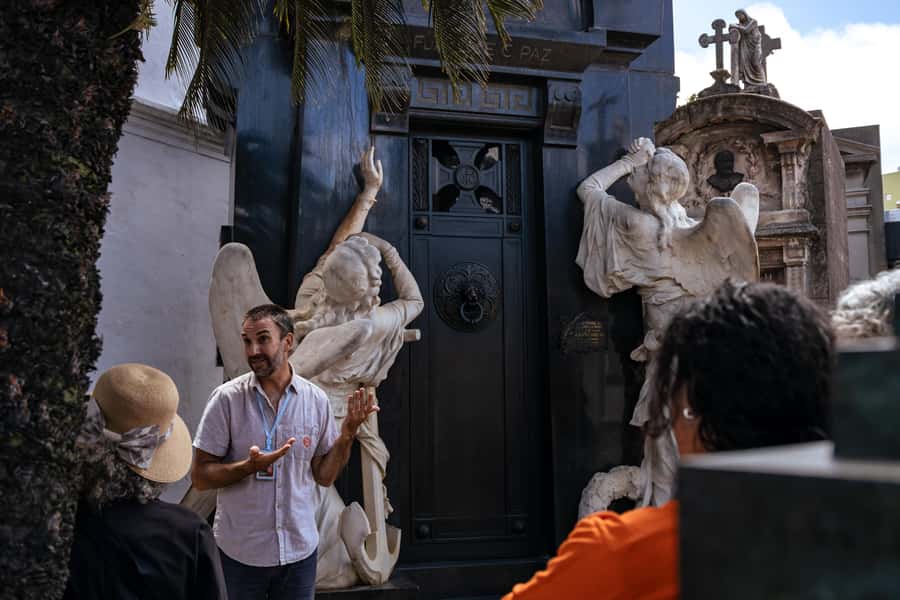
- Small groups (up to 15) make it easier to ask questions and actually hear the story at each stop.
- Esteban’s storytelling connects the carvings and architecture to people, power, and local legends.
- Evita Perón’s mausoleum is included, and the guide explains why it draws so many visitors.
- European-imported mausoleums help you see the cemetery as an art and immigrant-influence snapshot.
- Engaging for families with kids, since the legends are presented in a way that holds attention.
- Walking time is real (about 150 minutes), so comfortable shoes matter.
Meeting Plazoleta Chabuca Granda and Finding Your Guide
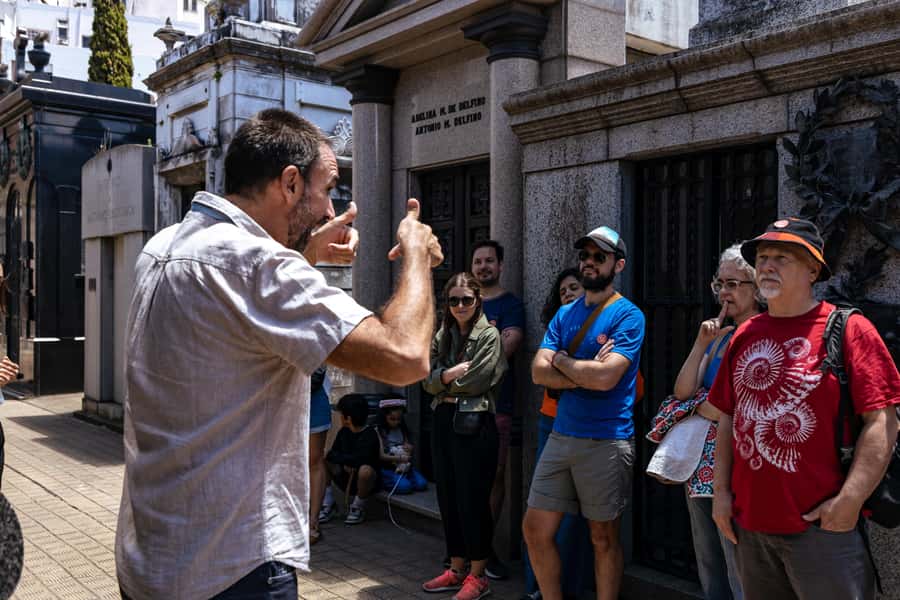
Recoleta Cemetery feels self-explanatory on a map, but the trick is getting to the right spot quickly. You meet outside the cemetery at Plazoleta Chabuca Granda. If you are coming by Uber or taxi, tell the driver you are going to the bar La Biela at Avenida Presidente Manuel Quintana 596, which makes the last step much easier.
Your guide will be easy to recognize: you are told he will be wearing a blue cap. That might sound small, but in Buenos Aires that kind of clarity saves time and stress.
One practical note: the tour is described as wheelchair accessible, which is a good sign for comfort. Still, it is a walking experience, so if mobility is limited, go slower and plan to take in the monuments rather than speed through them.
You can also read our reviews of more historical tours in Buenos Aires



What This Tour Really Feels Like Inside Recoleta
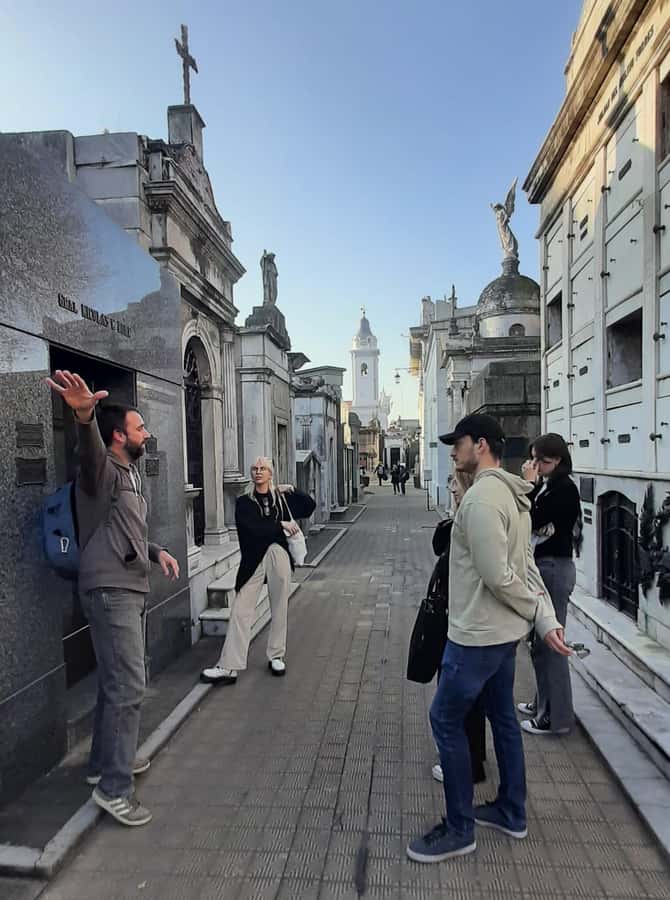
This is not a cemetery that works on autopilot. The stories are the point. The tour is built around the idea that the city’s wealth and status shaped how people wanted to be remembered. In the 1880s, the wealthiest families of Buenos Aires did not just build places to bury loved ones. They built monuments—almost like palace architecture for the dead—and they commissioned major artists to create lasting statements.
On this tour, you walk past marble facades that look similar at first glance. Then the guide gives you the connecting tissue: who these people were, what their families were trying to protect, and the legends that grew around the graves. That is why you end up leaving with more than photos. You leave with a mental map of meaning.
And yes, it gets eerie in places. The tour includes local legend material like a woman rumored to have been buried alive. That kind of story belongs to the cemetery. You cannot unknow it once you hear it and then look at the stone.
The 1880s Power Behind the Mausoleums (Not Just Names on Stone)
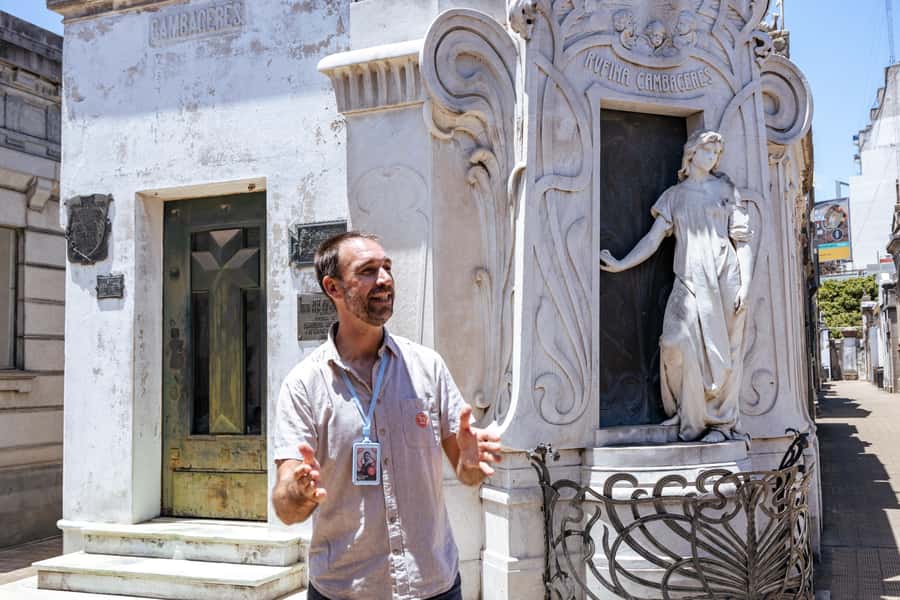
A big part of Recoleta’s pull is how the monuments communicate status. The wealthiest families used stone like branding: size, materials, and artistic detail all signal rank. When you understand that, the cemetery starts to feel logical instead of random.
I like that this tour frames the graves as social history. You are not stuck only in romance or only in horror. You get the mix: prestige, family rivalry, religious influence, and the human need to control how memory survives.
One of the specific story types included is the tragedy of a couple whose bitterness was etched into stone. Whether you find it heartbreaking or a little grimly theatrical, it helps you look at the carvings with more attention. Instead of scanning for famous names only, you start reading the whole scene.
Europe in Buenos Aires: Mausoleums That Look Imported for a Reason
Recoleta often gets called iconic, but the reason it feels distinctive is the influence you can see in the monuments. This tour specifically highlights that the cemetery includes mausoleums imported from Europe. Even if you do not know the design history ahead of time, you can spot how the style and sculpture traditions differ from what you might expect in a more local cemetery setting.
On the walk, the guide points out sculpture intricacies rather than treating the cemetery like a checklist. One standout theme from the experience is that you end up noticing the details you would normally walk right past. In small-group settings, that matters: you can step back, look longer, and hear the explanation before you move on.
If you like art history but do not want a textbook lecture, this is a nice middle ground. The monuments become readable. You start to see why the families invested so much money into design that could outlast time, weather, and public opinion.
Evita Perón’s Tomb: Why It’s the Most-Visited Stop
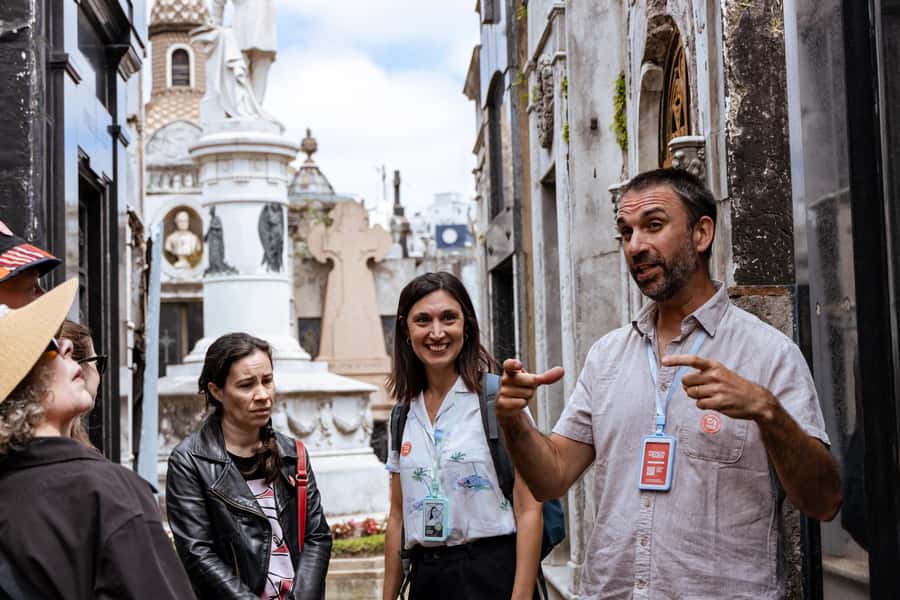
Evita Perón’s mausoleum is the most visited site in Recoleta—and this tour includes that stop. But what makes it worth your time is the context. Seeing her tomb is the easy part. Understanding why so many people feel drawn to it turns a photo spot into a story you can repeat.
Evita is one of those figures where the name alone carries emotion. The tour adds another layer: how her place in Argentine history connects to how visitors read the cemetery today. It is not just fame. It is also the way public memory lives inside private stone.
Even if you think you already know the basics, a guide’s walk-through can shift what you notice. You stop looking only at the headline and start watching how the monument is framed within the wider cemetery setting.






The Legends Are the Entertainment, But the Details Are the Payoff
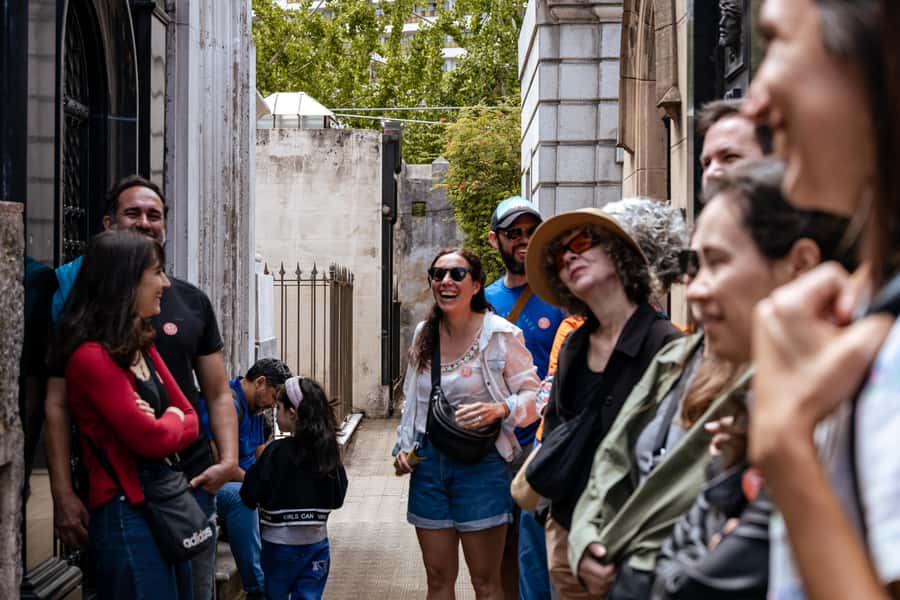
The most satisfying part of this tour is the balance between story and interpretation. You get eerie legends and dramatic human tales, but you also get the practical “why” behind what you are looking at.
Two examples of the kinds of legends and stories you can expect include:
- The legend of a woman buried alive.
- The story of a couple whose bitterness was etched into stone for eternity.
These are not just spooky add-ons. They make you look at the cemetery as a place where people tried to shape meaning. Even when a legend sounds dark, it often reflects how communities explained uncertainty, grief, and social conflict when modern records were harder to come by.
I also appreciated how the guide encourages questions. That is a huge deal for a tour like this, because people often want to ask about symbolism, specific monuments, or the difference between family stories and publicly shared history.
Pacing and Weather: How the 150 Minutes Fits Together
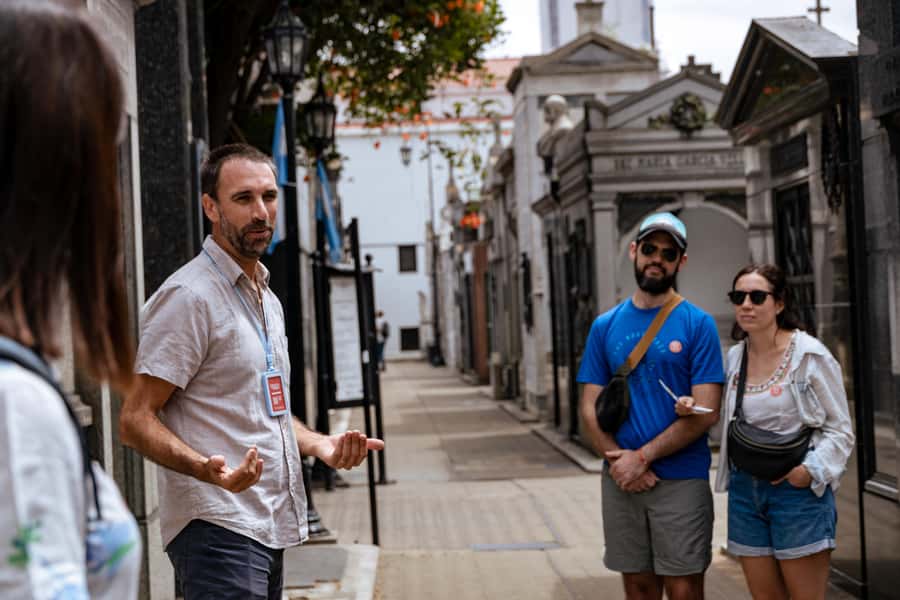
The tour runs about 150 minutes. That is long enough to cover multiple sections of the cemetery without feeling rushed, but short enough that you still feel fresh by the end.
It is also a walking tour, so comfort matters. Expect uneven paths and lots of stopping points where you will want to stand still and look. If you are sensitive to sun, heat, or sudden rain, plan with the idea that the guide may keep the group moving between shade. In one case, the guide even had umbrellas ready when rain started during the walk.
If you are traveling with kids, the pacing generally works well because the guide weaves in legends that keep attention, then anchors them back to what you see in front of you.
Price and Value: $49 Plus the Entrance Ticket
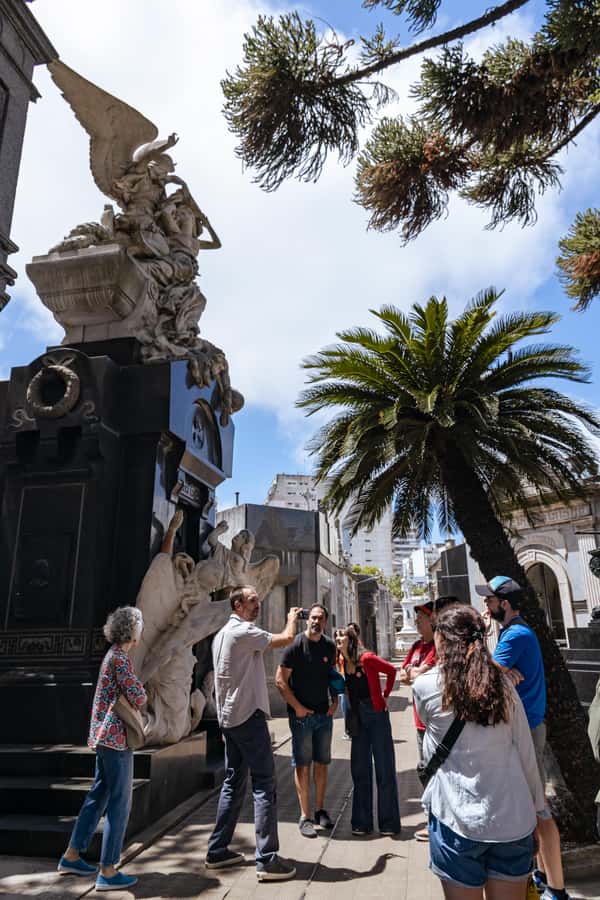
Let’s talk money in plain terms. The tour price is $49 per person, and the big catch is the entrance ticket is not included. The cemetery ticket entrance is listed at 22,600 Argentine Pesos.
Whether this is a “good deal” comes down to what you want from Recoleta:
- If you want a quick look at famous tombs, you could spend less time and money wandering on your own.
- If you want to understand why the cemetery looks the way it does, and you care about the stories tied to monuments, then paying for a guide becomes the value.
For me, the value equation is strongest when you factor in the small-group size (never more than 15), the English live guide, and the fact that you get multiple story themes in one walk. You are not paying just to enter a cemetery. You are paying to have it explained well enough that your photos make sense later.
Who This Tour Fits Best
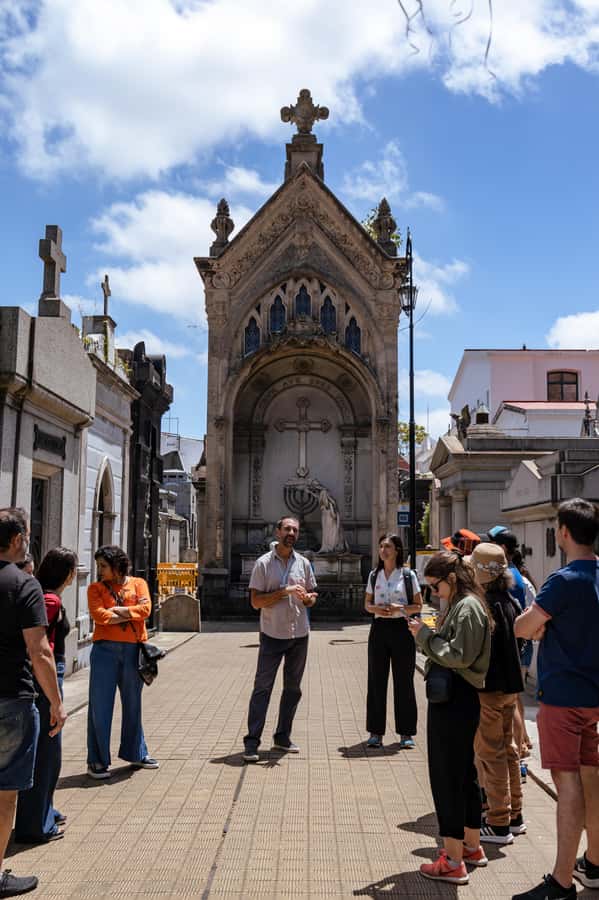
This is a great fit if you enjoy:
- Architecture and sculpture details you might otherwise miss
- Family stories and local legends tied to real places
- A structured walking plan in a complicated-feeling site
It also works well for mixed groups. The tour notes it is suitable for families and kids, and the pacing plus legend-led storytelling is typically easier for young minds than a pure lecture.
If you are a hardcore history scholar who wants deep archival detail, you might still enjoy it but should expect a more story-driven approach. This tour is built to help you connect emotionally and visually—not to replace a research trip.
Photography, Respect, and How to Act in an Active Cemetery
Recoleta is not a theme park. Photography is allowed, but you are asked to be discreet and respectful. That means keeping your voice down, giving other visitors space, and not turning graves into a photo shoot set.
A small reminder: you are walking through an active cemetery. Treat it like you would a memorial space at home. It makes the experience better, not just safer.
The Practical Checklist Before You Go
You will have a better time if you show up ready for a real walk:
- Wear comfortable shoes (this is not a sit-down tour)
- Bring a light layer if you get sensitive to sun or wind
- If rain is possible, consider a compact cover, especially if you are visiting during unpredictable weather
Also, plan your time around meeting outside the cemetery. Getting to Plazoleta Chabuca Granda and meeting your guide is part of the success of the day.
Should You Book This Recoleta Cemetery Tour?
I recommend booking this tour if you want Recoleta to feel like a guided story instead of a difficult-to-read maze of monuments. The combination of small-group size, a live English guide, and the inclusion of both Evita Perón’s mausoleum and the Europe-influenced mausoleums makes it a strong use of about 2.5 hours.
Skip it only if your priority is a quick, self-paced wander and you do not care about the legends and symbolic details. Since the entrance ticket is separate, you should also be comfortable with the extra cost.
If you want Recoleta Cemetery to click—marble faces, sculpture clues, family drama, and all—this is the kind of tour that helps it all fall into place.
FAQ
How long is the Recoleta Cemetery small group tour?
It lasts about 150 minutes (around 2.5 hours).
Is the cemetery entrance ticket included in the $49 price?
No. The entrance ticket is listed separately at 22,600 Argentine Pesos.
Where do we meet for the tour?
You meet outside the cemetery at Plazoleta Chabuca Granda.
How do I find the guide if I’m using Uber or a taxi?
If you are taking Uber or a taxi, tell the driver you are going to the bar La Biela at Avenida Presidente Manuel Quintana 596. The guide will be wearing a blue cap for easy recognition.
Is the tour guide available in English?
Yes. The tour is led by a live guide in English.
Is photography allowed?
Photography is allowed, but you should be discreet and respectful.
What if my plans change?
The tour offers free cancellation up to 24 hours in advance for a full refund. It also offers reserve now & pay later so you can keep plans flexible.