REVIEW · BUENOS AIRES
English Classes with Native Teachers
Book on Viator →Operated by Vamos Academy School · Bookable on Viator
English lessons, Buenos Aires style. This one-hour session at Vamos Academy is built for native-teacher practice and runs in English-only, so you spend the time actually using the language and can plug in teachers like Maria, Camila, Frederick, Ty, or Taine as you learn.
I especially like how the lessons are planned around your needs (conversation, vocabulary, grammar, whatever you’re focused on). I also love the human vibe—lots of students mention friendly, helpful staff and teachers who keep things moving while you build confidence.
One consideration: it’s a 1-hour class, so real progress usually means taking more than one session. Also, since there are six levels plus exam-focused Higher levels, you’ll want to choose the right fit so you’re not stuck too easy or too hard.
In This Review
- Key Things I’d Prioritize
- Buenos Aires Base: Viamonte 1516 and a Clean Start
- Quick reality check on timing
- A 1-Hour Lesson That’s Not One-Size-Fits-All
- The one downside of personalization
- What “Native Teachers” Means in Practice
- Choosing the Right Level: A1 to C1, Plus Higher (C2)
- Why that helps you avoid frustration
- The main thing to watch
- What to Expect During the Hour
- A practical tip before you go
- Exam Preparation and the Higher-Level Track
- Who this fits
- Price and Value: $20 for a Native Teacher Session
- When $20 feels like a bargain
- When it might not be enough on its own
- Where It Fits in Your Buenos Aires Trip
- Who should book this
- Who might want something different
- So, Should You Book It?
- FAQ
- How much does the English class cost?
- How long is the English class?
- Where is the meeting point?
- What time is the academy open?
- Is the class taught in English?
- Are there different English levels available?
- Can the lessons be tailored to my needs?
- Is exam preparation available?
- Is this a private experience?
Key Things I’d Prioritize
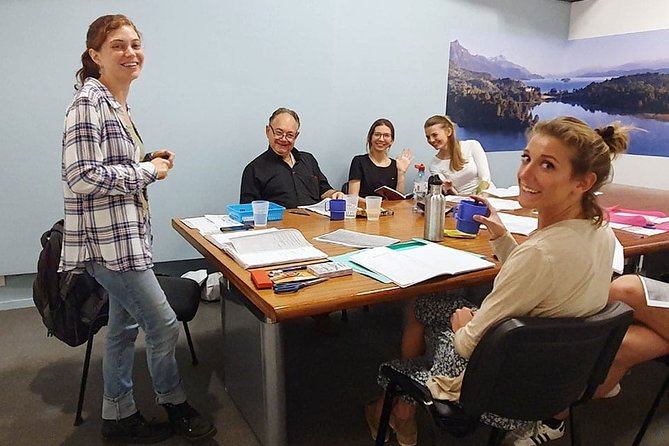
- Native speakers at every level: from Beginner (A1) through Advanced (C1), with Higher (C2) options too
- English-only classroom time: you practice listening and speaking right away
- Lesson personalization: talk, vocabulary, grammar, or whatever your goal is
- Exam preparation available: special goals can be arranged
- Flexible experience with different teachers: you may have the chance to practice with accents from different countries
- Private group format: only your group participates
Buenos Aires Base: Viamonte 1516 and a Clean Start
Your experience starts at Vamos Academy Spanish School and English Classes, at Viamonte 1516 in Buenos Aires. It’s in the city center (C1055 ABD), and the location is described as near public transportation, which matters because language learning is hard enough without adding transit stress.
Check in with your mobile ticket. That’s a small detail, but it helps—no searching for paper tickets right before class. The academy also keeps long hours on weekdays (Monday to Friday from 9:00 AM to 9:00 PM), so you’re not locked into some weird one-time schedule.
And then you sit down for the part you actually paid for: a full hour of English instruction, taught by a native speaker and geared to your current level.
You can also read our reviews of more tours and experiences in Buenos Aires



Quick reality check on timing
The class is listed as about 1 hour. That’s not a half-day commitment, which is great for fitting into sightseeing. But it also means you’re working in tight time windows—your teacher will likely steer the lesson toward what you want most, rather than trying to cover everything.
A 1-Hour Lesson That’s Not One-Size-Fits-All
This isn’t framed as a big lecture. The model is practical: you and your teacher shape what happens during your time together. The key promise is that you can tailor the lesson to what you’re keen to learn—whether that’s conversation, vocabulary, or grammar.
Here’s why that matters for you in Buenos Aires. Many language programs make you sit through content you don’t need. With this setup, you can treat each session like targeted practice.
In the spirit of “short and useful,” you can use one class to:
- get speaking momentum when you’re stuck in your head
- work on a specific grammar point you keep tripping over
- expand vocabulary around daily life, work topics, or travel situations
- focus on exam-style goals if you’re preparing for a specific test
And because it’s entirely held in English, the lesson has a built-in pressure-cooker effect—in a good way. You learn faster when the brain can’t switch off.
The one downside of personalization
Personalization is a superpower, but it needs input from you. If you show up with a vague goal, the class will still be helpful—but you’ll get more value if you can name what you want to improve.
Even a simple plan like:
- I want more speaking confidence
- I want clearer grammar for sentences
- I want to improve my vocabulary for conversations
can help your teacher steer the time efficiently.
What “Native Teachers” Means in Practice
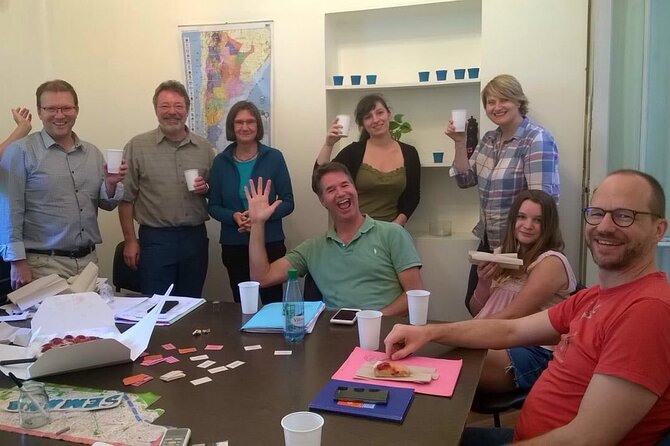
Native-teacher instruction is the headline for a reason. In Buenos Aires, you’ll hear Spanish everywhere. Having English taught by native speakers helps you connect the dots faster between how English sounds and how you’re expected to use it.
From the reviews, the experience is also described as fun and formative, with staff and teachers who are friendly and helpful. Several teacher names pop up, like Linda, Cortland, and others including Maria, Camila, Frederick, Ty, and Taine. That doesn’t guarantee the same lineup every day, but it does reinforce the idea that you’re dealing with real teachers, not just generic substitutes.
One standout detail: you may get to practice with different teachers from different countries. That’s more useful than it sounds. Different accents can train your ear, so you stop panicking when someone pronounces things slightly differently.






Choosing the Right Level: A1 to C1, Plus Higher (C2)
The academy organizes English courses into six levels:
- Beginner (A1)
- Elementary (A2)
- Pre-Intermediate (B1)
- Intermediate (B1+)
- Upper-Intermediate (B2)
- Advanced (C1)
And then there’s Higher (C2). Higher students often take individual classes or in private groups, usually when they have specific exam goals or are planning a move to an English-speaking country.
What I like about their structure is that the levels are tied to communicative ability—not just memorizing rules. Yes, grammar and vocabulary come up. But the framework is designed around where you can function in real conversations and where you need to go next.
Why that helps you avoid frustration
If you’ve ever studied English and felt like you’re “learning English” but not getting better at using English, this approach is a better match. You’re being guided by what you can already do and what you need for real communication.
The main thing to watch
Since levels are defined this way, your best results come when your chosen level actually fits you. If you pick a level that’s too far below your current ability, you won’t stretch. Too far above, and you’ll feel lost.
What to Expect During the Hour
You can think of the session as an English workshop shaped around your goals. The only firm “schedule” element we have is the duration—about an hour—and the rule that it’s held in English.
During that time, the teacher can focus on:
- conversation practice
- vocabulary building
- grammar work
- whatever you specifically want to address
You’re also encouraged to get tips from academic staff, which suggests the school doesn’t just hand you a worksheet and disappear. The goal is to make your time count.
A practical tip before you go
Write down 3 things you want to improve before your lesson. It could be:
- a topic you want to discuss
- a grammar weakness you keep repeating
- a question you want to understand better
Then during your class, you can steer the conversation to those points. You’ll leave with clearer progress than if you walk in hoping the teacher reads your mind.
Exam Preparation and the Higher-Level Track
If you need English for an exam, the program can arrange special exam preparation. That’s mentioned as a standard option, not an afterthought.
Higher (C2) students often do individual or private group work when their goals are very specific—like preparing for an international exam or planning to move to an English-speaking country.
Who this fits
- You’re preparing for a test and want targeted practice, not general conversation
- You need high accuracy and can handle more advanced language demands
- You have a clear timeline and want help focusing your study
If you’re not sure whether you’re exam-focused, start simpler: pick a level that matches your current communication ability and use the lessons to build confidence and control. Then, if you need exam prep, switch into that track.
Price and Value: $20 for a Native Teacher Session
The price is $20.00 per person for about 1 hour. That’s low for native-teacher instruction, and the “value math” improves even more because the lesson is tailored and held entirely in English.
Also, the experience is described as a private tour/activity. That means only your group participates. In practice, that can reduce the “watching from the side” feeling you sometimes get in larger classes, especially when your goal is speaking confidence.
When $20 feels like a bargain
- You want speaking practice without a crowded room
- You’ll use the lesson to work on your specific weak points
- You’re willing to take multiple sessions, since the highlight is repeating until you feel improved
When it might not be enough on its own
If you want dramatic jumps fast, one hour can only do so much. But as a consistent tool—one lesson at a time—it can be a very efficient way to keep your English active while you explore Buenos Aires.
(As a side note: the experience is non-refundable and cannot be changed for any reason. If your schedule might change, plan carefully before booking.)
Where It Fits in Your Buenos Aires Trip
This works well in a trip rhythm: sightseeing in the morning, practice in the afternoon. Because the academy runs 9:00 AM to 9:00 PM, Monday to Friday, you can usually find a slot without rearranging everything.
And if you’re already studying Spanish, this is a nice counterbalance. You get an environment where English is the working language, which makes it easier to separate the two and build habits.
Who should book this
This experience is a strong fit if you:
- want native-teacher instruction
- need speaking practice and want the lesson to push you to use English
- like the idea of choosing your lesson focus (conversation, vocabulary, grammar)
- may benefit from exam prep or advanced Higher-level work later on
Who might want something different
If you only want a one-time “taste” of English and you don’t plan to repeat lessons, you may feel the improvement is gradual. The program is built around progress through repeated sessions.
So, Should You Book It?
I’d book it if you want a practical English class in Buenos Aires that doesn’t waste time. The combination of native teachers, English-only instruction, and lesson personalization makes it one of those setups where you can actually feel progress week to week.
You don’t need fancy gear. Just show up with goals, pick the right level, and use that hour to speak as much as you can.
If you’re aiming for real communication (or an exam), or you want to train your ear to different accents, this is an easy yes.
FAQ
How much does the English class cost?
The class costs $20.00 per person.
How long is the English class?
It lasts about 1 hour.
Where is the meeting point?
You meet at Vamos Academy Spanish School and English Classes, Viamonte 1516, C1055 ABD, Buenos Aires.
What time is the academy open?
Opening hours are Monday to Friday, 9:00 AM to 9:00 PM.
Is the class taught in English?
Yes. The classes are entirely held in English.
Are there different English levels available?
Yes. The program offers six levels: Beginner (A1) through Advanced (C1), plus Higher (C2) options.
Can the lessons be tailored to my needs?
Yes. You can tailor the lessons to what you want to learn, including conversation, vocabulary, or grammar.
Is exam preparation available?
Yes. Exam preparation can be arranged.
Is this a private experience?
Yes. It’s listed as a private tour/activity, so only your group participates.