REVIEW · BUENOS AIRES
Buenos Aires: Historic District Private Guided Walking Tour
Book on GetYourGuide →Operated by BUENOS AIRES PASS · Bookable on GetYourGuide
Buenos Aires history walks right in. This private 2-hour stroll pairs panoramic city views with a guide who explains Argentina’s independence, history, and traditions clearly, and then lands you at Plaza de Mayo for the founding story.
I also love how the tour turns big-name sights into actual places you can read. The Metropolitan Cathedral and Cabildo are included with entry, so you can focus on architecture and context instead of ticket hassles. One possible drawback: the meeting point is outside Café Tortoni, so confirm the location close to departure and make sure you have internet access if you need updates.
If you want a structured, English-friendly walk through central Buenos Aires without jumping between multiple tickets, this is a tidy way to do it. It’s wheelchair accessible, and the group stays private, so you can ask questions without competing with a crowd.
In This Review
- Key highlights at a glance
- Getting oriented at Café Tortoni and starting your Historic District walk
- Panoramic views and the neighborhood mood before Plaza de Mayo
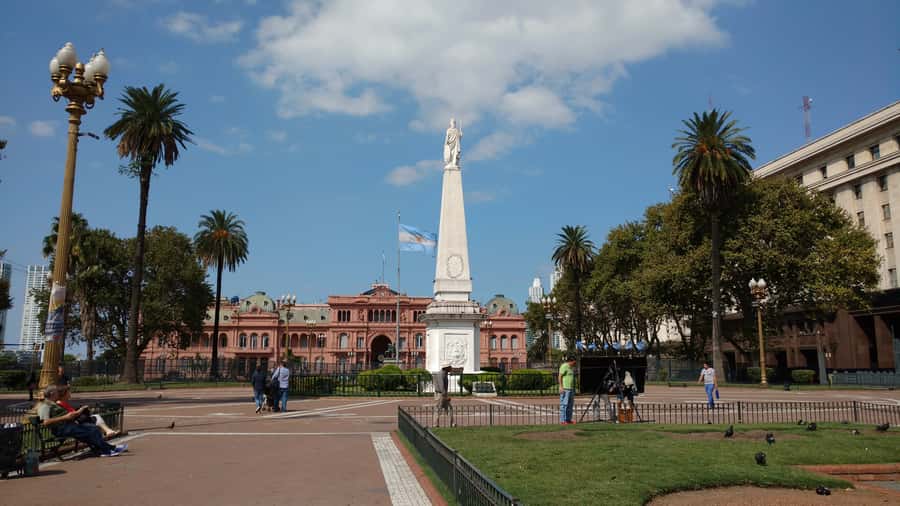
- Plaza de Mayo, Casa Robada, and the founding-era context
- Cabildo: seeing colonial town power in brick and stone
- Metropolitan Cathedral’s neoclassical design up close
- The Plaza de Mayo subway station and Buenos Aires’ transit origin
- Price and what $52 gets you in 2 hours
- Pacing, practical tips, and what to bring
- What kind of traveler this private Historic District walk suits
- Should you book this Buenos Aires Historic District tour?
- FAQ
- How long is the Buenos Aires Historic District private walking tour?
- Where does the tour meet?
- What’s included in the price?
- Is hotel pickup included?
- Which languages are available for the live guide?
- Can I skip the ticket line for the cathedral and Cabildo?
- Is the tour wheelchair accessible?
- What should I bring?
Key highlights at a glance
- Meet your guide outside Café Tortoni and start with local context right away
- Panoramic views from a top neighborhood, before you hit the political core
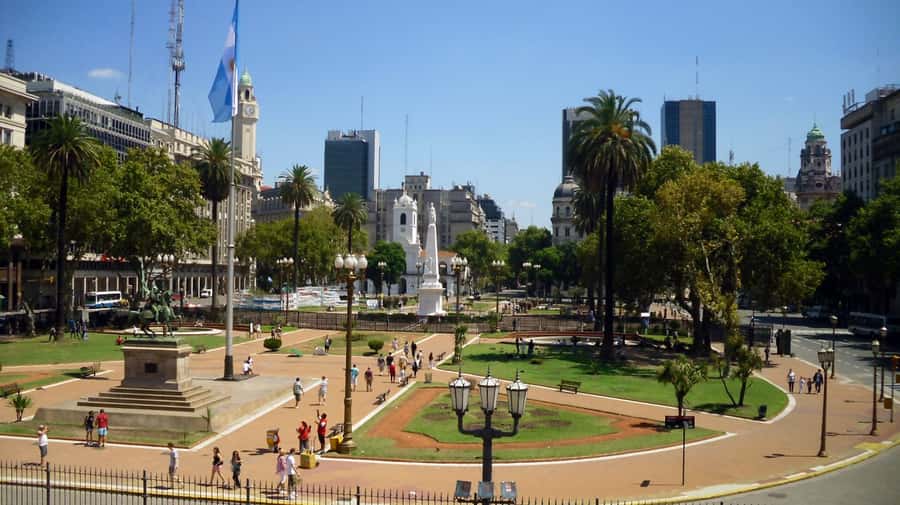
- Plaza de Mayo (founded in 1580) plus Casa Robada for the power-and-history connection
- Cabildo entry included, so you can picture colonial town government up close
- Metropolitan Cathedral (unusual neoclassical design) with skip-the-line entry
- Plaza de Mayo subway station where Buenos Aires’ subway system began
Getting oriented at Café Tortoni and starting your Historic District walk
The tour begins outside Café Tortoni. That matters more than it sounds, because you’re starting in a landmark setting that’s closely tied to Buenos Aires identity and well-known meeting culture. From there, your guide sets the tone with stories tied to Argentine history and famous personalities who used this area as a gathering place.
This first stretch is also where you get your bearings. The route is built for walking, so you’ll want to arrive ready to move. Since there’s no hotel pickup, you’ll be doing your own short commute to the center, but the upside is you’re not wasting time waiting around.
Also, this is a private group, so you’re not stuck with the “everyone thinks the tour pace is fine” problem. If you’re curious—about dates, symbols, or why certain buildings look the way they do—you can ask and keep going.
You can also read our reviews of more walking tours in Buenos Aires

Panoramic views and the neighborhood mood before Plaza de Mayo
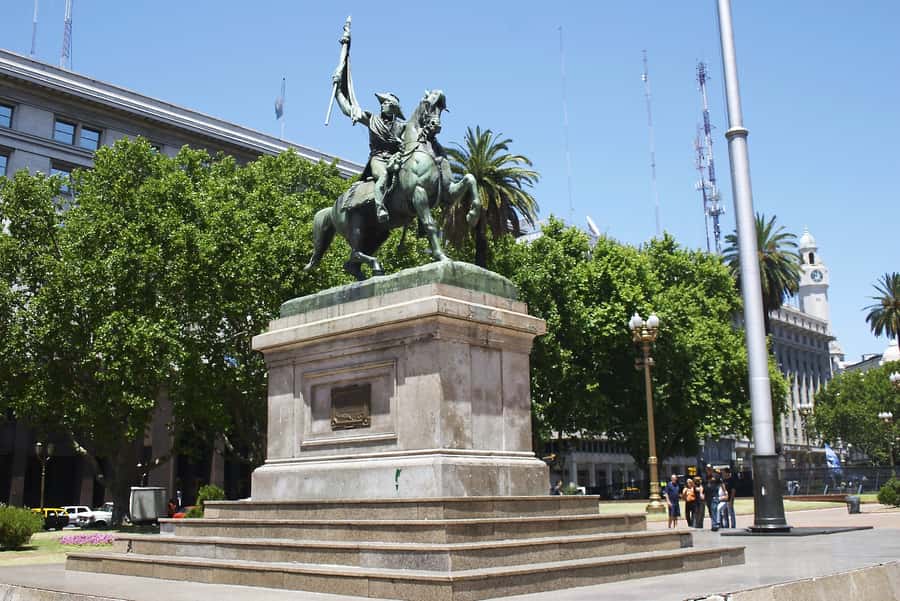
One of the best parts of this tour is the switch from “pretty city” to “political city.” Before you reach the main squares and institutions, you get panoramic city views from one of Buenos Aires’ most dazzling neighborhoods. It’s a smart move, because it gives you a mental map of how dense and important this center really is.
Buenos Aires can feel like a series of big blocks and grand facades. Those early viewpoints help you understand the layout—where you are, how far the sights relate to each other, and why the Historic District feels like the city’s original stage.
Your guide also ties these views to Argentina’s larger story: independence, history, and traditions. It’s not just architecture trivia. You’ll hear the kind of background that makes names and institutions feel less abstract when you reach the formal buildings next.
Plaza de Mayo, Casa Robada, and the founding-era context
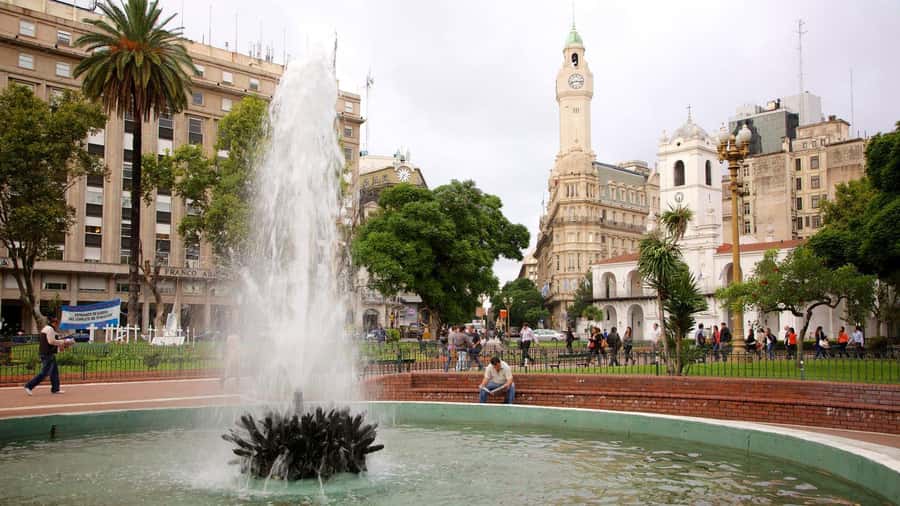
Plaza de Mayo is the tour’s centerpiece, and the timing is right. You’ll stand in the square where Buenos Aires was founded in 1580, which instantly turns the location into more than a photo stop. Even if you’ve seen pictures before, it hits differently when you’re standing inside the space where power, speeches, and civic life have shaped the city.
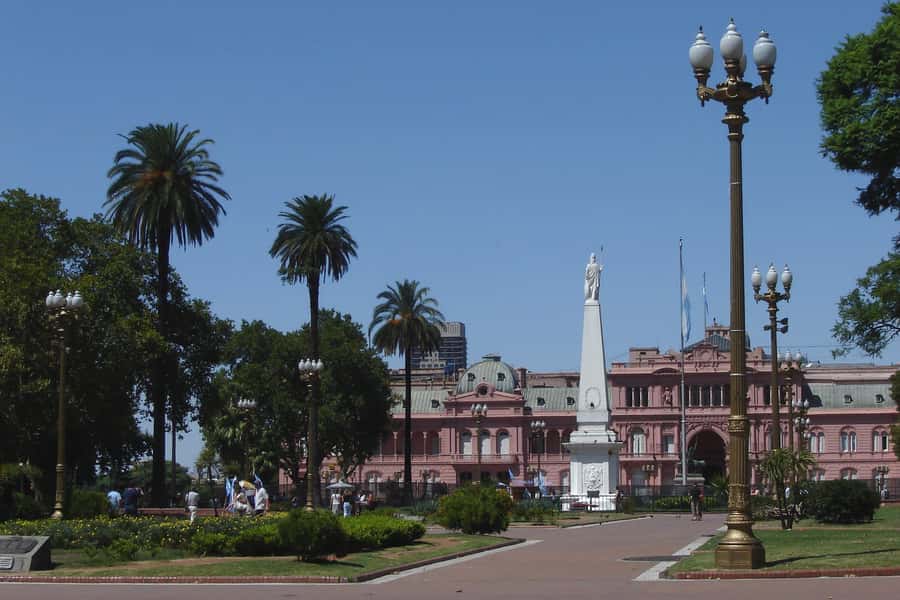
Then you’ll see Casa Robada, the president’s office. That pairing—founding square plus today’s seat of national leadership—helps you connect past to present. You start to see how the city’s identity keeps repeating the same theme: institutions in the open, history in the public space.
If you like history that explains why people cared, you’ll probably enjoy how your guide frames independence and tradition alongside the buildings around you. It’s the kind of storytelling that makes you look up at facades and then look back at the square itself, like the whole area is one big diagram.
Cabildo: seeing colonial town power in brick and stone
After Plaza de Mayo, you’ll head to the Cabildo, another major stop where the past is tangible. You’ll visit the historic building that served as the seat of the town council during colonial times, and that detail gives the visit a clear purpose.
This is one of those places where guide context really pays off. Without an explanation, you’d mostly read it as an old government building. With a guide, you can imagine how decisions got made, where local authority sat, and why the colonial era left such strong architectural fingerprints.
Because entrance to the Cabildo is included, you don’t waste energy trying to figure out ticket logistics while everyone’s standing there at the threshold. You can spend that time reading the place—how it’s set up, how it relates to the surrounding political core, and why it’s part of this square-and-institutions cluster.
Metropolitan Cathedral’s neoclassical design up close
Next comes the Metropolitan Cathedral, with entrance included and ticket-line time saved. The cathedral is known for its unusual neoclassical architecture, and that’s the kind of detail you can actually spot with a little explanation in your ear.
Neoclassical design is usually about order, symmetry, and a certain kind of formal language. Here, it helps Buenos Aires look like more than just a city of street life and European-style neighborhoods—it shows how the city wanted its major institutions to feel: official, structured, and built to last.
If you’re someone who likes to notice design choices—columns, proportions, and the way buildings frame public space—you’ll get a lot out of this stop. It’s not just “go inside a church.” It’s more like “learn how to look” for the specific style signals the cathedral displays.
You can also read our reviews of more guided tours in Buenos Aires




The Plaza de Mayo subway station and Buenos Aires’ transit origin
Near the cathedral, you can see the Plaza de Mayo subway station, the spot where Buenos Aires’ subway system began. This adds a practical, modern layer to an otherwise political and colonial-heavy day.
It’s also a nice reminder that cities don’t freeze in time. Even when you’re focused on independence-era stories and historic government buildings, the city’s later growth patterns show up in infrastructure. You get a quick but meaningful contrast: grand institutional architecture on one side, the everyday machine of transit on the other.
This stop helps you end with a different kind of connection to the city. Instead of only thinking about who ruled and when, you start thinking about how the city moves people now—and how that movement has roots in this same central area.
Price and what $52 gets you in 2 hours
At $52 per person for about two hours, the value depends on what you want from the time. You’re paying for a private guided walk plus included entry to both the Cabildo and the Metropolitan Cathedral.
That’s the key trade-off: you’re not paying for comfort perks like hotel pickup and drop-off. You’re paying for guide time and for avoiding entry hassle through included access and skip-the-ticket-line coverage.
If you’re traveling with another person, the private format can feel like a smarter deal, because you’re not competing for attention with a bigger crowd. And if you enjoy learning why buildings matter, the guide’s history focus can easily turn “two hours of walking” into “two hours that taught me how to read the city.”
Also note the languages offered: English, Portuguese, and Samoan. The tour guide experience matters here. Past guides listed in bookings have been praised for clear English and for answering questions without sounding like they’re racing through a script.
Pacing, practical tips, and what to bring
This is a walking tour, so comfortable shoes are not optional—they’re the foundation of a good experience. You’ll cover central sights that are close enough for walking, but you’ll still want your feet ready.
The tour info also asks for internet access. That’s a good idea for any city day in which meeting-point details or timing messages might matter. Even if nothing changes, having access helps you stay calm if you need to confirm where to go.
Your best move: show up a little early at Café Tortoni and do a quick check of your route and meetup spot. It’s a small step that prevents the kind of start-of-tour stress that can kill momentum for the rest of the walk.
What kind of traveler this private Historic District walk suits
This tour fits you best if you want a guided, structured overview of Buenos Aires’ most important central institutions. It’s ideal for first-timers who know they’ll spend time in Plaza de Mayo anyway, but want the history connected to what they’re looking at.
It’s also a good fit if you like asking questions. Private group tours work well when you’re curious about specifics—dates like 1580, why certain buildings show neoclassical design choices, or how the Cabildo functioned during colonial town council days.
If you’re the type who prefers to wander without any structure, a guided route might feel too planned. But if you want to leave with clear context—independence, history, traditions, and how the buildings relate—this is a strong choice.
Wheelchair accessible is explicitly stated, which is a plus for travelers who need mobility-friendly planning. Just note that this is still a walking tour, so you’ll want to plan around how much time you can comfortably spend on foot.
Should you book this Buenos Aires Historic District tour?
If you want a clean, high-value introduction to Buenos Aires’ historic political core, I’d book it. For $52, you get a private guide, a focused two-hour route, included entry to the Cabildo and Metropolitan Cathedral, and a clear connection between the founding square, leadership buildings, and even the subway origin.
Hold off only if you dislike set itineraries or you’re worried about meeting-point precision. If you book, arrive at Café Tortoni a touch early, keep your phone data ready, and bring comfortable shoes. Do that, and you’ll walk away with the kind of understanding that turns central Buenos Aires from a list of landmarks into a story you can actually follow.
FAQ
How long is the Buenos Aires Historic District private walking tour?
The tour lasts about 2 hours.
Where does the tour meet?
The meeting point is outside Café Tortoni.
What’s included in the price?
You get a live guide, a walking tour, and entrance to the Metropolitan Cathedral and Cabildo.
Is hotel pickup included?
No, hotel pickup and drop-off are not included.
Which languages are available for the live guide?
The tour offers live guide options in English, Portuguese, and Samoan.
Can I skip the ticket line for the cathedral and Cabildo?
Yes, skip-the-ticket-line access is included.
Is the tour wheelchair accessible?
Yes, wheelchair accessibility is stated as available.
What should I bring?
Bring comfortable shoes and have internet access available.